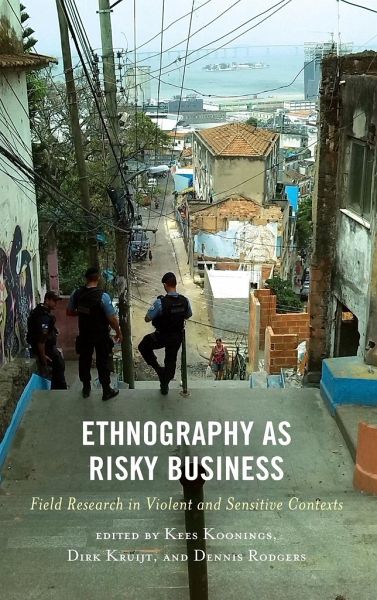
Ethnography as Risky Business addresses how to carry out ethnographic fieldwork on socio-political conflict and collective violence with a focus on the global south. Drawing on real-life case studies, it reflects on key methodological problems and the ethical and personal challenges faced when conducting and reporting on "risky" ethnography.
Ethnography as Risky Business addresses how to carry out ethnographic fieldwork on socio-political conflict and collective violence with a focus on the global south. Drawing on real-life case studies, it reflects on key methodological problems and the ethical and personal challenges faced when conducting and reporting on "risky" ethnography.
Kees Kooningsis associate professor of anthropology and development studies in theDepartment of Cultural Anthropology at Utrecht University and professor of Brazilian studies at CEDLA, University of Amsterdam. Dirk Kruijt is professor emeritus of development studies in the Department of Cultural Anthropology at Utrecht University, research fellow at the Center for International Studies of the University Institute of Lisbon, and research fellow at the Centre for Military Studies, Stellenbosch University. DennisRodgersis research professor in the Department of Anthropology and Sociology at the Graduate Institute of International and Development Studies and visiting professor in international development studies at the University of Amsterdam.
Inhaltsangabe
Introduction: Ethnography as 'Risky Business' Chapter 1: Researching the Politics of Aid in War-torn Societies: The Case of Chalatenango, El Salvador Chapter 2: Dealing with Distrust: A Diplomat-Anthropologist Negotiating Obstacles in Politically Sensitive Urban Fieldwork in Sudan Chapter 3: Researching security in Africa as the "Sierra Foxtrot Golf" Chapter 4: A Wolf in Sheep's Clothing: Negotiating Identity in Fieldwork Among the National Civil Police in Guatemala Chapter 5: "Doctor, How Can We Improve Our Image in Europe?": Researching War and Peace in Colombia as an Ethnographer-Consultant Chapter 6: Interviewing Revolutionary Generations in Latin America: A Personal Memoir Chapter 7: "You are not like the Ladinos at all": Reflections on Fieldwork, Cataloguing the Researcher and Knowledge Production Chapter 8: Keeping a Distance? Dealing With Perpetrators of Violence in a Guatemalan Town Chapter 9: From 'Broder' to 'Don': Methodological Reflections on Longitudinal Gang Research in Nicaragua Chapter 10: Interpretation of Dreams and Humor in Affective Fieldwork on State Violence in Argentina Chapter 11: Swimming with Former Combatants: Ethics and Pragmatics of Fieldwork in Post War zones in Sri Lanka Chapter 12: Ethical Issues Raised by Legal Anthropological Research on Local Dispute Settlement in Ecuador Chapter 13: Security at Stake: Dealingwith Violence and Public (In)security in a Popular Neighborhood in Guadalajara, Mexico Chapter 14: Among Comrades: (Dis)trust in Ethnographic Fieldwork with Former Salvadoran Revolutionaries Chapter 15: Embedded Ethnography: Conflict Research Through an International Peace Mission in Colombia Chapter 16: Fieldwork Frontiers: Danger, Uncertainty, and Limitations During Research with Former Combatants in Mozambique
Introduction: Ethnography as 'Risky Business' Chapter 1: Researching the Politics of Aid in War-torn Societies: The Case of Chalatenango, El Salvador Chapter 2: Dealing with Distrust: A Diplomat-Anthropologist Negotiating Obstacles in Politically Sensitive Urban Fieldwork in Sudan Chapter 3: Researching security in Africa as the "Sierra Foxtrot Golf" Chapter 4: A Wolf in Sheep's Clothing: Negotiating Identity in Fieldwork Among the National Civil Police in Guatemala Chapter 5: "Doctor, How Can We Improve Our Image in Europe?": Researching War and Peace in Colombia as an Ethnographer-Consultant Chapter 6: Interviewing Revolutionary Generations in Latin America: A Personal Memoir Chapter 7: "You are not like the Ladinos at all": Reflections on Fieldwork, Cataloguing the Researcher and Knowledge Production Chapter 8: Keeping a Distance? Dealing With Perpetrators of Violence in a Guatemalan Town Chapter 9: From 'Broder' to 'Don': Methodological Reflections on Longitudinal Gang Research in Nicaragua Chapter 10: Interpretation of Dreams and Humor in Affective Fieldwork on State Violence in Argentina Chapter 11: Swimming with Former Combatants: Ethics and Pragmatics of Fieldwork in Post War zones in Sri Lanka Chapter 12: Ethical Issues Raised by Legal Anthropological Research on Local Dispute Settlement in Ecuador Chapter 13: Security at Stake: Dealingwith Violence and Public (In)security in a Popular Neighborhood in Guadalajara, Mexico Chapter 14: Among Comrades: (Dis)trust in Ethnographic Fieldwork with Former Salvadoran Revolutionaries Chapter 15: Embedded Ethnography: Conflict Research Through an International Peace Mission in Colombia Chapter 16: Fieldwork Frontiers: Danger, Uncertainty, and Limitations During Research with Former Combatants in Mozambique
Es gelten unsere Allgemeinen Geschäftsbedingungen: www.buecher.de/agb
Impressum
www.buecher.de ist ein Internetauftritt der buecher.de internetstores GmbH
Geschäftsführung: Monica Sawhney | Roland Kölbl | Günter Hilger
Sitz der Gesellschaft: Batheyer Straße 115 - 117, 58099 Hagen
Postanschrift: Bürgermeister-Wegele-Str. 12, 86167 Augsburg
Amtsgericht Hagen HRB 13257
Steuernummer: 321/5800/1497
USt-IdNr: DE450055826