
Andere Kunden interessierten sich auch für
 Liberal and Fascist Italy55,99 €
 Forging Democracy202,99 €
 The Betrayal of Anne Frank11,99 €
 The Betrayal of Anne Frank12,99 €
 The Betrayal of Anne Frank8,49 €
 The Escape Artist14,99 €
 The Betrayal of Anne Frank13,99 €




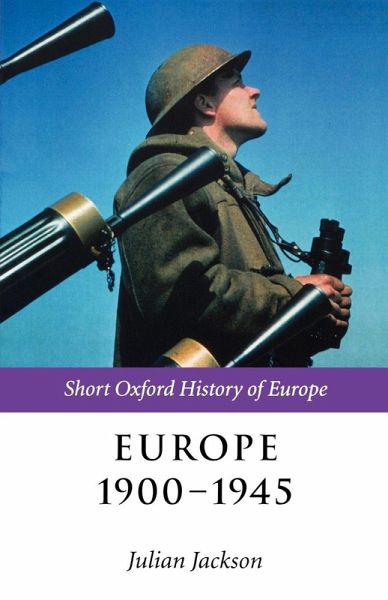
The penultimate volume in the Short Oxford History of Europe series analyses a period dominated by war, economic dislocation, revolution, and counter-revolution. In a set of thematic chapters, Julian Jackson and a leading international team of historians trace the continuities of the period, as well as the major ruptures of two World Wars.
By 1945, the European continent, which in 1900 appeared increasingly prosperous, reasonably ordered, and increasingly civilised, had torn itself apart. On the way, its societies had suffered inflations and depressions, vicious dictatorships, and the most destructive wars in modern history.
This book provides a thought-provoking and wide-ranging history of the whole of Europe in this period. Six lively and stimulating chapters have been written especially for this volume. They focus in turn on political, economic, social, and cultural aspects of the period, as well as international relations within Europe and with the wider world. Particular care is taken to integrate developments in southern and eastern Europe (including the USSR) into the more familiar story of what happened in
western and central Europe.
By 1945, the European continent, which in 1900 appeared increasingly prosperous, reasonably ordered, and increasingly civilised, had torn itself apart. On the way, its societies had suffered inflations and depressions, vicious dictatorships, and the most destructive wars in modern history.
This book provides a thought-provoking and wide-ranging history of the whole of Europe in this period. Six lively and stimulating chapters have been written especially for this volume. They focus in turn on political, economic, social, and cultural aspects of the period, as well as international relations within Europe and with the wider world. Particular care is taken to integrate developments in southern and eastern Europe (including the USSR) into the more familiar story of what happened in
western and central Europe.