Eric Barends, Denise M Rousseau
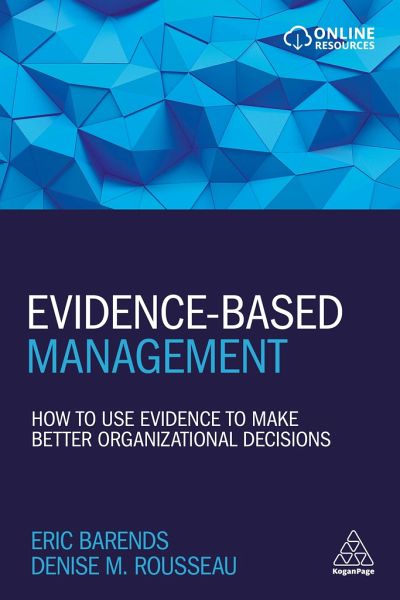
Evidence-Based Management
How to Use Evidence to Make Better Organizational Decisions
Eric Barends, Denise M Rousseau
Evidence-Based Management
How to Use Evidence to Make Better Organizational Decisions
- Gebundenes Buch
- Merkliste
- Auf die Merkliste
- Bewerten Bewerten
- Teilen
- Produkt teilen
- Produkterinnerung
- Produkterinnerung
Make better organizational decisions using data and evidence from sources both inside and outside your business
Andere Kunden interessierten sich auch für
Nate SilverOn the Edge18,99 €
Nassim Nicholas TalebFooled by Randomness10,99 €
Neil PerkinBuilding the Agile Business Through Digital Transformation76,99 €
Mohan SubramaniamThe Future of Competitive Strategy17,99 €
AnonymNutzungspotenziale durch Advanced Data Analytics von Big Data im Controlling. Planung, Forecasting, Simulation und Reporting47,95 €
Ross SparkmanStrategic Workforce Planning107,99 €
Decision Support Systems VIII: Sustainable Data-Driven and Evidence-Based Decision Support38,99 €-
-
-
Make better organizational decisions using data and evidence from sources both inside and outside your business
Produktdetails
- Produktdetails
- Verlag: Kogan Page / Kogan Page Ltd
- Seitenzahl: 392
- Erscheinungstermin: 3. Januar 2021
- Englisch
- Abmessung: 240mm x 161mm x 30mm
- Gewicht: 1038g
- ISBN-13: 9781398693425
- ISBN-10: 1398693421
- Artikelnr.: 60323019
- Herstellerkennzeichnung
- Libri GmbH
- Europaallee 1
- 36244 Bad Hersfeld
- gpsr@libri.de
- Verlag: Kogan Page / Kogan Page Ltd
- Seitenzahl: 392
- Erscheinungstermin: 3. Januar 2021
- Englisch
- Abmessung: 240mm x 161mm x 30mm
- Gewicht: 1038g
- ISBN-13: 9781398693425
- ISBN-10: 1398693421
- Artikelnr.: 60323019
- Herstellerkennzeichnung
- Libri GmbH
- Europaallee 1
- 36244 Bad Hersfeld
- gpsr@libri.de
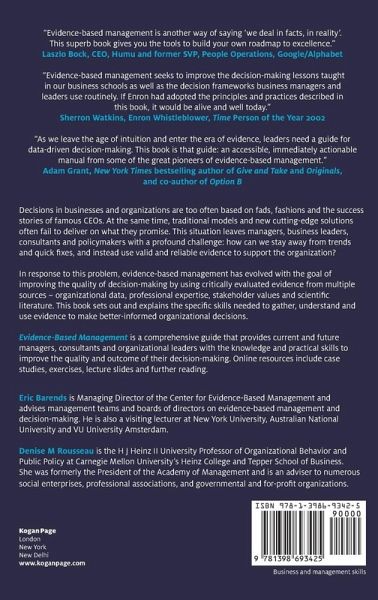
Eric Barends is Managing Director of the Center for Evidence-Based Management and advises management teams and boards of directors on evidence-based management and decision making. He is also a visiting lecturer at New York University, Australian National University and the VU University of Amsterdam.
Chapter
01: Evidence
based management: the basic principles (with Rob Briner); Chapter
02: ASK: Critical questions about assumed problems and preferred solutions; Section
PART ONE: Evidence from practitioners; Chapter
03: ACQUIRE: Evidence from practitioners; Chapter
04: APPRAISE: Evidence from practitioners; Section
PART TWO: Evidence from the scientific literature; Chapter
05: A short introduction to science (with Rob Briner); Chapter
06: ACQUIRE: Evidence from the scientific literature; Chapter
07: APPRAISE: Evidence from the scientific literature (with Rob Briner); Section
PART THREE: Evidence from the organization; Chapter
08: ACQUIRE: Evidence from the organization (with Martin Walker); Chapter
09: APPRAISE: Evidence from the organization (with Martin Walker); Section
PART FOUR: Evidence from stakeholders; Chapter
10: ACQUIRE: Evidence from stakeholders; Chapter
11 APPRAISE: Evidence from stakeholders; Chapter
12: AGGREGATE: Weighing and pulling together the evidence; Chapter
13: APPLY: Incorporating the evidence into the decision
making process (with Alessandra Capezio); Chapter
14: ASSESS: Evaluate the outcome of the decision taken; Chapter
15: Building the capacity for evidence
based management; Chapter
16: Guidelines for critically appraised topics;
01: Evidence
based management: the basic principles (with Rob Briner); Chapter
02: ASK: Critical questions about assumed problems and preferred solutions; Section
PART ONE: Evidence from practitioners; Chapter
03: ACQUIRE: Evidence from practitioners; Chapter
04: APPRAISE: Evidence from practitioners; Section
PART TWO: Evidence from the scientific literature; Chapter
05: A short introduction to science (with Rob Briner); Chapter
06: ACQUIRE: Evidence from the scientific literature; Chapter
07: APPRAISE: Evidence from the scientific literature (with Rob Briner); Section
PART THREE: Evidence from the organization; Chapter
08: ACQUIRE: Evidence from the organization (with Martin Walker); Chapter
09: APPRAISE: Evidence from the organization (with Martin Walker); Section
PART FOUR: Evidence from stakeholders; Chapter
10: ACQUIRE: Evidence from stakeholders; Chapter
11 APPRAISE: Evidence from stakeholders; Chapter
12: AGGREGATE: Weighing and pulling together the evidence; Chapter
13: APPLY: Incorporating the evidence into the decision
making process (with Alessandra Capezio); Chapter
14: ASSESS: Evaluate the outcome of the decision taken; Chapter
15: Building the capacity for evidence
based management; Chapter
16: Guidelines for critically appraised topics;
Chapter
01: Evidence
based management: the basic principles (with Rob Briner); Chapter
02: ASK: Critical questions about assumed problems and preferred solutions; Section
PART ONE: Evidence from practitioners; Chapter
03: ACQUIRE: Evidence from practitioners; Chapter
04: APPRAISE: Evidence from practitioners; Section
PART TWO: Evidence from the scientific literature; Chapter
05: A short introduction to science (with Rob Briner); Chapter
06: ACQUIRE: Evidence from the scientific literature; Chapter
07: APPRAISE: Evidence from the scientific literature (with Rob Briner); Section
PART THREE: Evidence from the organization; Chapter
08: ACQUIRE: Evidence from the organization (with Martin Walker); Chapter
09: APPRAISE: Evidence from the organization (with Martin Walker); Section
PART FOUR: Evidence from stakeholders; Chapter
10: ACQUIRE: Evidence from stakeholders; Chapter
11 APPRAISE: Evidence from stakeholders; Chapter
12: AGGREGATE: Weighing and pulling together the evidence; Chapter
13: APPLY: Incorporating the evidence into the decision
making process (with Alessandra Capezio); Chapter
14: ASSESS: Evaluate the outcome of the decision taken; Chapter
15: Building the capacity for evidence
based management; Chapter
16: Guidelines for critically appraised topics;
01: Evidence
based management: the basic principles (with Rob Briner); Chapter
02: ASK: Critical questions about assumed problems and preferred solutions; Section
PART ONE: Evidence from practitioners; Chapter
03: ACQUIRE: Evidence from practitioners; Chapter
04: APPRAISE: Evidence from practitioners; Section
PART TWO: Evidence from the scientific literature; Chapter
05: A short introduction to science (with Rob Briner); Chapter
06: ACQUIRE: Evidence from the scientific literature; Chapter
07: APPRAISE: Evidence from the scientific literature (with Rob Briner); Section
PART THREE: Evidence from the organization; Chapter
08: ACQUIRE: Evidence from the organization (with Martin Walker); Chapter
09: APPRAISE: Evidence from the organization (with Martin Walker); Section
PART FOUR: Evidence from stakeholders; Chapter
10: ACQUIRE: Evidence from stakeholders; Chapter
11 APPRAISE: Evidence from stakeholders; Chapter
12: AGGREGATE: Weighing and pulling together the evidence; Chapter
13: APPLY: Incorporating the evidence into the decision
making process (with Alessandra Capezio); Chapter
14: ASSESS: Evaluate the outcome of the decision taken; Chapter
15: Building the capacity for evidence
based management; Chapter
16: Guidelines for critically appraised topics;