
Andere Kunden interessierten sich auch für
 Used in Dentistry") Comparison of Adhesive (Bonding Agents) Used in Dentistry40,99 €
Comparison of Adhesive (Bonding Agents) Used in Dentistry40,99 € Adhesive Techniques in Restorative Dentistry82,99 €
 Evolution of Ceramics in Dentistry: Basics to Advanced53,99 €
 ADHESIVE IN ORTHODONTICS40,99 €
 The Evolution of the Smile40,99 €
 DENTIN BONDING AGENTS29,99 €
 Evolution of Self-ligating brackets40,99 €



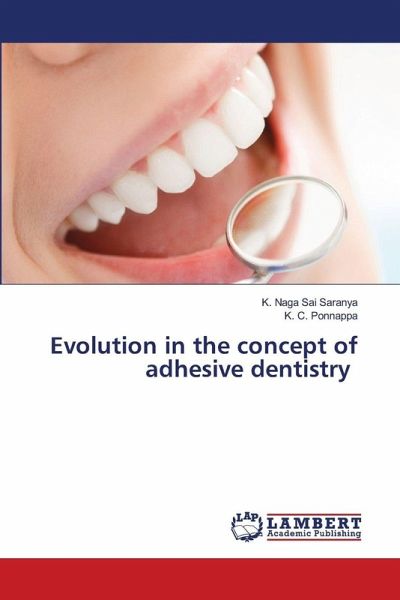
Dental adhesive systems have undergone significant advancements, evolving from low-strength, and unstable first-generation materials to today's highly versatile universal adhesives. Enamel bonding is well-established using phosphoric acid etching, which creates micromechanical retention through resin tag formation. Dentin bonding, however, remains more complex due to its organic composition, tubular structure, and moisture sensitivity. The smear layer plays a crucial role, and its treatment ranging from removal to modification greatly affects bonding outcomes.The fourth-generation "total-etch" systems marked a major improvement in long-term dentin adhesion, while later generations aimed to simplify application steps. Self-etch adhesives introduced chemical bonding potential, particularly in dentin, though they often struggle with enamel. Universal adhesives (eighth generation) offer flexibility, combining the benefits of etch-and-rinse and self-etch approaches. Adhesive performance is influenced by factors like monomer composition, solvent systems, and hybrid layer quality.Despite simplification efforts, technique sensitivity and moisture control remain critical for success.