
Andere Kunden interessierten sich auch für
 English Fiction and the Evolution of Language, 1850-1914109,99 €
 The evolution of The British Constitution and the events that shaped it29,99 €
 The Evolution of an Empire; A Brief Historical Sketch of France15,99 €
 National Telecommunications Institute27,99 €
") Germany And Its Evolution In Modern Times (1913)37,99 €
Germany And Its Evolution In Modern Times (1913)37,99 € Domestic Politics And The Politics Of Satellite Telecommunications52,99 €
 Evolution and the Victorians156,99 €






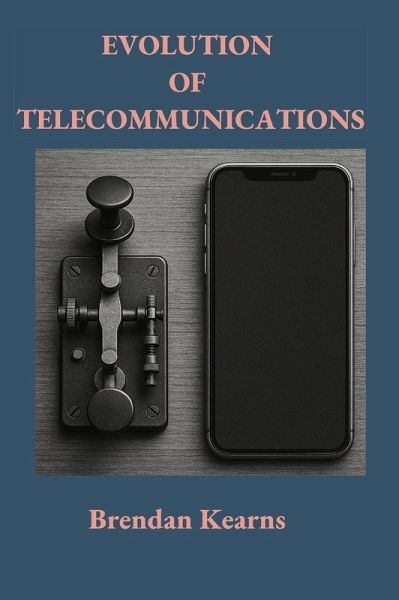
Chapters One and Two examine the birth of telecommunications with the invention of the telegraph and the telephone-two innovations that have forever transformed the way we communicate. Chapters Three through Six address the subsequent development of switching, signalling, transmission systems, and service creation, providing a structured view of the technical evolution that built our networks. The focus then shifts to the transformation of hardware, operating systems, and customer premises equipment in Chapters Seven and Eight. Chapter Nine introduces readers to the regulatory and legal landscape that shaped the sector. In contrast, Chapter Ten turns to the growing importance of cybersecurity in an era where circuit-switched networks are nearing retirement. Wi-Fi - a personal area of interest - takes centre stage in Chapter Eleven. Chapter Twelve then explores the fascinating evolution of messaging systems, tracing their journey from Morse code and telex to packet switching, and ultimately to the global messaging clients that now span the Globe. Chapters Thirteen through Sixteen present a four-part history of telecommunications in Ireland. This begins with a national overview, followed by an examination of Ireland's pivotal role in international submarine cable networks. The third part examines the development of the national telephone system, from manual switching to digital and packet-switched technologies. The final section highlights the journey to broadband connectivity and the nationwide drive toward fibre-to-the-home. Chapters Seventeen and Eighteen delve into deeper technical dimensions, including the distinction between synchronous and asynchronous systems and the relationship between early switching and the advent of computing. From there, we move into the future. Chapter Nineteen addresses artificial intelligence, which is already making a tangible impact on telecoms. At the same time, Chapter Twenty is dedicated to quantum computing, which is still in its early stages but is impossible to ignore. In the final stretch, we examine network addressing and the evolution of content delivery, respectively-topics that underpin the modern user experience. The book concludes with two reflective chapters. My thoughts on the future of telecommunications are presented in Chapter Twenty-Three, followed by an epilogue in Chapter Twenty-Four. A complete list of consulted sources is also included in the last chapter. Twenty-Three. Whether you are a student, a professional, or simply curious about how your phone connects to the world, I hope this book informs and inspires. The story of telecommunications is not just one of cables and switches-it is the story of human connection, ingenuity, and the relentless pursuit of better ways to communicate.