
Andere Kunden interessierten sich auch für
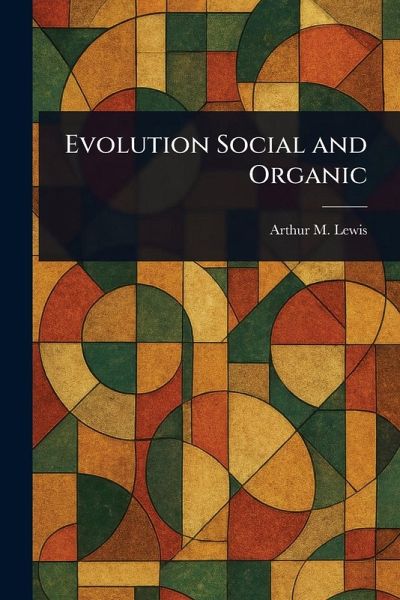
 Evolution Social and Organic16,99 €
 Transmission; or, Variation of Character Through the Mother15,99 €
 An Introduction to Social Psychology24,99 €
 Medicine and Evolution80,99 €
 The Place of Science in Modern Civilisation, and Other Essays23,99 €
 The Fraud of Feminism15,99 €
 What's Wrong With the World18,99 €






Explore the intersection of Darwinism and societal advancement in Arthur M. Lewis's "Evolution Social and Organic." This thought-provoking work delves into the principles of organic evolution and applies them to the study of social evolution, examining how societies develop and progress. Lewis investigates the dynamics of societal change through the lens of evolutionary theory, offering a unique perspective on the forces shaping human civilization. This classic text, categorized under Social Sciences and Philosophy, provides insights into the historical understanding of societal development, progress, and the impact of evolutionary thought on social theory. It will appeal to readers interested in the history of sociology, the life sciences, and the philosophical underpinnings of social evolution. This work has been selected by scholars as being culturally important, and is part of the knowledge base of civilization as we know it. This work is in the public domain in the United States of America, and possibly other nations. Within the United States, you may freely copy and distribute this work, as no entity (individual or corporate) has a copyright on the body of the work. Scholars believe, and we concur, that this work is important enough to be preserved, reproduced, and made generally available to the public. We appreciate your support of the preservation process, and thank you for being an important part of keeping this knowledge alive and relevant.