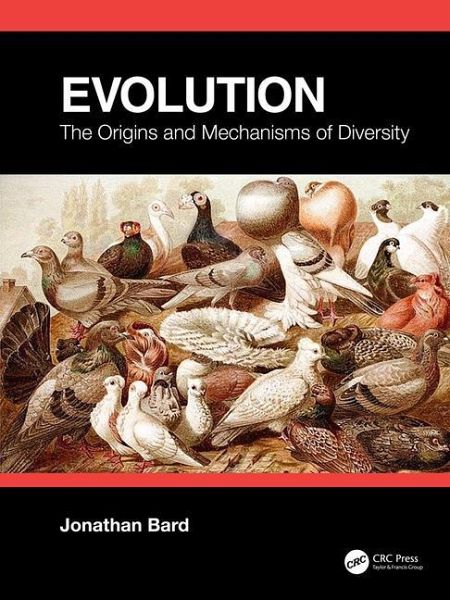
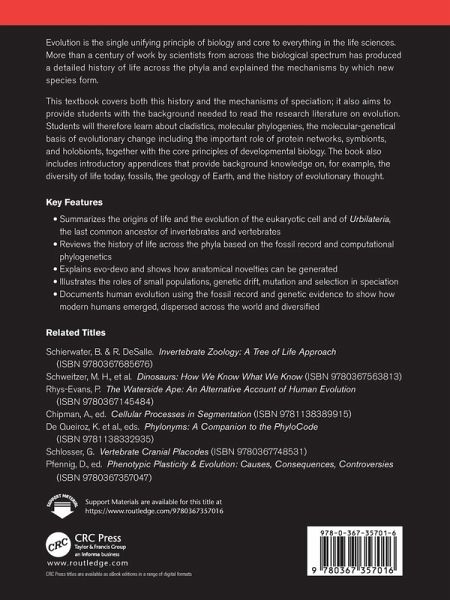
Using this textbook, students will learn about cladistics, molecular phylogenies and the molecular-genetical basis of evolutionary change, including the important role of protein networks, symbionts and holobionts, together with the core principles of developmental biology.
Using this textbook, students will learn about cladistics, molecular phylogenies and the molecular-genetical basis of evolutionary change, including the important role of protein networks, symbionts and holobionts, together with the core principles of developmental biology.
Professor Jonathan Bard is a vertebrate developmental anatomist who has also published research papers in evolutionary, theoretical and systems biology and in bioinformatics. He worked at the MRC Human Genetics Unit and at the University of Edinburgh and is currently a graduate advisor at Balliol College Oxford.
Inhaltsangabe
Preface. SECTION I: AN INTRODUCTION TO EVOLUTION 1. Approaching Evolution 2. A Potted History of Evolutionary Science 3. The Ancient World 4. Life Today: Species Diversity and Classification SECTION II. THE EVIDENCE FOR EVOLUTION 5. Analysing Evolutionary Change 6. The Anatomical Evidence for Evolutionary Change 7. The Genomic Evidence 8. The Evo-Devo Evidence SECTION III: THE HISTORY OF LIFE 9. The First Two Billion Years 10. The Roots of the Eukaryotic Tree of Life 11. The Evolution of Algae and Plants 12. The Evolution of Multicellular Organisms in the Ediacaran period 13. The Cambrian Explosion and the Evolution of Protostomes 14. Deuterostome Evolution: From the Beginnings to the Amphibians 15. Vertebrate Evolution: Stem Mammals, Reptiles and Birds 16. Vertebrate Evolution: Mammals SECTION IV: MECHANISMS OF EVOLUTION 17. Variation 1: Mutations and Phenotypes 18. Variation 2: Evolutionary Change 19. Adaptation, Symbionts and Holobionts 20. Selection 21. Evolutionary Population Genetics 22. Speciation SECTION V: HUMAN EVOLUTION 23. Human Evolution 1: The Fossil Evidence 24. Human Evolution 2: Genes and Migrations 25. Human Evolution 3: The Origins of Modern Humans 26. Conclusions Appendix 1. Systems Biology Appendix 2. A History of Evolutionary Thought Appendix 3. A Brief History of the World Appendix 4. Rocks, Dates and Fossils Appendix 5: Constructing Molecular Phylogenies Appendix 6: Three Key Model Organisms: Mouse, Drosophila and H. sapiens Appendix 7: Some Principles of Animal Developmental Biology Appendix 8: Evolution Versus Creationism Glossary. Acknowledgements. Index.
Preface. SECTION I: AN INTRODUCTION TO EVOLUTION 1. Approaching Evolution 2. A Potted History of Evolutionary Science 3. The Ancient World 4. Life Today: Species Diversity and Classification SECTION II. THE EVIDENCE FOR EVOLUTION 5. Analysing Evolutionary Change 6. The Anatomical Evidence for Evolutionary Change 7. The Genomic Evidence 8. The Evo-Devo Evidence SECTION III: THE HISTORY OF LIFE 9. The First Two Billion Years 10. The Roots of the Eukaryotic Tree of Life 11. The Evolution of Algae and Plants 12. The Evolution of Multicellular Organisms in the Ediacaran period 13. The Cambrian Explosion and the Evolution of Protostomes 14. Deuterostome Evolution: From the Beginnings to the Amphibians 15. Vertebrate Evolution: Stem Mammals, Reptiles and Birds 16. Vertebrate Evolution: Mammals SECTION IV: MECHANISMS OF EVOLUTION 17. Variation 1: Mutations and Phenotypes 18. Variation 2: Evolutionary Change 19. Adaptation, Symbionts and Holobionts 20. Selection 21. Evolutionary Population Genetics 22. Speciation SECTION V: HUMAN EVOLUTION 23. Human Evolution 1: The Fossil Evidence 24. Human Evolution 2: Genes and Migrations 25. Human Evolution 3: The Origins of Modern Humans 26. Conclusions Appendix 1. Systems Biology Appendix 2. A History of Evolutionary Thought Appendix 3. A Brief History of the World Appendix 4. Rocks, Dates and Fossils Appendix 5: Constructing Molecular Phylogenies Appendix 6: Three Key Model Organisms: Mouse, Drosophila and H. sapiens Appendix 7: Some Principles of Animal Developmental Biology Appendix 8: Evolution Versus Creationism Glossary. Acknowledgements. Index.
Es gelten unsere Allgemeinen Geschäftsbedingungen: www.buecher.de/agb
Impressum
www.buecher.de ist ein Internetauftritt der buecher.de internetstores GmbH
Geschäftsführung: Monica Sawhney | Roland Kölbl | Günter Hilger
Sitz der Gesellschaft: Batheyer Straße 115 - 117, 58099 Hagen
Postanschrift: Bürgermeister-Wegele-Str. 12, 86167 Augsburg
Amtsgericht Hagen HRB 13257
Steuernummer: 321/5800/1497
USt-IdNr: DE450055826