
Andere Kunden interessierten sich auch für
 Evoquology44,99 €
 Evoquologia44,99 €
 Evoquologia44,99 €
 Évoquologie44,99 €
 Evoquologie68,90 €
 L'EMPIRE DU GROTESQUE CHEZ FELLINI ET ALMODÓVAR:51,99 €
 Crise des hommes et des choses36,99 €


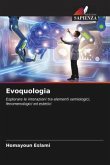



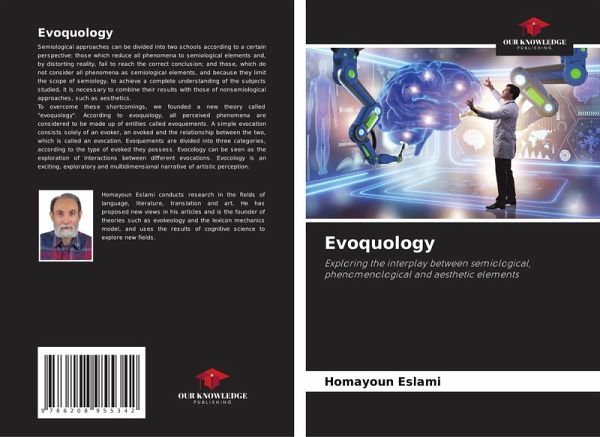
Semiological approaches can be divided into two schools according to a certain perspective: those which reduce all phenomena to semiological elements and, by distorting reality, fail to reach the correct conclusion; and those, which do not consider all phenomena as semiological elements, and because they limit the scope of semiology, to achieve a complete understanding of the subjects studied, it is necessary to combine their results with those of nonsemiological approaches, such as aesthetics.To overcome these shortcomings, we founded a new theory called "evoquology". According to evoquology, all perceived phenomena are considered to be made up of entities called evoquements. A simple evocation consists solely of an evoker, an evoked and the relationship between the two, which is called an evocation. Evoquements are divided into three categories, according to the type of evoked they possess. Evocology can be seen as the exploration of interactions between different evocations. Evocology is an exciting, exploratory and multidimensional narrative of artistic perception.