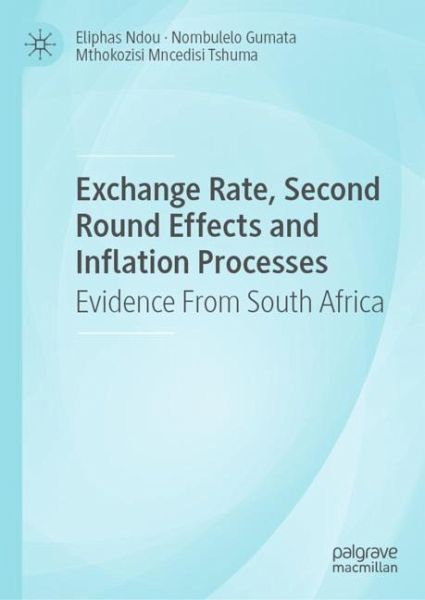
This book focuses on the exchange rate pass-through (ERPT), second round effects and the inflation process in South Africa. The authors demonstrate that magnitudes of the second round effects of the exchange rate depreciation and oil price shocks depend on inflation regimes. The impact of positive oil price shocks on inflation is weakened by monetary policy credibility. Evidence shows the influence of oil price on unit labour costs and correlation between exchange rate changes and inflation has weakened. In addition, ERPT is reduced by low business and consumer confidence, high trade openness,…mehr
This book focuses on the exchange rate pass-through (ERPT), second round effects and the inflation process in South Africa. The authors demonstrate that magnitudes of the second round effects of the exchange rate depreciation and oil price shocks depend on inflation regimes. The impact of positive oil price shocks on inflation is weakened by monetary policy credibility. Evidence shows the influence of oil price on unit labour costs and correlation between exchange rate changes and inflation has weakened. In addition, ERPT is reduced by low business and consumer confidence, high trade openness, low inflation and high exchange rate volatility which weaken real economic activity. Both monetary and fiscal policy credibility lowers the sizes of ERPT to inflation and inflation expectations. Fiscal policy via fuel levies, administered prices and public transport inflation channel impacts the responses of monetary policy to inflation shocks. The authors show that second round effectscontribute very little to wage inflation following an exchange rate depreciation shock. Both lending rate and household consumption responds asymmetrical to repo rate changes.
This book will appeal to policymakers, students, academics and analysts.
Eliphas Ndou is an economist at the South African Reserve Bank, and a lecturer at the University of the Witwatersrand, Johannesburg, South Africa. His research interests include international finance and macroeconomics, applied macro and microeconomics, monetary policy, fiscal policy, banking regulation and macro prudential policy. Nombulelo Gumata holds a Masters Degree in Economics from the University of Johannesburg. She is an economist at the South African Reserve Bank. She also lectures and tutors on a part time basis at the Centre for Education in Economics and Finance Africa (CEEF Africa). Prof. Mthuli Ncube is Managing Director of Quantum Global Research Lab, Switzerland, and Professor at the University of Oxford, and HSBC Distinguished Professor of Banking and Finance at University of the Witwatersrand(Wits), Wits Business School. Prof. Ncube served as Chief Economist and Vice President of the African Development Bank Group. He has been an Investment Banker. He holds a PhD in Economics (Mathematical Finance) from University of Cambridge. He is Chairman of the African Economic Research Consortium (AERC) Board and Board member of Global Development Network (GDN) and Royal Africa Society (RAS). He has been Lecturer in Finance at London School of Economics (LSE) and Dean of Wits Business School, and Dean of Wits Faculty of Commerce Law and Management. He has also authored 13 books and numerous research papers in economics and finance.
Inhaltsangabe
Part I: The changing size of second-round effects.- 1. Introduction. 2. Policy implications of ERPT and ongoing debates.- 3. Second round effects, exchange rate depreciation, inflation and average wage settlements.- 4. Second round effects, remuneration per worker, exchange rate depreciation shock and inflation expectations.- 5. Second-round effects, private sector wage inflation and exchange rate depreciation shocks.- 6. Second round effects of oil price shocks to consumer price inflation and the unit labour costs channel.- Part II: Monetary and fiscal policy credibility and changing exchange rate pass-through.- 7. Monetary policy credibility and the time varying exchange rate pass-through to inflation.- 8. Monetary policy credibility and the exchange rate pass-through to inflation.- 9. Does the monetary policy channel impact the transmission of exchange rate depreciation shocks to inflation?.- 10. Does monetary policy credibility impact the responses of unit labour costs to exchange rate depreciation shocks?.- 11. Does monetary policy credibility play a role in transmission of oil price shocks to inflation expectations?.- 12. Does monetary policy credibility affect market-based inflation expectations?.- Part III: Trade openness, Consumer and business confidence and exchange rate pass-through.- 13. Does the consumer confidence channel affect the response of inflation to exchange rate depreciation shocks?.- 14. Does weak business confidence impact the pass-through of the exchange rate depreciation shocks to inflation?.- 15. Does exchange rate volatility impact the pass-through of the exchange rate depreciation shocks to inflation?.- 16. Does trade openness matter for the response of inflation to exchange rate depreciation shocks?.- Part IV: Fiscal policy credibility and changing exchange rate pass-through.- 17. Does fiscal policy credibility matter for the exchange rate pass-through to inflation in South Africa?.- 18. Fiscal policy credibility and time varying exchange rate pass-through to consumer price inflation.- 19. Is the impact of high monetary policy credibility on inflation and the ERPT reinforced by fiscal policy credibility?.- Part V: Regulated price, inflation process and monetary policy influence.- 20. What is the role and cost of administered prices? Evidence from monetary policy responses to positive inflation shocks.- 21. Monetary and fiscal policy interactions in inflation process: The role of fuel levies channel.- 22. Monetary and fiscal policy interactions in inflation process: The role of public transport inflation channel.- 23. The distributive effects of monetary policy: Evidence form inflation rates by deciles and rural areas.- Part VI: Asymmetric interest rate pass-through.- 24. Is there any evidence of the amount and adjustment asymmetries of lending rate reaction to the repo rate changes?.- 25Is there evidence of rigidity in the corporate lending rate adjustment following repo rate changes?.- 26. Does the flexible mortgage rate exhibit asymmetrical response to changes in the repo rate?.- 27. What is the role of competition in the banking sector on the interest rate pass-through and loan intermediation mark-up?.- 28. Does consumption growth respond asymmetrically to positive and negative repo rate changes?.- 29. Does the household financial wealth explain the asymmetric response of consumption to monetary policy shock in South Africa?.
Part I: The changing size of second-round effects.- 1. Introduction. 2. Policy implications of ERPT and ongoing debates.- 3. Second round effects, exchange rate depreciation, inflation and average wage settlements.- 4. Second round effects, remuneration per worker, exchange rate depreciation shock and inflation expectations.- 5. Second-round effects, private sector wage inflation and exchange rate depreciation shocks.- 6. Second round effects of oil price shocks to consumer price inflation and the unit labour costs channel.- Part II: Monetary and fiscal policy credibility and changing exchange rate pass-through.- 7. Monetary policy credibility and the time varying exchange rate pass-through to inflation.- 8. Monetary policy credibility and the exchange rate pass-through to inflation.- 9. Does the monetary policy channel impact the transmission of exchange rate depreciation shocks to inflation?.- 10. Does monetary policy credibility impact the responses of unit labour costs to exchange rate depreciation shocks?.- 11. Does monetary policy credibility play a role in transmission of oil price shocks to inflation expectations?.- 12. Does monetary policy credibility affect market-based inflation expectations?.- Part III: Trade openness, Consumer and business confidence and exchange rate pass-through.- 13. Does the consumer confidence channel affect the response of inflation to exchange rate depreciation shocks?.- 14. Does weak business confidence impact the pass-through of the exchange rate depreciation shocks to inflation?.- 15. Does exchange rate volatility impact the pass-through of the exchange rate depreciation shocks to inflation?.- 16. Does trade openness matter for the response of inflation to exchange rate depreciation shocks?.- Part IV: Fiscal policy credibility and changing exchange rate pass-through.- 17. Does fiscal policy credibility matter for the exchange rate pass-through to inflation in South Africa?.- 18. Fiscal policy credibility and time varying exchange rate pass-through to consumer price inflation.- 19. Is the impact of high monetary policy credibility on inflation and the ERPT reinforced by fiscal policy credibility?.- Part V: Regulated price, inflation process and monetary policy influence.- 20. What is the role and cost of administered prices? Evidence from monetary policy responses to positive inflation shocks.- 21. Monetary and fiscal policy interactions in inflation process: The role of fuel levies channel.- 22. Monetary and fiscal policy interactions in inflation process: The role of public transport inflation channel.- 23. The distributive effects of monetary policy: Evidence form inflation rates by deciles and rural areas.- Part VI: Asymmetric interest rate pass-through.- 24. Is there any evidence of the amount and adjustment asymmetries of lending rate reaction to the repo rate changes?.- 25Is there evidence of rigidity in the corporate lending rate adjustment following repo rate changes?.- 26. Does the flexible mortgage rate exhibit asymmetrical response to changes in the repo rate?.- 27. What is the role of competition in the banking sector on the interest rate pass-through and loan intermediation mark-up?.- 28. Does consumption growth respond asymmetrically to positive and negative repo rate changes?.- 29. Does the household financial wealth explain the asymmetric response of consumption to monetary policy shock in South Africa?.
Es gelten unsere Allgemeinen Geschäftsbedingungen: www.buecher.de/agb
Impressum
www.buecher.de ist ein Internetauftritt der buecher.de internetstores GmbH
Geschäftsführung: Monica Sawhney | Roland Kölbl | Günter Hilger
Sitz der Gesellschaft: Batheyer Straße 115 - 117, 58099 Hagen
Postanschrift: Bürgermeister-Wegele-Str. 12, 86167 Augsburg
Amtsgericht Hagen HRB 13257
Steuernummer: 321/5800/1497
USt-IdNr: DE450055826