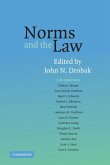
This collection of essays by 13 well-known contributors departs from a conventional analysis of the state that universalizes and standardizes what the state is, does, and means. The contributors engage state and stateness as it is encountered in everyday life, ranging from village and urban life to big dams, war, torture, hospital treatment, cinema attendance, and art exhibitions. The essays locate the state in time, space, and circumstance so that it is contingent and evocative rather than definitive and authoritative. The study discusses formative discourses on the state, what we may think…mehr
This collection of essays by 13 well-known contributors departs from a conventional analysis of the state that universalizes and standardizes what the state is, does, and means. The contributors engage state and stateness as it is encountered in everyday life, ranging from village and urban life to big dams, war, torture, hospital treatment, cinema attendance, and art exhibitions. The essays locate the state in time, space, and circumstance so that it is contingent and evocative rather than definitive and authoritative. The study discusses formative discourses on the state, what we may think or say about the state, and what images are evoked by its various manifestations through social and cultural forms. This volume begins with a non-essentialist perspective on state formation, and concludes with an account of how the state is experienced in the post-9/11 world scenario, in India and South Asia, the US, Europe, including the former Soviet Union, and the Far East. The contributors include James C. Scott, Arundhati Roy, Sudipta Kaviraj, Lloyd I. Rudolph, Philip Oldenburg, and Paul R. Brass.
Lloyd I. Rudolph is Professor Emeritus of Political Science at the University of Chicago. John Kurt Jacobsen is Research Associate, Program on International Politics, Economics and Security at the University of Chicago.
Inhaltsangabe
* Introduction - Framing the Inquiry: Historicizing the Modern State (Lloyd I. Rudolph and John Kurt Jacobsen); EXPERIENCING HIGH MODERNIST STATES IN AMERICA, INDIA, AND THE SOVIET UNION; * 1.: High Modernist Social Engineering: The Case of the Tennessee Valley Authority (James C. Scott); * 2.: The Cost of Living: The Narmada Dam and the Indian State (Arundhati Roy); * 3.: Understanding the Collapse of the Soviet Union (Hyung-Min-Joo); * 4.: How Political Scientists Experienced India's Development State (Paul R. Brass); EXPERIENCING THE STATE FROM BELOW IN VILLAGE INDIA AND GERMANY AND URBAN KARACHI; * 5.: Experiencing Reunification: An East German Village after the Fall of the Wall (Helmuth Berking); * 6.: The Dynamics of Bureaucratic Rule in Pakistan: A Personal View (Tasneem Ahmed Siddiqui); * 7.: Face to Face with the Indian State: A Grass Roots View (Philip Oldenburg); EXPERIENCING THE STATE FROM OUTSIDE: PSYCHIATRY, FILM, AND ART; * 8.: Experiencing Care: Psychotherapy and NHS Mental Health Reform in Britain (Nicholas Temple); * 9.: In Cahoots? Cinema, Cynicism, and Citizenship (John Kurt Jacobsen); * 10.: Forest of Logos: Empire of Signs (Patricia Bickers); EMANCIPATORY RESISTANCE; * 11.: Gandhi's Trial and India's Colonial State (Sudipta Kaviraj); * 12.: Experiencing Repressive States in America and the Koreas (Bruce Cumings); Conclusion - Sovereignty Unbound: Experiencing the State after 9/11 (Lloyd I. Rudolph and John Kurt Jacobsen); Notes on Contributors
Es gelten unsere Allgemeinen Geschäftsbedingungen: www.buecher.de/agb
Impressum
www.buecher.de ist ein Internetauftritt der buecher.de internetstores GmbH
Geschäftsführung: Monica Sawhney | Roland Kölbl | Günter Hilger
Sitz der Gesellschaft: Batheyer Straße 115 - 117, 58099 Hagen
Postanschrift: Bürgermeister-Wegele-Str. 12, 86167 Augsburg
Amtsgericht Hagen HRB 13257
Steuernummer: 321/5800/1497
USt-IdNr: DE450055826