
Andere Kunden interessierten sich auch für
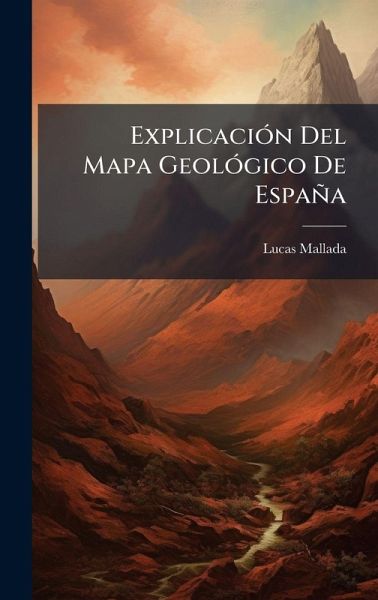
 Explicación Del Mapa Geológico De España36,99 €
 Bosquejo GeolÃ3gico De La Provincia De Cadiz30,99 €
xico, Volume 1...") Parergones Del Instituto GeolÃ3gico De MÃ(c)xico, Volume 1...37,99 €
Parergones Del Instituto GeolÃ3gico De MÃ(c)xico, Volume 1...37,99 € DescripciÃ3n FÃ-sica Y GeolÃ3gica De La Provincia De Santander...29,99 €
 DescripciÃ3n FÃ-sica Y GeolÃ3gica De La Provincia De Madrid...31,99 €
![Ricerche Intorno Alla Vera Posizione Geologica Del Terreno Del Macigno in Italia E Nel Mezzogiorno D'Europa Seguita [Sic] Da Alcune Lettere Intorno Al Terreno Cretaceo Delle Alpi Venete]( "Ricerche Intorno Alla Vera Posizione Geologica Del Terreno Del Macigno in Italia E Nel Mezzogiorno D'Europa Seguita [Sic] Da Alcune Lettere Intorno Al Terreno Cretaceo Delle Alpi Venete") Ricerche Intorno Alla Vera Posizione Geologica Del Terreno Del Macigno in Italia E Nel Mezzogiorno D'Europa Seguita [Sic] Da Alcune Lettere Intorno Al Terreno Cretaceo Delle Alpi Venete28,99 €
Ricerche Intorno Alla Vera Posizione Geologica Del Terreno Del Macigno in Italia E Nel Mezzogiorno D'Europa Seguita [Sic] Da Alcune Lettere Intorno Al Terreno Cretaceo Delle Alpi Venete28,99 €. Traduit de l'allemand, avec l'autorisation de l'auteur et annotÃ(c)e sous la direction de Emm. de Margerie. Avec une prÃ(c)f. par Marcel Bertrand") La face de la terre (Das Antlitz der Erde). Traduit de l'allemand, avec l'autorisation de l'auteur et annotÃ(c)e sous la direction de Emm. de Margerie. Avec une prÃ(c)f. par Marcel Bertrand43,99 €
La face de la terre (Das Antlitz der Erde). Traduit de l'allemand, avec l'autorisation de l'auteur et annotÃ(c)e sous la direction de Emm. de Margerie. Avec une prÃ(c)f. par Marcel Bertrand43,99 €
![Ricerche Intorno Alla Vera Posizione Geologica Del Terreno Del Macigno in Italia E Nel Mezzogiorno D'Europa Seguita [Sic] Da Alcune Lettere Intorno Al Terreno Cretaceo Delle Alpi Venete](https://bilder.buecher.de/produkte/74/74521/74521353m.jpg "Ricerche Intorno Alla Vera Posizione Geologica Del Terreno Del Macigno in Italia E Nel Mezzogiorno D'Europa Seguita [Sic] Da Alcune Lettere Intorno Al Terreno Cretaceo Delle Alpi Venete")
ExplicaciÃ3n Del Mapa GeolÃ3gico De España: Sistemas Permiano, Triásico, Liásico Y Jurásico, written by Lucas Mallada and originally published in 1902, is a detailed exploration of the geological features of Spain, specifically focusing on the Permian, Triassic, Liasic, and Jurassic systems. This historical work provides valuable insights into the geological composition and history of the region. It is an essential resource for geologists, historians, and anyone interested in the earth sciences and the geological heritage of Spain. This edition preserves the original text, offering readers a glimpse into the scientific understanding of the time and the foundational research that has shaped modern geology. This work has been selected by scholars as being culturally important, and is part of the knowledge base of civilization as we know it. This work was reproduced from the original artifact, and remains as true to the original work as possible. Therefore, you will see the original copyright references, library stamps (as most of these works have been housed in our most important libraries around the world), and other notations in the work. This work is in the public domain in the United States of America, and possibly other nations. Within the United States, you may freely copy and distribute this work, as no entity (individual or corporate) has a copyright on the body of the work. As a reproduction of a historical artifact, this work may contain missing or blurred pages, poor pictures, errant marks, etc. Scholars believe, and we concur, that this work is important enough to be preserved, reproduced, and made generally available to the public. We appreciate your support of the preservation process, and thank you for being an important part of keeping this knowledge alive and relevant.