A fundamental precept of all liberal democracies is a commitment to free speech. However, democracies differ fundamentally when addressing the constitutionality of laws regulating certain kinds of speech. In the United States, the commitment to free speech in the First Amendment has been held by the Supreme Court to protect the public expression of the most noxious racist ideology and hence to render unconstitutional even narrow restrictions on hate speech. In contrast, governments have been accorded considerable leeway to restrict racist and other extreme expression in almost every other…mehr
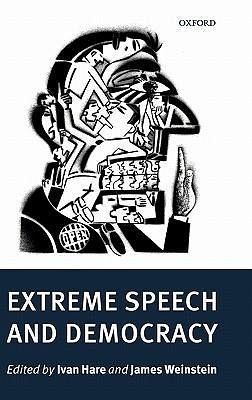
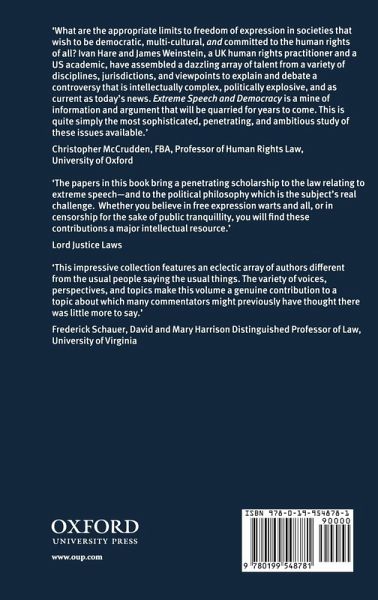
A fundamental precept of all liberal democracies is a commitment to free speech. However, democracies differ fundamentally when addressing the constitutionality of laws regulating certain kinds of speech. In the United States, the commitment to free speech in the First Amendment has been held by the Supreme Court to protect the public expression of the most noxious racist ideology and hence to render unconstitutional even narrow restrictions on hate speech. In contrast, governments have been accorded considerable leeway to restrict racist and other extreme expression in almost every other democracy, including Canada, the United Kingdom and other European countries. This book considers the constitutionality of hate speech regulation, and examines how liberal democracies have adopted fundamental differences in the way they respond to racist or extreme expressions. What accounts for the marked differences in attitude towards the constitutionality of hate speech regulation? Does hate speech regulation violate the core free speech principle constitutive of democracy? Has the traditional US position on extreme expressions justifiably not found favour elsewhere? Should, or could, other values such as the commitment to equality or dignity legitimately override the right to free speech in some circumstances? This collection of papers from some of the top free speech thinkers and writers today attempts to analyse and answer some of these fundamental questions that confront liberal democracies faced with extreme expressions.
Ivan Hare is a Barrister at Blackstone Chambers and a former Fellow of Trinity College, Cambridge. James Weinstein is the Amelia D. Lewis Professor of Constitutional Law at Sandra Day O'Connor College of Law, Arizona State University Contributors: Eric Barendt David Bodney Tufyal Choudhury Ian Cram David Edgar Carolyn Evans John Finnis David Fraser Dieter Grimm Ivan Hare Eric Heinze Ian Leigh Jose Liht Maleiha Malik Dominic McGoldrick Robert Post Amnon Reichman Jacob Rowbottom Sara Savage Wayne Sumner Patrick Weil James Weinstein Michael Whine David Williams
Inhaltsangabe
* Part I: Introduction and Background * 1: Ivan Hare, James Weinstein: Introduction * 2: Dieter Grimm: Freedom of Speech in a Globalizing World * 3: James Weinstein: Extreme Speech and Democracy * 4: Ivan Hare: The International and European Law of Freedom of Expression * 5: David Williams: Historical Perspectives on Extreme Speech Regulation in the United Kingdom * 6: Maleiha Malik: "Extreme Speech ": Political Engagement as an Alternative to Legal Regulation * Part II: Hate Speech * 7: Robert Post: Analysing Hate Speech * 8: Eric Heinze: Wild-West Cowboys versus Cheese-Eating Surrender Monkeys: Some Problems in Comparative Approaches to Hate Speech Regulation * 9: Wayne Sumner: Incitement and the Regulation of Hate Speech * 10: Erich Heinze: Homophobic Speech * Part III: Speech that Promotes Religious Hatred * 11: Sara Savage, Jose Liht: Do-it-yourself radical religious speech: how to assemble the ingredients of a binary world view * 12: Ivan Hare: Crosses, Crescents and Sacred Cows: Criminalising Incitement to Religious Hatred in European and UK Law * 13: Ian Cram: Satire, Cartoons and Offensive Expression * 14: Amnon Reichman: The Passionate Expression of Hate: Constitutional Protections, Emotional Harm and Comparative Law in Israel * Part IV: Religious Speech and Expressive Conduct That Offend Secular Values * 15: Carolyn Evans: Religious Speech that Undermines Gender Equality * 16: Ian Leigh: Equality Denial: A New Hate Crime * 17: Dominic McGoldrick: The Veil Controversies in Europe * 18: John Finnis: Reflections on the Veil in Schools * Part V: Incitement to and Glorification of Terrorism * 19: Lord Goldsmith, QC: The UK Government's Response to the Threat of Terrorism * 20: Eric Barendt: Incitement to and Glorification of Terrorism in the United Kingdom * 21: Tufyal Choudhury: Encouraging Terrorism * 22: Makhdoom Ali Khan: A Different Perspective on Incitement to Terrorism * 23: David Feldman: Comment * Part VI: Holocaust Denial * 24: David Fraser: "On the Internet, nobody knows you're a Nazi ": Some Comparative Aspects of Holocaust Denial on the www * 25: Michael Whine: Holocaust Denial * 26: Dieter Grimm: The Holocaust Denial Opinion of the German Federal Constitutional Court * 27: Patrick Weil: The Politics of Memory: the Ban and Commemoration in France * 28: Robert Post: Comment * Part VII: Governmental and Self-Regulation of the Media * 29: David Edgar: Shouting Fire: From the Nanny State to the Heckler's Veto * 30: David Bodney: An American Perspective * 31: Jacob Rowbottom: Extreme Speech and the Media * Part VIII: Conclusions * 32: Ivan Hare, James Weinstein: Extreme Speech in Comparative Perspective * Appendices
* Part I: Introduction and Background * 1: Ivan Hare, James Weinstein: Introduction * 2: Dieter Grimm: Freedom of Speech in a Globalizing World * 3: James Weinstein: Extreme Speech and Democracy * 4: Ivan Hare: The International and European Law of Freedom of Expression * 5: David Williams: Historical Perspectives on Extreme Speech Regulation in the United Kingdom * 6: Maleiha Malik: "Extreme Speech ": Political Engagement as an Alternative to Legal Regulation * Part II: Hate Speech * 7: Robert Post: Analysing Hate Speech * 8: Eric Heinze: Wild-West Cowboys versus Cheese-Eating Surrender Monkeys: Some Problems in Comparative Approaches to Hate Speech Regulation * 9: Wayne Sumner: Incitement and the Regulation of Hate Speech * 10: Erich Heinze: Homophobic Speech * Part III: Speech that Promotes Religious Hatred * 11: Sara Savage, Jose Liht: Do-it-yourself radical religious speech: how to assemble the ingredients of a binary world view * 12: Ivan Hare: Crosses, Crescents and Sacred Cows: Criminalising Incitement to Religious Hatred in European and UK Law * 13: Ian Cram: Satire, Cartoons and Offensive Expression * 14: Amnon Reichman: The Passionate Expression of Hate: Constitutional Protections, Emotional Harm and Comparative Law in Israel * Part IV: Religious Speech and Expressive Conduct That Offend Secular Values * 15: Carolyn Evans: Religious Speech that Undermines Gender Equality * 16: Ian Leigh: Equality Denial: A New Hate Crime * 17: Dominic McGoldrick: The Veil Controversies in Europe * 18: John Finnis: Reflections on the Veil in Schools * Part V: Incitement to and Glorification of Terrorism * 19: Lord Goldsmith, QC: The UK Government's Response to the Threat of Terrorism * 20: Eric Barendt: Incitement to and Glorification of Terrorism in the United Kingdom * 21: Tufyal Choudhury: Encouraging Terrorism * 22: Makhdoom Ali Khan: A Different Perspective on Incitement to Terrorism * 23: David Feldman: Comment * Part VI: Holocaust Denial * 24: David Fraser: "On the Internet, nobody knows you're a Nazi ": Some Comparative Aspects of Holocaust Denial on the www * 25: Michael Whine: Holocaust Denial * 26: Dieter Grimm: The Holocaust Denial Opinion of the German Federal Constitutional Court * 27: Patrick Weil: The Politics of Memory: the Ban and Commemoration in France * 28: Robert Post: Comment * Part VII: Governmental and Self-Regulation of the Media * 29: David Edgar: Shouting Fire: From the Nanny State to the Heckler's Veto * 30: David Bodney: An American Perspective * 31: Jacob Rowbottom: Extreme Speech and the Media * Part VIII: Conclusions * 32: Ivan Hare, James Weinstein: Extreme Speech in Comparative Perspective * Appendices
Es gelten unsere Allgemeinen Geschäftsbedingungen: www.buecher.de/agb
Impressum
www.buecher.de ist ein Internetauftritt der buecher.de internetstores GmbH
Geschäftsführung: Monica Sawhney | Roland Kölbl | Günter Hilger
Sitz der Gesellschaft: Batheyer Straße 115 - 117, 58099 Hagen
Postanschrift: Bürgermeister-Wegele-Str. 12, 86167 Augsburg
Amtsgericht Hagen HRB 13257
Steuernummer: 321/5800/1497
USt-IdNr: DE450055826