
Andere Kunden interessierten sich auch für
 F6F Hellcat Vs A6m Zero-Sen17,99 €
 Bf 110 Vs Lancaster17,99 €
 La-5/7 vs Fw 19017,99 €
 F4F Wildcat and F6F Hellcat Aces of Vf-219,99 €
 Spitfire V Vs C.202 Folgore17,99 €
 Nieuport 11/16 Bébé Vs Fokker Eindecker17,99 €
 B-24 Liberator Vs Ki-43 Oscar17,99 €
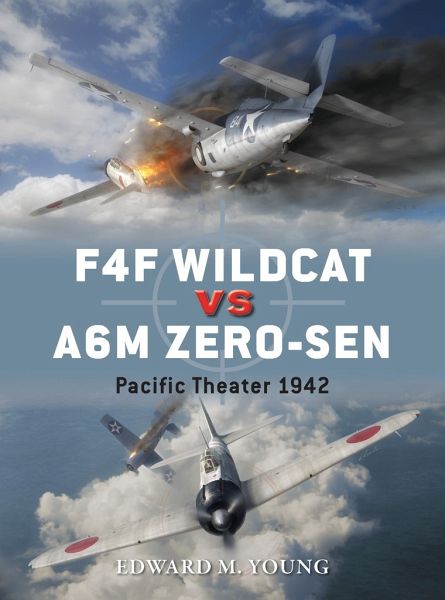
From Coral Sea to Midway to Guadalcanal and Santa Cruz, these fighters battled for air supremacy over the Pacific in World War II. The Grumman F4F Wildcat and the Mitsubishi A6M Zero-sen were contemporaries, although designed to very different requirements. Ruggedly built so as to survive the rigors of carrier operations, the Wildcat was the best carrier fighter the US Navy had available when the USA entered World War II, and it remained the principal fighter for the US Navy and the US Marine Corps until the more capable F6F Hellcat and F4U Corsair entered service in 1942-43. Designed to meet a seemingly impossible requirement from the Imperial Japanese Navy (IJN) for an aeroplane with a speed greater than 300mph, exceptional maneuverability, long range, and an impressive armament - for the time - of two 7.7mm machine guns and two 20mm cannon, the Zero-sen could out-perform any Allied fighter in 1941-42. In one-on-one combat the Zero-sen was clearly superior to the rugged Grumman F4F Wildcat in speed, climb, maneuverability, and service ceiling. The Wildcat, in turn, had better firepower and structural strength but was some 2,600lb heavier than its Japanese opponent, with only 250 additional horsepower; even so, the Wildcat pilots had no alternative but to take on their more capable Japanese opponents until superior American aircraft could be put into production. The battles between the Wildcat and the Zero-sen during 1942 represent a classic duel in which pilots flying a nominally inferior fighter successfully developed air combat tactics that negated the strengths of their opponent.