
Facilitating Watershed Management
Fostering Awareness and Stewardship
Herausgeber: France, Robert L.
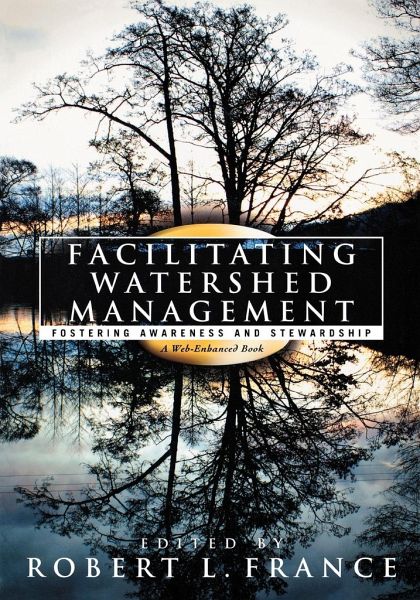
Facilitating Watershed Management
Fostering Awareness and Stewardship
Herausgeber: France, Robert L.
- Broschiertes Buch
- Merkliste
- Auf die Merkliste
- Bewerten Bewerten
- Teilen
- Produkt teilen
- Produkterinnerung
- Produkterinnerung
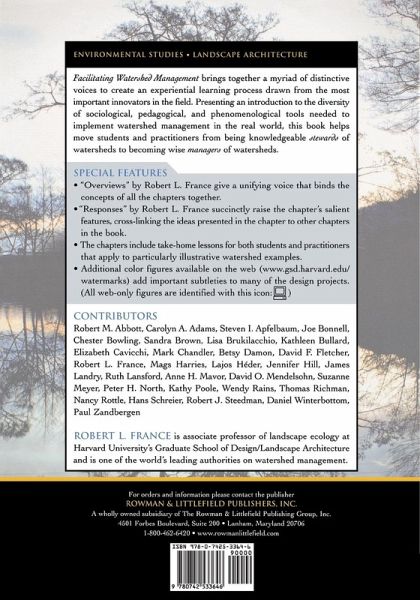
Facilitating Watershed Management brings together myriad distinctive voices to create an experiential learning process drawn from the most important innovators in the field. Presenting an introduction to the diversity of tools (sociological, pedagogical, phenomenological) needed to implement watershed management in the real world trenches, the book helps move students and practitioners from being knowledgeable stewards of watersheds to becoming wise managers of watersheds.
Andere Kunden interessierten sich auch für
 Dominique HesFacilitating green building52,99 €
 Joe R. McBrideThe World's Urban Forests68,99 €
 Lynette StrangstadGraveyard Preservation Primer60,99 €
 Florida Architecture of Addison Mizner21,99 €
 H. Philip StaatsCalifornian Architecture in Santa Barbara18,99 €
 Nicholas AyoSigns of Grace30,99 €
 Elizabeth B. McCallOld Philadelphia Houses on Society Hill, 1750-184031,99 €
-
-
-







Facilitating Watershed Management brings together myriad distinctive voices to create an experiential learning process drawn from the most important innovators in the field. Presenting an introduction to the diversity of tools (sociological, pedagogical, phenomenological) needed to implement watershed management in the real world trenches, the book helps move students and practitioners from being knowledgeable stewards of watersheds to becoming wise managers of watersheds.
Produktdetails
- Produktdetails
- Verlag: Rowman & Littlefield Publishers
- Seitenzahl: 398
- Erscheinungstermin: 21. März 2005
- Englisch
- Abmessung: 254mm x 178mm x 21mm
- Gewicht: 746g
- ISBN-13: 9780742533646
- ISBN-10: 0742533646
- Artikelnr.: 21776916
- Herstellerkennzeichnung
- Libri GmbH
- Europaallee 1
- 36244 Bad Hersfeld
- gpsr@libri.de
- Verlag: Rowman & Littlefield Publishers
- Seitenzahl: 398
- Erscheinungstermin: 21. März 2005
- Englisch
- Abmessung: 254mm x 178mm x 21mm
- Gewicht: 746g
- ISBN-13: 9780742533646
- ISBN-10: 0742533646
- Artikelnr.: 21776916
- Herstellerkennzeichnung
- Libri GmbH
- Europaallee 1
- 36244 Bad Hersfeld
- gpsr@libri.de
Robert L. France, associate professor of landscape ecology at Harvard University's Graduate School of Design/Landscape Architecture, is one of the world's leading authorities on watershed management.
Part 1 Part I: Environmental Communication
Chapter 2 Overview: The Sociology of Watershed Stewardship and Management
Chapter 3 1 Buzzwords and Benchmarks: Ecosystem Health as a Management Goal
Chapter 4 Response: Integrating Human and Environmental Aspirations
Chapter 5 2 Into the Great Wide Open: Rethinking Design in an Era of
Economic, Social, and Environmental Change
Chapter 6 Response: Watershed Health as Wealth and Other "Capital" Ideas
Chapter 7 3 Innovation Diffusion and Water-Sensitive Design
Chapter 8 Response: Making Sure Paradigm Shift Happens
Chapter 9 4 Agency-Sponsored Alternative Dispute Resolution Process in
Urban River Management
Chapter 10 Response: Managing Watersheds by Managing People
Chapter 11 5 Watershed Management-The Never-Ending Story
Chapter 12 Response: The Art of Watershed Gardening
Chapter 13 6 WatershedAtlas.com: Educating the Public
Chapter 14 Response: Virtual, Spatial, and Temporal Tours
Chapter 15 7 Watermarks: Imprinting Water(shed) Awareness through
Environmental Literature and Art
Chapter 16 Response: Engaging the Aquatic Muse
Part 17 Part II: Education Outreach
Chapter 18 Overview: The Pedagogy of Watershed Stewardship and Management
Chapter 19 8 Watershed Management Education and Training CD-ROMs
Chapter 20 Response: Electronically Expanding Watersheds through Distance
Learning
Chapter 21 9 A New Role for University Extension in Water Resources
Management
Chapter 22 Response: Participatory Education
Chapter 23 10 Saving Species by Saving Watersheds: Poster Development and
Community Participation
Chapter 24 Response: Information Transfer and Local Empowerment
Chapter 25 11 Exploring Water: Art and Physics in Teaching and Learning
with Water
Chapter 26 Response: Intimate Liquid Encounters-Teaching the Teachers
Chapter 27 12 Taking It to the Streets: Mystic Watershed Awareness Efforts
Merge with Public Art
Chapter 28 Response: Ripple Effects-Making Water Visible by Making Waves
Chapter 29 13 Developing a Public Education Toolbox for a Contested Wetland
in Los Angeles
Chapter 30 Response: Multiple Educational Challenges for Nonprofit
Stewardship Groups
Chapter 31 14 Applying the Theory: Design/Build Models for Water Harvesting
and Watershed Awareness
Chapter 32 Response: Teaching and Learning by Doing
Part 33 Part III: Demonstration Projects
Chapter 34 Overview: The Phenomenology of Watershed Stewardship and
Management
Chapter 35 15 The Touch of Water: Artists Working with Water and
Communities
Chapter 36 Response: Establishing Environmental Awareness through Water
Artistry
Chapter 37 16 Elevating Wetland Consciousness: Environmental Education and
Art
Chapter 38 Response: Curing Cancer by Applying Bandages of Functional Art
Chapter 39 17 Combining Art and Science: The Living Water Garden in
Chengdu, China
Chapter 40 Response: Role of High-Visibility Demonstration Projects
Chapter 41 18 Riparian Pocket Parks as a Means for Physically and
Conceptually Connecting People to Urban Waters
Chapter 42 Response: Recognition on the Way to Restoration
Chapter 43 19 Stormwater Management: A Primer and Guidelines fro Future
Programming and Innovative Demonstration Projects
Chapter 44 Response: Developing Cost-Effective and Integrative Water
Management
Chapter 45 20 Watershed Management as Urban Design: The Civic Hydrology of
Bellevue, Washington
Chapter 46 Response: Lives Linked by Liquid
Chapter 47 21 Message in the Medium: Watershed Awareness through Design of
a Watershed Education Center
Chapter 48 Response: Practicing What Is Preached
Chapter 2 Overview: The Sociology of Watershed Stewardship and Management
Chapter 3 1 Buzzwords and Benchmarks: Ecosystem Health as a Management Goal
Chapter 4 Response: Integrating Human and Environmental Aspirations
Chapter 5 2 Into the Great Wide Open: Rethinking Design in an Era of
Economic, Social, and Environmental Change
Chapter 6 Response: Watershed Health as Wealth and Other "Capital" Ideas
Chapter 7 3 Innovation Diffusion and Water-Sensitive Design
Chapter 8 Response: Making Sure Paradigm Shift Happens
Chapter 9 4 Agency-Sponsored Alternative Dispute Resolution Process in
Urban River Management
Chapter 10 Response: Managing Watersheds by Managing People
Chapter 11 5 Watershed Management-The Never-Ending Story
Chapter 12 Response: The Art of Watershed Gardening
Chapter 13 6 WatershedAtlas.com: Educating the Public
Chapter 14 Response: Virtual, Spatial, and Temporal Tours
Chapter 15 7 Watermarks: Imprinting Water(shed) Awareness through
Environmental Literature and Art
Chapter 16 Response: Engaging the Aquatic Muse
Part 17 Part II: Education Outreach
Chapter 18 Overview: The Pedagogy of Watershed Stewardship and Management
Chapter 19 8 Watershed Management Education and Training CD-ROMs
Chapter 20 Response: Electronically Expanding Watersheds through Distance
Learning
Chapter 21 9 A New Role for University Extension in Water Resources
Management
Chapter 22 Response: Participatory Education
Chapter 23 10 Saving Species by Saving Watersheds: Poster Development and
Community Participation
Chapter 24 Response: Information Transfer and Local Empowerment
Chapter 25 11 Exploring Water: Art and Physics in Teaching and Learning
with Water
Chapter 26 Response: Intimate Liquid Encounters-Teaching the Teachers
Chapter 27 12 Taking It to the Streets: Mystic Watershed Awareness Efforts
Merge with Public Art
Chapter 28 Response: Ripple Effects-Making Water Visible by Making Waves
Chapter 29 13 Developing a Public Education Toolbox for a Contested Wetland
in Los Angeles
Chapter 30 Response: Multiple Educational Challenges for Nonprofit
Stewardship Groups
Chapter 31 14 Applying the Theory: Design/Build Models for Water Harvesting
and Watershed Awareness
Chapter 32 Response: Teaching and Learning by Doing
Part 33 Part III: Demonstration Projects
Chapter 34 Overview: The Phenomenology of Watershed Stewardship and
Management
Chapter 35 15 The Touch of Water: Artists Working with Water and
Communities
Chapter 36 Response: Establishing Environmental Awareness through Water
Artistry
Chapter 37 16 Elevating Wetland Consciousness: Environmental Education and
Art
Chapter 38 Response: Curing Cancer by Applying Bandages of Functional Art
Chapter 39 17 Combining Art and Science: The Living Water Garden in
Chengdu, China
Chapter 40 Response: Role of High-Visibility Demonstration Projects
Chapter 41 18 Riparian Pocket Parks as a Means for Physically and
Conceptually Connecting People to Urban Waters
Chapter 42 Response: Recognition on the Way to Restoration
Chapter 43 19 Stormwater Management: A Primer and Guidelines fro Future
Programming and Innovative Demonstration Projects
Chapter 44 Response: Developing Cost-Effective and Integrative Water
Management
Chapter 45 20 Watershed Management as Urban Design: The Civic Hydrology of
Bellevue, Washington
Chapter 46 Response: Lives Linked by Liquid
Chapter 47 21 Message in the Medium: Watershed Awareness through Design of
a Watershed Education Center
Chapter 48 Response: Practicing What Is Preached
Part 1 Part I: Environmental Communication
Chapter 2 Overview: The Sociology of Watershed Stewardship and Management
Chapter 3 1 Buzzwords and Benchmarks: Ecosystem Health as a Management Goal
Chapter 4 Response: Integrating Human and Environmental Aspirations
Chapter 5 2 Into the Great Wide Open: Rethinking Design in an Era of
Economic, Social, and Environmental Change
Chapter 6 Response: Watershed Health as Wealth and Other "Capital" Ideas
Chapter 7 3 Innovation Diffusion and Water-Sensitive Design
Chapter 8 Response: Making Sure Paradigm Shift Happens
Chapter 9 4 Agency-Sponsored Alternative Dispute Resolution Process in
Urban River Management
Chapter 10 Response: Managing Watersheds by Managing People
Chapter 11 5 Watershed Management-The Never-Ending Story
Chapter 12 Response: The Art of Watershed Gardening
Chapter 13 6 WatershedAtlas.com: Educating the Public
Chapter 14 Response: Virtual, Spatial, and Temporal Tours
Chapter 15 7 Watermarks: Imprinting Water(shed) Awareness through
Environmental Literature and Art
Chapter 16 Response: Engaging the Aquatic Muse
Part 17 Part II: Education Outreach
Chapter 18 Overview: The Pedagogy of Watershed Stewardship and Management
Chapter 19 8 Watershed Management Education and Training CD-ROMs
Chapter 20 Response: Electronically Expanding Watersheds through Distance
Learning
Chapter 21 9 A New Role for University Extension in Water Resources
Management
Chapter 22 Response: Participatory Education
Chapter 23 10 Saving Species by Saving Watersheds: Poster Development and
Community Participation
Chapter 24 Response: Information Transfer and Local Empowerment
Chapter 25 11 Exploring Water: Art and Physics in Teaching and Learning
with Water
Chapter 26 Response: Intimate Liquid Encounters-Teaching the Teachers
Chapter 27 12 Taking It to the Streets: Mystic Watershed Awareness Efforts
Merge with Public Art
Chapter 28 Response: Ripple Effects-Making Water Visible by Making Waves
Chapter 29 13 Developing a Public Education Toolbox for a Contested Wetland
in Los Angeles
Chapter 30 Response: Multiple Educational Challenges for Nonprofit
Stewardship Groups
Chapter 31 14 Applying the Theory: Design/Build Models for Water Harvesting
and Watershed Awareness
Chapter 32 Response: Teaching and Learning by Doing
Part 33 Part III: Demonstration Projects
Chapter 34 Overview: The Phenomenology of Watershed Stewardship and
Management
Chapter 35 15 The Touch of Water: Artists Working with Water and
Communities
Chapter 36 Response: Establishing Environmental Awareness through Water
Artistry
Chapter 37 16 Elevating Wetland Consciousness: Environmental Education and
Art
Chapter 38 Response: Curing Cancer by Applying Bandages of Functional Art
Chapter 39 17 Combining Art and Science: The Living Water Garden in
Chengdu, China
Chapter 40 Response: Role of High-Visibility Demonstration Projects
Chapter 41 18 Riparian Pocket Parks as a Means for Physically and
Conceptually Connecting People to Urban Waters
Chapter 42 Response: Recognition on the Way to Restoration
Chapter 43 19 Stormwater Management: A Primer and Guidelines fro Future
Programming and Innovative Demonstration Projects
Chapter 44 Response: Developing Cost-Effective and Integrative Water
Management
Chapter 45 20 Watershed Management as Urban Design: The Civic Hydrology of
Bellevue, Washington
Chapter 46 Response: Lives Linked by Liquid
Chapter 47 21 Message in the Medium: Watershed Awareness through Design of
a Watershed Education Center
Chapter 48 Response: Practicing What Is Preached
Chapter 2 Overview: The Sociology of Watershed Stewardship and Management
Chapter 3 1 Buzzwords and Benchmarks: Ecosystem Health as a Management Goal
Chapter 4 Response: Integrating Human and Environmental Aspirations
Chapter 5 2 Into the Great Wide Open: Rethinking Design in an Era of
Economic, Social, and Environmental Change
Chapter 6 Response: Watershed Health as Wealth and Other "Capital" Ideas
Chapter 7 3 Innovation Diffusion and Water-Sensitive Design
Chapter 8 Response: Making Sure Paradigm Shift Happens
Chapter 9 4 Agency-Sponsored Alternative Dispute Resolution Process in
Urban River Management
Chapter 10 Response: Managing Watersheds by Managing People
Chapter 11 5 Watershed Management-The Never-Ending Story
Chapter 12 Response: The Art of Watershed Gardening
Chapter 13 6 WatershedAtlas.com: Educating the Public
Chapter 14 Response: Virtual, Spatial, and Temporal Tours
Chapter 15 7 Watermarks: Imprinting Water(shed) Awareness through
Environmental Literature and Art
Chapter 16 Response: Engaging the Aquatic Muse
Part 17 Part II: Education Outreach
Chapter 18 Overview: The Pedagogy of Watershed Stewardship and Management
Chapter 19 8 Watershed Management Education and Training CD-ROMs
Chapter 20 Response: Electronically Expanding Watersheds through Distance
Learning
Chapter 21 9 A New Role for University Extension in Water Resources
Management
Chapter 22 Response: Participatory Education
Chapter 23 10 Saving Species by Saving Watersheds: Poster Development and
Community Participation
Chapter 24 Response: Information Transfer and Local Empowerment
Chapter 25 11 Exploring Water: Art and Physics in Teaching and Learning
with Water
Chapter 26 Response: Intimate Liquid Encounters-Teaching the Teachers
Chapter 27 12 Taking It to the Streets: Mystic Watershed Awareness Efforts
Merge with Public Art
Chapter 28 Response: Ripple Effects-Making Water Visible by Making Waves
Chapter 29 13 Developing a Public Education Toolbox for a Contested Wetland
in Los Angeles
Chapter 30 Response: Multiple Educational Challenges for Nonprofit
Stewardship Groups
Chapter 31 14 Applying the Theory: Design/Build Models for Water Harvesting
and Watershed Awareness
Chapter 32 Response: Teaching and Learning by Doing
Part 33 Part III: Demonstration Projects
Chapter 34 Overview: The Phenomenology of Watershed Stewardship and
Management
Chapter 35 15 The Touch of Water: Artists Working with Water and
Communities
Chapter 36 Response: Establishing Environmental Awareness through Water
Artistry
Chapter 37 16 Elevating Wetland Consciousness: Environmental Education and
Art
Chapter 38 Response: Curing Cancer by Applying Bandages of Functional Art
Chapter 39 17 Combining Art and Science: The Living Water Garden in
Chengdu, China
Chapter 40 Response: Role of High-Visibility Demonstration Projects
Chapter 41 18 Riparian Pocket Parks as a Means for Physically and
Conceptually Connecting People to Urban Waters
Chapter 42 Response: Recognition on the Way to Restoration
Chapter 43 19 Stormwater Management: A Primer and Guidelines fro Future
Programming and Innovative Demonstration Projects
Chapter 44 Response: Developing Cost-Effective and Integrative Water
Management
Chapter 45 20 Watershed Management as Urban Design: The Civic Hydrology of
Bellevue, Washington
Chapter 46 Response: Lives Linked by Liquid
Chapter 47 21 Message in the Medium: Watershed Awareness through Design of
a Watershed Education Center
Chapter 48 Response: Practicing What Is Preached