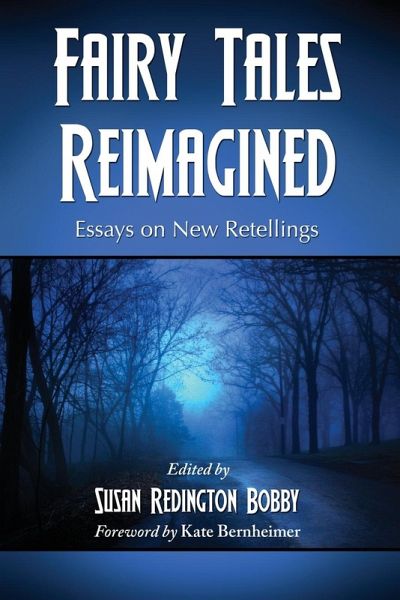
Although readers and filmgoers are strongly familiar with Disney's sanitized child-centric fairy tales, they are quick to catch on to reworkings of classic tales into a contemporary context. The rise is such retellings seems to indicate that readers are hungry for a new narrative, one that hearkens back to the old yet moves the storyline forward to reflect conditions of the modern world. No mere escapist fantasies, the reimagined fairy tales of the late 20th and early 21st centuries reflect social, political and cultural truths. Sixteen essays consider fairy tales recreated through short…mehr
Although readers and filmgoers are strongly familiar with Disney's sanitized child-centric fairy tales, they are quick to catch on to reworkings of classic tales into a contemporary context. The rise is such retellings seems to indicate that readers are hungry for a new narrative, one that hearkens back to the old yet moves the storyline forward to reflect conditions of the modern world. No mere escapist fantasies, the reimagined fairy tales of the late 20th and early 21st centuries reflect social, political and cultural truths. Sixteen essays consider fairy tales recreated through short stories, novels, poetry, and the graphic novel from both best-selling and lesser-known writers, applying a variety of perspectives, including postmodernism, psychoanalysis, Marxism, feminism, queer theory and gender studies. Along with the classic fairy tales, fiction from writers such as Neil Gaiman (Stardust) and Gregory Macquire (Wicked) is covered.
Susan Redington Bobby is an associate professor of English at Wesley College. She is the editor of Fairy Tales Reimagined: Essays on New Retellings (McFarland, 2009), the author of Beyond His Dark Materials: Innocence and Experience in the Fiction of Philip Pullman (McFarland 2012), and the author of a critical essay in the His Dark Materials Casebook (Palgrave 2014).
Inhaltsangabe
Table of Contents Acknowledgments Foreword: The Affect of Fairy Tales KATE BERNHEIMER Introduction: Authentic Voices in Contemporary Fairy Tales SUSAN REDINGTON BOBBY Redefining Gender and Sexuality Queering the Fairy Tale Canon: Emma Donoghue's Kissing the Witch MARTINE HENNARD DUTHEIL DE LA ROCHÈRE Contemporary Women Poets and the Fairy Tale CHRISTA MASTRANGELO JOYCE Struggling Sisters and Failing Spells: Re-engendering Fairy Tale Heroism in Peg Kerr's The Wild Swans BETHANY JOY BEAR Found Girls: J.M. Barrie's Peter & Wendy and Jane Yolen's "Lost Girls" JOANNE CAMPBELL TIDWELL Inventions and Transformations: Imagining New Worlds in the Stories of Neil Gaiman MATHILDA SLABBERT Rewriting Narrative Forms "And the Princess, Telling the Story": A.S. Byatt's Self-Reflexive Fairy Stories JEFFREY K. GIBSON Between Wake and Sleep: Robert Coover's Briar Rose, A Playful Reawakening of The Sleeping Beauty MARIE C. BOUCHET Winterson's Wonderland: The PowerBook as a Postmodern Re-Vision of Lewis Carroll's Alice Books MAUREEN TORPEY "I Think You Are Not Telling Me All of This Story": Storytelling, Fate, and Self-Determination in Robin McKinley's Folktale Revisions AMIE A. DOUGHTY Remembering Trauma and Dystopia The Complete Tales of Kate Bernheimer: Postmodern Fairytales in a Dystopian World HELEN PILINOVSKY The Fairy Tale as Allegory for the Holocaust: Representing the Unrepresentable in Yolen's Briar Rose and Murphy's Hansel and Gretel MARGARETE J. LANDWEHR "This Gospel of My Hell": The Narration of Violence in Gaétan Soucy's The Little Girl Who Was Too Fond of Matches LAUREN CHOPLIN Revolutionizing Culture and Politics Negotiating Wartime Masculinity in Bill Willingham's Fables MARK C. HILL Philip Pullman's I Was a Rat! and the Fairy-Tale Retelling as Instrument of Social Criticism VANESSA JOOSEN The Wicked Witch of the West: Terrorist? Rewriting Evil in Gregory Maguire's Wicked CHRISTOPHER ROMAN Embracing Equality: Class Reversals and Social Reform in Shannon Hale's The Goose Girl and Princess Academy SUSAN REDINGTON BOBBY Comprehensive Bibliography About the Contributors Index
Table of Contents Acknowledgments Foreword: The Affect of Fairy Tales KATE BERNHEIMER Introduction: Authentic Voices in Contemporary Fairy Tales SUSAN REDINGTON BOBBY Redefining Gender and Sexuality Queering the Fairy Tale Canon: Emma Donoghue's Kissing the Witch MARTINE HENNARD DUTHEIL DE LA ROCHÈRE Contemporary Women Poets and the Fairy Tale CHRISTA MASTRANGELO JOYCE Struggling Sisters and Failing Spells: Re-engendering Fairy Tale Heroism in Peg Kerr's The Wild Swans BETHANY JOY BEAR Found Girls: J.M. Barrie's Peter & Wendy and Jane Yolen's "Lost Girls" JOANNE CAMPBELL TIDWELL Inventions and Transformations: Imagining New Worlds in the Stories of Neil Gaiman MATHILDA SLABBERT Rewriting Narrative Forms "And the Princess, Telling the Story": A.S. Byatt's Self-Reflexive Fairy Stories JEFFREY K. GIBSON Between Wake and Sleep: Robert Coover's Briar Rose, A Playful Reawakening of The Sleeping Beauty MARIE C. BOUCHET Winterson's Wonderland: The PowerBook as a Postmodern Re-Vision of Lewis Carroll's Alice Books MAUREEN TORPEY "I Think You Are Not Telling Me All of This Story": Storytelling, Fate, and Self-Determination in Robin McKinley's Folktale Revisions AMIE A. DOUGHTY Remembering Trauma and Dystopia The Complete Tales of Kate Bernheimer: Postmodern Fairytales in a Dystopian World HELEN PILINOVSKY The Fairy Tale as Allegory for the Holocaust: Representing the Unrepresentable in Yolen's Briar Rose and Murphy's Hansel and Gretel MARGARETE J. LANDWEHR "This Gospel of My Hell": The Narration of Violence in Gaétan Soucy's The Little Girl Who Was Too Fond of Matches LAUREN CHOPLIN Revolutionizing Culture and Politics Negotiating Wartime Masculinity in Bill Willingham's Fables MARK C. HILL Philip Pullman's I Was a Rat! and the Fairy-Tale Retelling as Instrument of Social Criticism VANESSA JOOSEN The Wicked Witch of the West: Terrorist? Rewriting Evil in Gregory Maguire's Wicked CHRISTOPHER ROMAN Embracing Equality: Class Reversals and Social Reform in Shannon Hale's The Goose Girl and Princess Academy SUSAN REDINGTON BOBBY Comprehensive Bibliography About the Contributors Index
Es gelten unsere Allgemeinen Geschäftsbedingungen: www.buecher.de/agb
Impressum
www.buecher.de ist ein Internetauftritt der buecher.de internetstores GmbH
Geschäftsführung: Monica Sawhney | Roland Kölbl | Günter Hilger
Sitz der Gesellschaft: Batheyer Straße 115 - 117, 58099 Hagen
Postanschrift: Bürgermeister-Wegele-Str. 12, 86167 Augsburg
Amtsgericht Hagen HRB 13257
Steuernummer: 321/5800/1497
USt-IdNr: DE450055826