
Andere Kunden interessierten sich auch für
 Neuropsychological Rehabilitation of Childhood Brain Injury76,99 €
 People with Hyperactivity80,99 €
 Fixing Sex107,99 €
 Parenting a Child with Asperger Syndrome24,99 €
 Ministering Spiritually to Families38,99 €
 Psychotherapy for Families after Brain Injury121,99 €
 Autism and Its Medical Management53,99 €




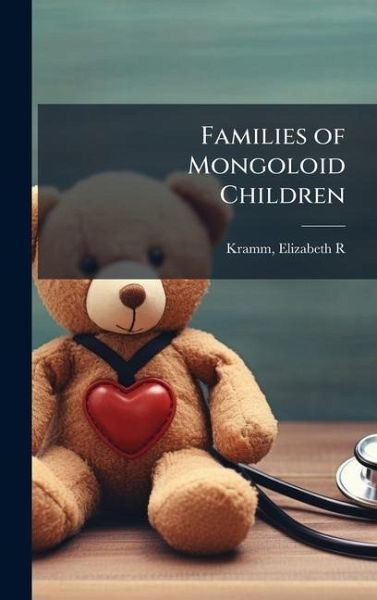
"Families of Mongoloid Children" offers a detailed exploration into the lives and experiences of families raising children with Down syndrome. Published in 1962, this study provides valuable insights into the challenges and joys faced by these families, reflecting the social and medical understanding of the time. Elizabeth R. Kramm's work sheds light on the support systems, coping mechanisms, and daily realities of families navigating the complexities of raising children with special needs. This book is a valuable resource for researchers, historians, and anyone interested in the evolution of societal attitudes towards developmental disabilities and family support. It serves as a historical document, capturing a specific moment in time and offering a unique perspective on the lives of these often-overlooked families. This work has been selected by scholars as being culturally important, and is part of the knowledge base of civilization as we know it. This work was reproduced from the original artifact, and remains as true to the original work as possible. Therefore, you will see the original copyright references, library stamps (as most of these works have been housed in our most important libraries around the world), and other notations in the work. This work is in the public domain in the United States of America, and possibly other nations. Within the United States, you may freely copy and distribute this work, as no entity (individual or corporate) has a copyright on the body of the work. As a reproduction of a historical artifact, this work may contain missing or blurred pages, poor pictures, errant marks, etc. Scholars believe, and we concur, that this work is important enough to be preserved, reproduced, and made generally available to the public. We appreciate your support of the preservation process, and thank you for being an important part of keeping this knowledge alive and relevant.