
Andere Kunden interessierten sich auch für
 The Recovery Tool Belt31,99 €
 Beyond Recovery18,99 €
 Unbroken Life29,99 €
 The Weight of Addiction19,99 €
 The Twelve Steps For Smartphone Addiction13,99 €
 Sober Covenants13,99 €
 The 10 Things You Need to Know About Sex Addiction20,99 €



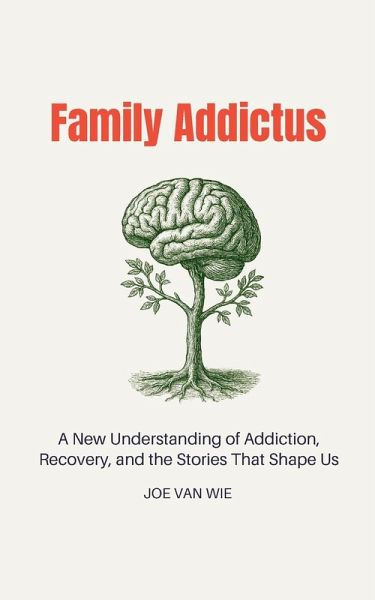
Addiction isn't a moral failing. It's an adaptation. In Family Addictus, Joe Van Wie, co-founder of Fellowship House treatment center, reveals how addiction is the brain's logical response to trauma, disconnection, and a culture that has forgotten how to sit with discomfort. Drawing from neuroscience, attachment theory, and years of clinical experience, Van Wie traces addiction back to its true origins: the first 1,000 days of life, where misattunement and early trauma create the conditions for substances to feel like missing pieces finally arriving. He explores how our brains develop coping strategies that can evolve into addiction when life becomes overwhelming. Van Wie explores how addiction spreads through family systems like inherited code, how modern culture's emphasis on productivity over presence creates perfect conditions for disconnection, and why traditional approaches often miss the deeper story. He examines the neurochemical feedback loops between dopamine, cortisol, and survival-mode thinking that make substances feel like solutions rather than problems. Recovery requires more than abstinence. Van Wie introduces the Twelve CORES framework developed at Fellowship House, which addresses the complete rewiring of a life: education, career, arts, family, friendship, health, adventure, altruism, agency, ethos, expertise, and individuality. These become invitations to rebuild identity, purpose, and belonging from the ground up. Recovery means returning to connection with our bodies, our families, our communities, and ourselves. It means learning to pause between stimulus and response, reclaiming the frontal lobe from survival mode, and remembering that healing happens in relationship, not isolation. The book explores how the prefrontal cortex can override the midbrain's emergency responses, how attachment patterns formed in infancy shape our capacity for trust and regulation, and how culture programs our brains like software. Van Wie shows how recovery becomes a kind of spiritual awakening, a remembering of who we are beneath the defenses and coping strategies. Written for anyone touched by addiction, Family Addictus offers a new lens for understanding one of our most misunderstood conditions. We are human beings who adapted to survive and are now ready to wake up.