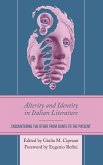
This volume explores the mysterious relationship between imagination and creatures-be they animals or hybrids- through the field of Italian literary history from its origins through the early modern period. Animals and fantastic beings have become transfer figures, charged with signifying and expressing symbolic moments and emotional states. Some of these creatures have achieved such fame that they have become true literary tropes. The essays gathered in this volume explore the allegorical, cultural, or philosophical significance that specific creatures have assumed in the works of some of the…mehr
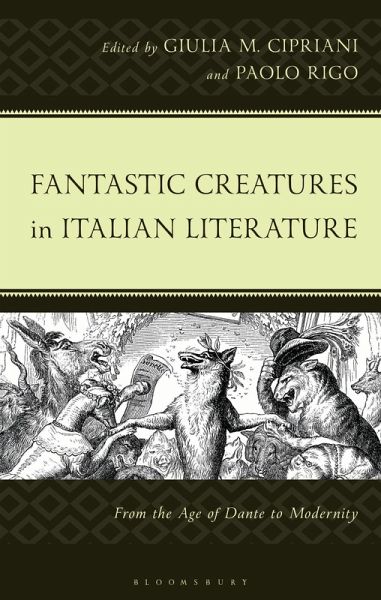
This volume explores the mysterious relationship between imagination and creatures-be they animals or hybrids- through the field of Italian literary history from its origins through the early modern period. Animals and fantastic beings have become transfer figures, charged with signifying and expressing symbolic moments and emotional states. Some of these creatures have achieved such fame that they have become true literary tropes. The essays gathered in this volume explore the allegorical, cultural, or philosophical significance that specific creatures have assumed in the works of some of the most important authors of the Italian premodern tradition, from Chiaro Davanzati, through Dante and Boccaccio, all the way to Leopardi. Though grounded in different genres and historical contexts, each essay reveals how the animal or demonic figure becomes a site of philosophical reflection.
Giulia M. Cipriani is Language Assistant in Italian at University College Dublin. Paolo Rigo is a researcher at Rome Tre University.
Inhaltsangabe
List of Figures About the Contributors Introduction Giulia M. Cipriani (University College Dublin, Ireland) andPaolo Rigo (Rome Tre University, Italy) 1. Chiaro Davanzati's Bestiary Sonnets Eduard Vilella (Autonoma University of Barcelona, Spain) 2. Cino and the Fantastic Beasts: The Antiliosa and the Others Paolo Rigo (Rome Tre University, Italy) 3. An Intercultural Journey of Dante's Phoenix in China: Symbolism, Transformation, and Translation Deng Yang (Jilin International Studies University, China) 4. Dante's Siren: Femmina, Serena, Strega George Rayson (University College Cork, Ireland) 5. Fantastic Traces Within the Decameron's Bestiary Serena Mauriello (University of Rome, La Sapienza, Italy) 6. Between Horror and Humor: The Demonic Body in Pulci and Boiardo Giulia M. Cipriani (University College Dublin, Ireland) 7. Shape-shifters: Animal Metamorphoses in Boiardo's Orlando Innamorato Anna Carocci (Rome Tre University, Italy) 8. The Myth of Medusa's Petrification and the Danger of Oblivion: Literary Reflections from Dante to Giordano Bruno Eleonora Buonocore (University of Calgary, Alberta, Canada) 9. The Terrible Tarantula and Its Venom: Two Literary Interpretations from the Baroque Era Silvia Argurio (Link Campus University, Italy) 10. The Rooster between Earth and Sky: Giacomo Leopardi's Cantico del gallo silvestre Dario Marcucci (City University of New York, USA)
Es gelten unsere Allgemeinen Geschäftsbedingungen: www.buecher.de/agb
Impressum
www.buecher.de ist ein Internetauftritt der buecher.de internetstores GmbH
Geschäftsführung: Monica Sawhney | Roland Kölbl | Günter Hilger
Sitz der Gesellschaft: Batheyer Straße 115 - 117, 58099 Hagen
Postanschrift: Bürgermeister-Wegele-Str. 12, 86167 Augsburg
Amtsgericht Hagen HRB 13257
Steuernummer: 321/5800/1497
USt-IdNr: DE450055826