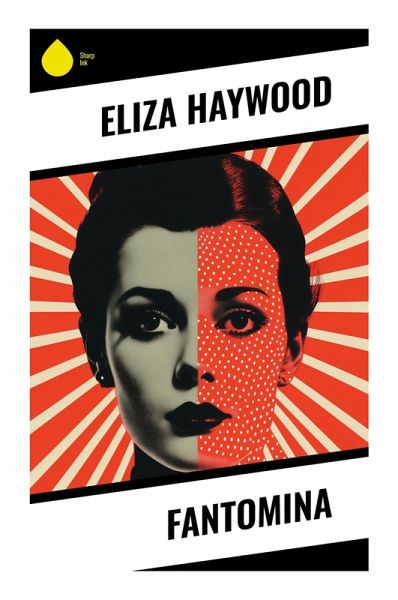
Eliza Haywood's "Fantomina" is a pioneering work of early 18th-century literature that intricately explores themes of female identity and sexual agency through its captivating narrative. The novella tells the story of a young woman who adopts multiple personas to seduce a man, allowing Haywood to address the complexities of gender and power dynamics within a patriarchal society. The prose is marked by its wit and psychological insight, reflecting the evolving literary context of the time, particularly the rise of sentimental fiction and concerns regarding women's roles in society. Haywood, an…mehr
Eliza Haywood's "Fantomina" is a pioneering work of early 18th-century literature that intricately explores themes of female identity and sexual agency through its captivating narrative. The novella tells the story of a young woman who adopts multiple personas to seduce a man, allowing Haywood to address the complexities of gender and power dynamics within a patriarchal society. The prose is marked by its wit and psychological insight, reflecting the evolving literary context of the time, particularly the rise of sentimental fiction and concerns regarding women's roles in society. Haywood, an influential figure in the development of the novel, was a writer and playwright who faced the constraints imposed on women in her era. Her firsthand experiences of the social limitations placed upon women may have significantly influenced her portrayal of female empowerment and subversion in "Fantomina." Despite the challenges she encountered in her career, Haywood's works often urged readers to reconsider societal norms, ultimately contributing to the feminist discourse in literature. I highly recommend "Fantomina" to readers interested in early feminist literature, as it challenges conventions and invites reflection on personal autonomy and societal expectations. Haywood's skillful narrative and innovative characterizations make this novella not only an engaging read but also a crucial text for understanding the evolution of women's literature.
Die Herstellerinformationen sind derzeit nicht verfügbar.
Autorenporträt
Eliza Haywood (1693-1756) was an English novelist, poet, playwright, actress, and publisher. Notoriously private, Haywood is a major figure in English literature about whom little is known for certain. Scholars believe she was born Eliza Fowler in Shropshire or London, but are unclear on the socioeconomic status of her family. She first appears in the public record in 1715, when she performed in an adaptation of Shakespeare's Timon of Athens in Dublin. Famously portrayed as a woman of ill-repute in Alexander Pope's Dunciad (1743), it is believed that Haywood had been deserted by her husband to raise their children alone. Pope's account is likely to have come from poet Richard Savage, with whom Haywood was friends for several years beginning in 1719 before their falling out. This period coincided with the publication of Love in Excess (1719-1720), Haywood's first and best-known novel. Alongside Delarivier Manley and Aphra Behn, Haywood was considered one of the leading romance writers of her time. Haywood's novels, such as Idalia; or The Unfortunate Mistress (1723) and The Distress'd Orphan; or Love in a Madhouse (1726), often explore the domination and oppression of women by men. The History of Miss Betsy Thoughtless (1751), one of Haywood's final novels, is a powerful story of a woman who leaves her abusive husband, experiences independence, and is pressured to marry once more. Highly regarded by feminist scholars today, Haywood was a prolific writer who revolutionized the English novel while raising a family, running a pamphlet shop in Covent Gardens, and pursuing a career as an actress and writer for some of London's most prominent theaters.
Es gelten unsere Allgemeinen Geschäftsbedingungen: www.buecher.de/agb
Impressum
www.buecher.de ist ein Internetauftritt der buecher.de internetstores GmbH
Geschäftsführung: Monica Sawhney | Roland Kölbl | Günter Hilger
Sitz der Gesellschaft: Batheyer Straße 115 - 117, 58099 Hagen
Postanschrift: Bürgermeister-Wegele-Str. 12, 86167 Augsburg
Amtsgericht Hagen HRB 13257
Steuernummer: 321/5800/1497
USt-IdNr: DE450055826