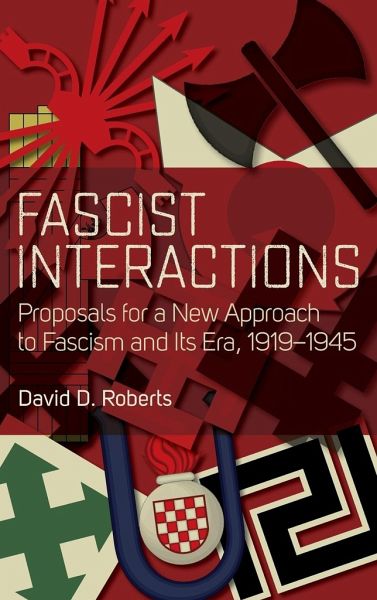
Differentiates and explores various modes of interaction—between fascists and conservatives in particular countries, between diverse fascist or quasi-fascist formations on the supranational level, between fascists and the liberal democracies, and between fascists and communists. Shows how fascism could have been at once substantive, sometimes offering innovative responses to genuine modern problems, and superficial, hollow—even ephemeral. Offers a new way of engaging the longstanding problem of whether fascism was confined to the era of the two world wars or remains an ongoing possibility.
David D. Roberts is Albert Berry Saye Professor of History, Emeritus, at the University of Georgia.
Inhaltsangabe
Preface PART I: PROBLEMS AND PROSPECTS Chapter 1. New Restiveness, New Possibilities, and Unfinished Business in Fascist Studies Chapter 2. Assessing the New Restiveness Chapter 3. Transnational Turn, Further Unfinished Business, and Some Preliminary Categories and Distinctions PART II: MODES OF EPOCHAL INTERACTION Chapter 4. Internal Interaction: Fascists, Conservatives, and the Establishment Chapter 5. Supranational Interaction within the New Right Chapter 6. Interaction with the Liberal Democracies Chapter 7. Interaction across the Left-Right Divide and Uncertainty over "Totalitarianism" PART III: SOME TENTATIVE PRESCRIPTIONS Chapter 8. Categories for Us: Blurring and Rigor Chapter 9. Fascism as "Epochal" or Continuing Possibility? Chapter 10. The Epochal Aggregate Works Cited Index
Es gelten unsere Allgemeinen Geschäftsbedingungen: www.buecher.de/agb
Impressum
www.buecher.de ist ein Internetauftritt der buecher.de internetstores GmbH
Geschäftsführung: Monica Sawhney | Roland Kölbl | Günter Hilger
Sitz der Gesellschaft: Batheyer Straße 115 - 117, 58099 Hagen
Postanschrift: Bürgermeister-Wegele-Str. 12, 86167 Augsburg
Amtsgericht Hagen HRB 13257
Steuernummer: 321/5800/1497
USt-IdNr: DE450055826