
Andere Kunden interessierten sich auch für
 Fathers and Sons25,99 €
 Fathers and Sons12,99 €
") Fathers and Sons(Illustrated)22,99 €
Fathers and Sons(Illustrated)22,99 €") Fathers and Sons (Warbler Classics Annotated Edition)11,99 €
Fathers and Sons (Warbler Classics Annotated Edition)11,99 € (Laminated Hardback with Jacket)") Fathers and Sons (Collector's Edition) (Laminated Hardback with Jacket)37,99 €
Fathers and Sons (Collector's Edition) (Laminated Hardback with Jacket)37,99 €") Fathers and Sons (Deluxe Library Edition)30,99 €
Fathers and Sons (Deluxe Library Edition)30,99 € Fathers and Sons32,99 €
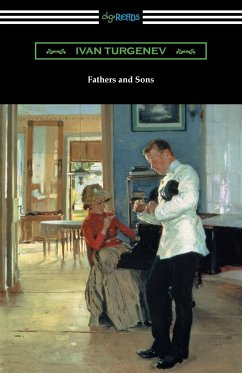
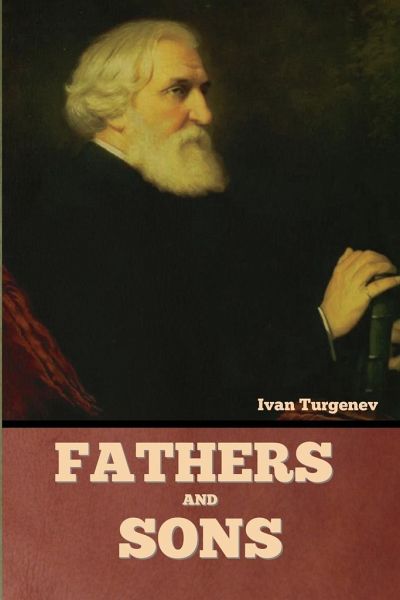
Fathers and Sons also translated more literally as Fathers and Children, is an 1862 novel by Ivan Turgenev, published in Moscow by Grachev & Co. It is one of the most acclaimed Russian novels of the 19th century. The fathers and children of the novel refers to the growing divide between the two generations of Russians, and the character Yevgeny Bazarov, a nihilist who rejects the old order. Turgenev wrote Fathers and Sons as a response to the growing cultural schism that he saw between liberals of the 1830s/1840s and the growing nihilist movement. Both the nihilists (the "sons") and the 1830s liberals (the "fathers") sought Western-based social change in Russia. Additionally, these two modes of thought were contrasted with the Slavophiles, who believed that Russia's path lay in its traditional spirituality. Turgenev's novel was responsible for popularizing the use of the term nihilism, which became widely used after the novel was published. Fathers and Sons might be regarded as the first wholly modern novel in Russian literature (Gogol's Dead Souls, another main contender, was referred to by the author as a poem or epic in prose as in the style of Dante's Divine Comedy, and was at any rate never completed). The novel introduces a dual character study, as seen with the gradual breakdown of Bazarov's and Arkady's nihilistic opposition to emotional display, especially in the case of Bazarov's love for Madame Odintsova. The novel is also the first Russian work to gain prominence in the Western world, eventually gaining the approval of well established novelists Gustave Flaubert, Guy de Maupassant, and Henry James. The Bolshevik revolutionary Vladimir Bazarov adopted his pseudonym from the character of Yevgeny Bazarov in this novel. (wikipedia.org)