Pradana Pradana Boy ZTF
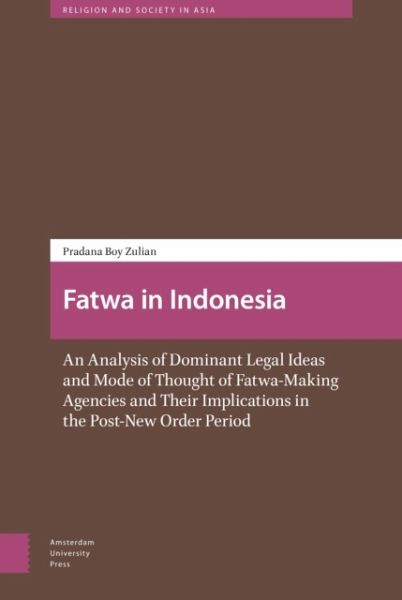
Fatwa in Indonesia
An Analysis of Dominant Legal Ideas and Mode of Thought of Fatwa-Making Agencies and Their Implications in the Post-New Order Period
Pradana Pradana Boy ZTF
Fatwa in Indonesia
An Analysis of Dominant Legal Ideas and Mode of Thought of Fatwa-Making Agencies and Their Implications in the Post-New Order Period
- Gebundenes Buch
- Merkliste
- Auf die Merkliste
- Bewerten Bewerten
- Teilen
- Produkt teilen
- Produkterinnerung
- Produkterinnerung
An exploration of fatwa in Indonesia during the period following the fall of President Suharto.
Andere Kunden interessierten sich auch für
Federico Lorenzo RamaioliIslamic State as a Legal Order45,99 €
Federico Lorenzo RamaioliIslamic State as a Legal Order138,99 €
AlfitriIslamic Law and Society in Indonesia154,99 €
AlfitriIslamic Law and Society in Indonesia45,99 €
Al KhanifReligious Minorities, Islam and the Law45,99 €
Romi Adetio SetiawanThe Future of Islamic Banking and Finance in Indonesia144,99 €
The Routledge Handbook of Islam and Gender52,99 €-
-
-
An exploration of fatwa in Indonesia during the period following the fall of President Suharto.
Produktdetails
- Produktdetails
- Religion and Society in Asia
- Verlag: Amsterdam University Press
- Seitenzahl: 318
- Erscheinungstermin: 27. November 2017
- Englisch
- Abmessung: 240mm x 161mm x 22mm
- Gewicht: 642g
- ISBN-13: 9789462981850
- ISBN-10: 946298185X
- Artikelnr.: 45677888
- Herstellerkennzeichnung
- Libri GmbH
- Europaallee 1
- 36244 Bad Hersfeld
- gpsr@libri.de
- Religion and Society in Asia
- Verlag: Amsterdam University Press
- Seitenzahl: 318
- Erscheinungstermin: 27. November 2017
- Englisch
- Abmessung: 240mm x 161mm x 22mm
- Gewicht: 642g
- ISBN-13: 9789462981850
- ISBN-10: 946298185X
- Artikelnr.: 45677888
- Herstellerkennzeichnung
- Libri GmbH
- Europaallee 1
- 36244 Bad Hersfeld
- gpsr@libri.de
Pradana Boy ZTF is a lecturer in Islamic Law, University of Muhammadiyah Malang, Indonesia. Trained as an Islamic legal scholar at Faculty of Islamic Studies, University of Muhammadiyah Malang. His master in contemporary Islamic thought and movements is obtained from Australian National University (2007). Ph.D in Islamic legal thought is completed at National University of Singapore (2015).
Summary, Notes on Transliteration, Chapter I: Introduction A. Background B.
Mode of Thought - Traditionalism - Revivalism - Reformism C. Significance
of the Study D. Methodology E. Thesis Structure Chapter II: Fatw? in
Islamic Legal Theory and Indonesian Legal System A. Introduction B. Fatw?
in Islamic Legal Theory C. Fatw? and the Indonesian Legal System D.
Conclusion Chapter III: Majelis Ulama Indonesia and Fatw? on Pluralism A.
Introduction B. Plurality of Islam and Religious Pluralism in Indonesia C.
MUI's Fatw? on Religious Pluralism D. Conclusion Chapter IV: The
Progressive Groups' Response A. Introduction B. Competing Religious Ideas
and Orientation C. On Diversity and Tolerance - The Problem of Semantic
Confusion - Challenging the Religious Authoritarians - Progressives and
Social Harmony - In Defense of Freedom of Thought D. Competing Ideas and
Mode of Thinking on Liberalism E. Progressives on Secularism in Indonesia
Chapter V: The Fatw? on Sectarianism and Its Social Implications: The Case
of Ahmadiyah And Shi'a A. Introduction B. Ahmadiyah and its Genesis in
Indonesia C. Fatw? on Ahmadiyah D. Shi'a in Indonesia E. Fatw? on Shi'a F.
Characte,ristics of the Mode of Thinking and Implications of Fatw? G.
Violence: The Case of Ahmadiyah H. Violence Against the Shi'a I. Closing
Chapter VI: Fatw? of Bahth al-Masail Nahdlatul Ulama' A. Introduction B. NU
and the Preservation of Traditionalism C. Factors Conditioning
Traditionalism - The Aswaja Doctrine - Attitude towards Tradition and
Mysticism - Taqlid and Islam Bermazhab D. Lajnah Bahth al-Mas?il and Its
Fatw? E. Conclusion Chapter VII: The Fatw? of Majelis Tarjih Muhammadiyah
A. Introduction B. The Foundation C. Muhammadiyah's Mode of Thought -
Muhammadiyah as Puritan - Muhammadiyah as Reform Movement - Competing
Orientation D. The Majelis Tarjih E. Fatwa and Social Changes in
Muhammadiyah F. Conclusion Chapter VIII: Conclusion, Bibliography,
Appendices.
Mode of Thought - Traditionalism - Revivalism - Reformism C. Significance
of the Study D. Methodology E. Thesis Structure Chapter II: Fatw? in
Islamic Legal Theory and Indonesian Legal System A. Introduction B. Fatw?
in Islamic Legal Theory C. Fatw? and the Indonesian Legal System D.
Conclusion Chapter III: Majelis Ulama Indonesia and Fatw? on Pluralism A.
Introduction B. Plurality of Islam and Religious Pluralism in Indonesia C.
MUI's Fatw? on Religious Pluralism D. Conclusion Chapter IV: The
Progressive Groups' Response A. Introduction B. Competing Religious Ideas
and Orientation C. On Diversity and Tolerance - The Problem of Semantic
Confusion - Challenging the Religious Authoritarians - Progressives and
Social Harmony - In Defense of Freedom of Thought D. Competing Ideas and
Mode of Thinking on Liberalism E. Progressives on Secularism in Indonesia
Chapter V: The Fatw? on Sectarianism and Its Social Implications: The Case
of Ahmadiyah And Shi'a A. Introduction B. Ahmadiyah and its Genesis in
Indonesia C. Fatw? on Ahmadiyah D. Shi'a in Indonesia E. Fatw? on Shi'a F.
Characte,ristics of the Mode of Thinking and Implications of Fatw? G.
Violence: The Case of Ahmadiyah H. Violence Against the Shi'a I. Closing
Chapter VI: Fatw? of Bahth al-Masail Nahdlatul Ulama' A. Introduction B. NU
and the Preservation of Traditionalism C. Factors Conditioning
Traditionalism - The Aswaja Doctrine - Attitude towards Tradition and
Mysticism - Taqlid and Islam Bermazhab D. Lajnah Bahth al-Mas?il and Its
Fatw? E. Conclusion Chapter VII: The Fatw? of Majelis Tarjih Muhammadiyah
A. Introduction B. The Foundation C. Muhammadiyah's Mode of Thought -
Muhammadiyah as Puritan - Muhammadiyah as Reform Movement - Competing
Orientation D. The Majelis Tarjih E. Fatwa and Social Changes in
Muhammadiyah F. Conclusion Chapter VIII: Conclusion, Bibliography,
Appendices.
Summary, Notes on Transliteration, Chapter I: Introduction A. Background B.
Mode of Thought - Traditionalism - Revivalism - Reformism C. Significance
of the Study D. Methodology E. Thesis Structure Chapter II: Fatw? in
Islamic Legal Theory and Indonesian Legal System A. Introduction B. Fatw?
in Islamic Legal Theory C. Fatw? and the Indonesian Legal System D.
Conclusion Chapter III: Majelis Ulama Indonesia and Fatw? on Pluralism A.
Introduction B. Plurality of Islam and Religious Pluralism in Indonesia C.
MUI's Fatw? on Religious Pluralism D. Conclusion Chapter IV: The
Progressive Groups' Response A. Introduction B. Competing Religious Ideas
and Orientation C. On Diversity and Tolerance - The Problem of Semantic
Confusion - Challenging the Religious Authoritarians - Progressives and
Social Harmony - In Defense of Freedom of Thought D. Competing Ideas and
Mode of Thinking on Liberalism E. Progressives on Secularism in Indonesia
Chapter V: The Fatw? on Sectarianism and Its Social Implications: The Case
of Ahmadiyah And Shi'a A. Introduction B. Ahmadiyah and its Genesis in
Indonesia C. Fatw? on Ahmadiyah D. Shi'a in Indonesia E. Fatw? on Shi'a F.
Characte,ristics of the Mode of Thinking and Implications of Fatw? G.
Violence: The Case of Ahmadiyah H. Violence Against the Shi'a I. Closing
Chapter VI: Fatw? of Bahth al-Masail Nahdlatul Ulama' A. Introduction B. NU
and the Preservation of Traditionalism C. Factors Conditioning
Traditionalism - The Aswaja Doctrine - Attitude towards Tradition and
Mysticism - Taqlid and Islam Bermazhab D. Lajnah Bahth al-Mas?il and Its
Fatw? E. Conclusion Chapter VII: The Fatw? of Majelis Tarjih Muhammadiyah
A. Introduction B. The Foundation C. Muhammadiyah's Mode of Thought -
Muhammadiyah as Puritan - Muhammadiyah as Reform Movement - Competing
Orientation D. The Majelis Tarjih E. Fatwa and Social Changes in
Muhammadiyah F. Conclusion Chapter VIII: Conclusion, Bibliography,
Appendices.
Mode of Thought - Traditionalism - Revivalism - Reformism C. Significance
of the Study D. Methodology E. Thesis Structure Chapter II: Fatw? in
Islamic Legal Theory and Indonesian Legal System A. Introduction B. Fatw?
in Islamic Legal Theory C. Fatw? and the Indonesian Legal System D.
Conclusion Chapter III: Majelis Ulama Indonesia and Fatw? on Pluralism A.
Introduction B. Plurality of Islam and Religious Pluralism in Indonesia C.
MUI's Fatw? on Religious Pluralism D. Conclusion Chapter IV: The
Progressive Groups' Response A. Introduction B. Competing Religious Ideas
and Orientation C. On Diversity and Tolerance - The Problem of Semantic
Confusion - Challenging the Religious Authoritarians - Progressives and
Social Harmony - In Defense of Freedom of Thought D. Competing Ideas and
Mode of Thinking on Liberalism E. Progressives on Secularism in Indonesia
Chapter V: The Fatw? on Sectarianism and Its Social Implications: The Case
of Ahmadiyah And Shi'a A. Introduction B. Ahmadiyah and its Genesis in
Indonesia C. Fatw? on Ahmadiyah D. Shi'a in Indonesia E. Fatw? on Shi'a F.
Characte,ristics of the Mode of Thinking and Implications of Fatw? G.
Violence: The Case of Ahmadiyah H. Violence Against the Shi'a I. Closing
Chapter VI: Fatw? of Bahth al-Masail Nahdlatul Ulama' A. Introduction B. NU
and the Preservation of Traditionalism C. Factors Conditioning
Traditionalism - The Aswaja Doctrine - Attitude towards Tradition and
Mysticism - Taqlid and Islam Bermazhab D. Lajnah Bahth al-Mas?il and Its
Fatw? E. Conclusion Chapter VII: The Fatw? of Majelis Tarjih Muhammadiyah
A. Introduction B. The Foundation C. Muhammadiyah's Mode of Thought -
Muhammadiyah as Puritan - Muhammadiyah as Reform Movement - Competing
Orientation D. The Majelis Tarjih E. Fatwa and Social Changes in
Muhammadiyah F. Conclusion Chapter VIII: Conclusion, Bibliography,
Appendices.