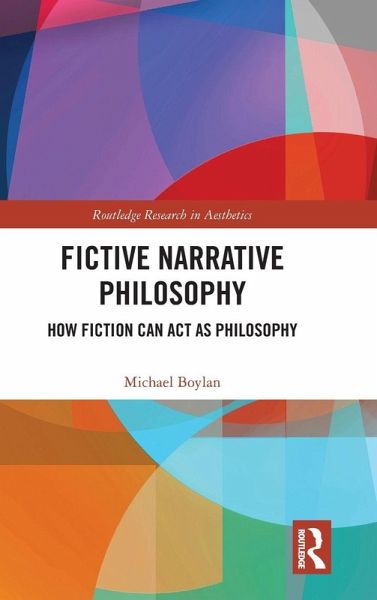
This book argues that some literary works indeed can make their own unique claims in different areas of philosophy, a method termed fictive narrative philosophy. It outlines detailed conceptions of fictive narrative philosophy, and brings this definition to bear on individual authors and works that can be considered prime examples of it.
This book argues that some literary works indeed can make their own unique claims in different areas of philosophy, a method termed fictive narrative philosophy. It outlines detailed conceptions of fictive narrative philosophy, and brings this definition to bear on individual authors and works that can be considered prime examples of it.
Michael Boylan is professor of philosophy at Marymount University. He is the author of 34 books and 138 essays covering literature, ethics/political philosophy, and ancient philosophy of science. He has been an invited lecturer at major universities in 14 countries on 5 continents. He as served on national advisory committees in the U.S.A. and has been a fellow at think tanks such as the Center for American Progress and the Brookings Institution.
Inhaltsangabe
Part I: The Structure of the Traditional Paradigm Chapter One: Narrative Fiction as Philosophically Interpreted in the Ancient Western World Chapter Two: Narrative Fiction as Philosophically Interpreted in the Modern and Contemporary Western World Part II: The Structure of the New Paradigm Chapter Three: What makes an Artifact Philosophy? Chapter Four: Literature as Philosophy Chapter Five: The Special Logic of Fictive Narrative Philosophy Chapter Six: Constructional Devices Chapter Seven: How do we Judge Fictive Narrative Philosophy? Chapter Eight: When Should we use Direct Discourse Philosophy and when Fictive Narrative Philosophy? Chapter Nine: How Might Fictive Narrative Philosophy Change the Academy? Appendix I: First Order Metaethical Principles: My own Philosophical Work on Ethics and Personhood Theory as a First Step for 'Ethics & Fictive Narrative Philosophy' Appendix II: My own work in Fictive Narrative Philosophy
Part I: The Structure of the Traditional Paradigm Chapter One: Narrative Fiction as Philosophically Interpreted in the Ancient Western World Chapter Two: Narrative Fiction as Philosophically Interpreted in the Modern and Contemporary Western World Part II: The Structure of the New Paradigm Chapter Three: What makes an Artifact Philosophy? Chapter Four: Literature as Philosophy Chapter Five: The Special Logic of Fictive Narrative Philosophy Chapter Six: Constructional Devices Chapter Seven: How do we Judge Fictive Narrative Philosophy? Chapter Eight: When Should we use Direct Discourse Philosophy and when Fictive Narrative Philosophy? Chapter Nine: How Might Fictive Narrative Philosophy Change the Academy? Appendix I: First Order Metaethical Principles: My own Philosophical Work on Ethics and Personhood Theory as a First Step for 'Ethics & Fictive Narrative Philosophy' Appendix II: My own work in Fictive Narrative Philosophy
Es gelten unsere Allgemeinen Geschäftsbedingungen: www.buecher.de/agb
Impressum
www.buecher.de ist ein Internetauftritt der buecher.de internetstores GmbH
Geschäftsführung: Monica Sawhney | Roland Kölbl | Günter Hilger
Sitz der Gesellschaft: Batheyer Straße 115 - 117, 58099 Hagen
Postanschrift: Bürgermeister-Wegele-Str. 12, 86167 Augsburg
Amtsgericht Hagen HRB 13257
Steuernummer: 321/5800/1497
USt-IdNr: DE450055826