Eric T. Ahrens is a professor of radiology at the University of California San Diego and the director of Stem Cell Molecular Imaging at the Sanford Consortium for Regenerative Medicine, California, USA. His research focuses on adapting non-invasive imaging methods to visualize specific cell populations in the body. He has pioneered MRI-based cell-tracking materials and methods that have been adopted by numerous investigators worldwide. Innovations by his laboratory include the synthesis of functionalized perfluorocarbon-based nanoemulsion probes for sensitive MRI, PET, and fluorescence detection. He led a team that developed a novel clinical perfluorocarbon 19F MRI cell-tracking agent and performed first-in-human studies to visualize the fate of cancer cell therapy grafts post-transfer. He has authored more than 100 scholarly publications in the fields of physics, chemistry, biology, and biomedicine and is an inventor on 12 patents. Ulrich Flögel is a professor for experimental cardiovascular imaging at the Department of Molecular Cardiology, Heinrich-Heine University of Düsseldorf, Germany. His research focuses on the interplay of function, energetics, metabolism, and inflammation as well as their role in the development of cardiovascular disease using innovative multinuclear MRI/MRS techniques, particularly 19F tracers. His efforts have established a broad molecular imaging platform that can track inflammatory and thrombotic processes with high specificity in parallel to metabolic and energetic alterations together with in-depth tissue microstructure characterizations.
Inhaltsangabe
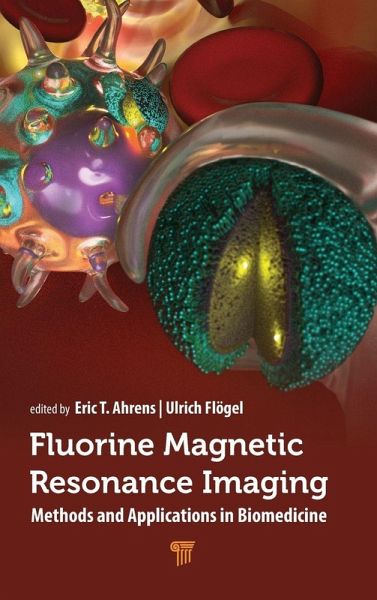
1. Polymeric 19F MRI Agents: Designing Responsive Imaging Agents 2. Nanofluorides: Inorganic Fluoride Nanocrystals for 19F MRI 3. Multibranched Superfluorinated Molecular Probes for 19F MRI 4. Development of Perfluorocarbon-Encapsulated Silica Nanoparticle as 19F MRI Tracer Agent 5. Perfluorocarbon Theranostic Nanoemulsions: From Imaging to Treatment of Inflammatory Diseases and Pain 6. Choosing and Optimizing a Pulse Sequence for Fluorine-19 MRI 7. 19F for Quantitative Tracking of Immune Cells Involved in Cancer Progression and Therapy 8. Noninvasive In Vivo Imaging of Neutrophil Trafficking by 19F MRI 9. 19F MRI to Map the Spatio-Temporal Infiltration of Immune Cells in Stroke and Tissue-Regeneration 10. Sensitivity and 19F MRI Cell Tracking
1. Polymeric 19F MRI Agents: Designing Responsive Imaging Agents 2. Nanofluorides: Inorganic Fluoride Nanocrystals for 19F MRI 3. Multibranched Superfluorinated Molecular Probes for 19F MRI 4. Development of Perfluorocarbon-Encapsulated Silica Nanoparticle as 19F MRI Tracer Agent 5. Perfluorocarbon Theranostic Nanoemulsions: From Imaging to Treatment of Inflammatory Diseases and Pain 6. Choosing and Optimizing a Pulse Sequence for Fluorine-19 MRI 7. 19F for Quantitative Tracking of Immune Cells Involved in Cancer Progression and Therapy 8. Noninvasive In Vivo Imaging of Neutrophil Trafficking by 19F MRI 9. 19F MRI to Map the Spatio-Temporal Infiltration of Immune Cells in Stroke and Tissue-Regeneration 10. Sensitivity and 19F MRI Cell Tracking
Es gelten unsere Allgemeinen Geschäftsbedingungen: www.buecher.de/agb
Impressum
www.buecher.de ist ein Internetauftritt der buecher.de internetstores GmbH
Geschäftsführung: Monica Sawhney | Roland Kölbl | Günter Hilger
Sitz der Gesellschaft: Batheyer Straße 115 - 117, 58099 Hagen
Postanschrift: Bürgermeister-Wegele-Str. 12, 86167 Augsburg
Amtsgericht Hagen HRB 13257
Steuernummer: 321/5800/1497
USt-IdNr: DE450055826