
Andere Kunden interessierten sich auch für
 Chemistry and Hygiene of Food Gases39,99 €
 Non-Intentionally Added Substances in PET-Bottled Mineral Water38,99 €
 Sicilian Street Foods and Chemistry38,99 €
 Quality Systems in the Food Industry42,99 €
 Soil and Water Conservation for Sustainable Food Production38,99 €
 Chemicals in the Food Industry46,99 €
 Food Traceability in Jordan38,99 €
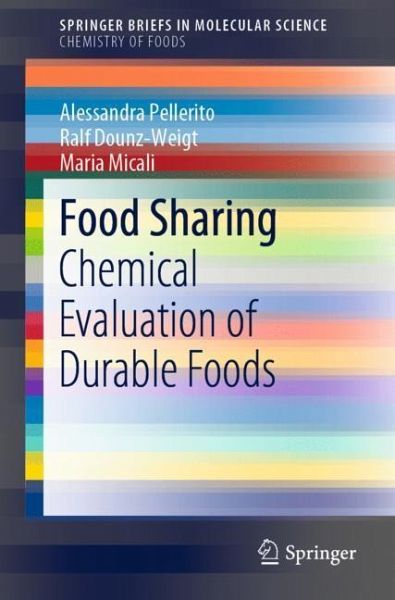
This book presents the concept of food sharing from a European perspective, and provides a concise analysis of its safety implications and the chemical properties of recovered foods.
In our modern world, 33% of the total food produced is lost each year, with serious economic, environmental and social consequences. Food worth approximately 1 trillion USD is wasted per year, and it is estimated that this wasted food could feed more than 3.4 billion people. Considering that 1/10 of the global population still does not have enough money for basic needs, and in view of the impact of consumer behaviour, food retailers and industry in food waste, food sharing appears to be an attractive solution, and several communities have recently been created with the main goal of saving food and giving it to those in need. Despite the positive impact of food sharing, it also raises concerns since recovered foods are subject to spoilage, decay and irreversible chemical-physical transformations.
In this book, the authors explore the current situation and the regulatory definition of food sharing in various European countries, presenting the German experience in the city of Magdeburg, where food-sharing networks have been implemented. They also discuss the chemical and safety evaluations of durable foods, and provide a simulation of food waste by comparing a food product with the same food produced with re-worked and still edible raw materials (recovered foods).
In our modern world, 33% of the total food produced is lost each year, with serious economic, environmental and social consequences. Food worth approximately 1 trillion USD is wasted per year, and it is estimated that this wasted food could feed more than 3.4 billion people. Considering that 1/10 of the global population still does not have enough money for basic needs, and in view of the impact of consumer behaviour, food retailers and industry in food waste, food sharing appears to be an attractive solution, and several communities have recently been created with the main goal of saving food and giving it to those in need. Despite the positive impact of food sharing, it also raises concerns since recovered foods are subject to spoilage, decay and irreversible chemical-physical transformations.
In this book, the authors explore the current situation and the regulatory definition of food sharing in various European countries, presenting the German experience in the city of Magdeburg, where food-sharing networks have been implemented. They also discuss the chemical and safety evaluations of durable foods, and provide a simulation of food waste by comparing a food product with the same food produced with re-worked and still edible raw materials (recovered foods).