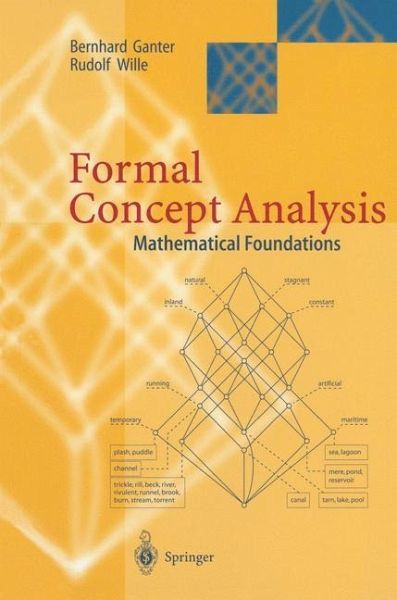
Dieses Lehrbuch zur Formalen Begriffsanalyse gibt eine systematische Darstellung der mathematischen Grundlagen und ihrer Verbindung zu Anwendungen in der Informatik, insbesondere in der Datenanalyse und Wissensverarbeitung. Das Buch vermittelt vor allem Methoden der graphischen Darstellung von Begriffssystemen, die sich in der Wissenskommunikation bestens bewährt haben. Theorie und graphische Darstellung werden dabei eng miteinander verknüpft. Die mathematischen Grundlagen werden vollständig abgehandelt und durch zahlreiche Beispiele anschaulich gemacht. Da zur Wissensverarbeitung immer…mehr
Dieses Lehrbuch zur Formalen Begriffsanalyse gibt eine systematische Darstellung der mathematischen Grundlagen und ihrer Verbindung zu Anwendungen in der Informatik, insbesondere in der Datenanalyse und Wissensverarbeitung. Das Buch vermittelt vor allem Methoden der graphischen Darstellung von Begriffssystemen, die sich in der Wissenskommunikation bestens bewährt haben. Theorie und graphische Darstellung werden dabei eng miteinander verknüpft. Die mathematischen Grundlagen werden vollständig abgehandelt und durch zahlreiche Beispiele anschaulich gemacht. Da zur Wissensverarbeitung immer stärker der Computer genutzt wird, gewinnen formale Methoden begrifflicher Analyse überall an Bedeutung. Das Buch macht die dafür grundlegende Theorie in kompakter Form zugänglich.
0. Order-theoretic Foundations.- 0.1 Ordered Sets.- 0.2 Complete Lattices.- 0.3 Closure Operators.- 0.4 Galois Connections.- 0.5 Hints and References.- 1. Concept Lattices of Contexts.- 1.1 Context and Concept.- 1.2 Context and Concept Lattice.- 1.3 Many-valued Contexts.- 1.4 Context Constructions and Standard Scales.- 1.5 Hints and References.- 2. Determination and Representation.- 2.1 All Concepts of a Context.- 2.2 Diagrams.- 2.3 Implications between Attributes.- 2.4 Dependencies between Attributes.- 2.5 Hints and References.- 3. Parts and Factors.- 3.1 Subcontexts.- 3.2 Complete Congruences.- 3.3 Closed Subrelations.- 3.4 Block Relations and Tolerances.- 3.5 Hints and References.- 4. Decompositions of Concept Lattices.- 4.1 Subdirect Decompositions.- 4.2 Atlas-decompositions.- 4.3 Substitution.- 4.4 Tensorial Decompositions.- 4.5 Hints and References.- 5. Constructions of Concept Lattices.- 5.1 Subdirect Product Constructions.- 5.2 Gluings.- 5.3 Local Doubling.- 5.4 Tensorial Constructions.- 5.5 Hints and References.- 6. Properties of Concept Lattices.- 6.1 Distributivity.- 6.2 Semimodularity and Modularity.- 6.3 Semidistributivity and Local Distributivity.- 6.4 Dimension.- 6.5 Hints and References.- 7. Context Comparison and Conceptual Measurability.- 7.1 Automorphisms of Contexts.- 7.2 Morphisms and Bonds.- 7.3 Scale Measures.- 7.4 Measurability Theorems.- 7.5 Hints and References.- References.
Preface to the first edition. Preface to the second edition. Acknowledgements. 0. Order theoretic foundations. 1. Concept lattices of formal contexts. 2. Determination and representation. 3. Parts, factors, and bonds. 4. Decompositions of concept lattices. 5. Constructions of concept lattices. 6. Properties of concept lattices. 7. Context comparison and conceptual measurability. 8. Contextual concept logic. References. Formal contexts and concept lattices in this book. Index.
0. Order-theoretic Foundations.- 0.1 Ordered Sets.- 0.2 Complete Lattices.- 0.3 Closure Operators.- 0.4 Galois Connections.- 0.5 Hints and References.- 1. Concept Lattices of Contexts.- 1.1 Context and Concept.- 1.2 Context and Concept Lattice.- 1.3 Many-valued Contexts.- 1.4 Context Constructions and Standard Scales.- 1.5 Hints and References.- 2. Determination and Representation.- 2.1 All Concepts of a Context.- 2.2 Diagrams.- 2.3 Implications between Attributes.- 2.4 Dependencies between Attributes.- 2.5 Hints and References.- 3. Parts and Factors.- 3.1 Subcontexts.- 3.2 Complete Congruences.- 3.3 Closed Subrelations.- 3.4 Block Relations and Tolerances.- 3.5 Hints and References.- 4. Decompositions of Concept Lattices.- 4.1 Subdirect Decompositions.- 4.2 Atlas-decompositions.- 4.3 Substitution.- 4.4 Tensorial Decompositions.- 4.5 Hints and References.- 5. Constructions of Concept Lattices.- 5.1 Subdirect Product Constructions.- 5.2 Gluings.- 5.3 Local Doubling.- 5.4 Tensorial Constructions.- 5.5 Hints and References.- 6. Properties of Concept Lattices.- 6.1 Distributivity.- 6.2 Semimodularity and Modularity.- 6.3 Semidistributivity and Local Distributivity.- 6.4 Dimension.- 6.5 Hints and References.- 7. Context Comparison and Conceptual Measurability.- 7.1 Automorphisms of Contexts.- 7.2 Morphisms and Bonds.- 7.3 Scale Measures.- 7.4 Measurability Theorems.- 7.5 Hints and References.- References.
Preface to the first edition. Preface to the second edition. Acknowledgements. 0. Order theoretic foundations. 1. Concept lattices of formal contexts. 2. Determination and representation. 3. Parts, factors, and bonds. 4. Decompositions of concept lattices. 5. Constructions of concept lattices. 6. Properties of concept lattices. 7. Context comparison and conceptual measurability. 8. Contextual concept logic. References. Formal contexts and concept lattices in this book. Index.
Es gelten unsere Allgemeinen Geschäftsbedingungen: www.buecher.de/agb
Impressum
www.buecher.de ist ein Internetauftritt der buecher.de internetstores GmbH
Geschäftsführung: Monica Sawhney | Roland Kölbl | Günter Hilger
Sitz der Gesellschaft: Batheyer Straße 115 - 117, 58099 Hagen
Postanschrift: Bürgermeister-Wegele-Str. 12, 86167 Augsburg
Amtsgericht Hagen HRB 13257
Steuernummer: 321/5800/1497
USt-IdNr: DE450055826