
Andere Kunden interessierten sich auch für
 Dwelling in the Age of Climate Change146,99 €
 The Force of Nonviolence18,99 €
 The Ethical Principle and Its Application in State Relations28,99 €
 Recognition Theory & Contemp French CB137,99 €
 Intervention, Terrorism, and Torture77,99 €
 The ethics of researching war24,99 €
 The Ethics of Researching War116,99 €





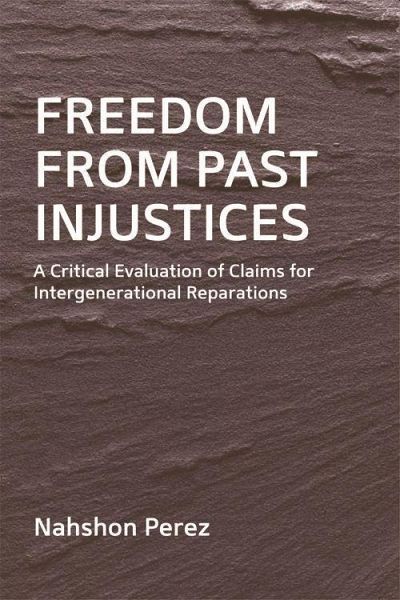
Should contemporary citizens provide material redress to right past wrongs? There is a widespread belief that contemporary citizens should take responsibility for rectifying past wrongs. Nahshon Perez challenges this view, questioning attempts to aggregate dead wrongdoers with living people, and examining ideas of intergenerational collective responsibility with great suspicion. He distinguishes sharply between those who are indeed unjustly enriched by past wrongs, and those who are not. Looking at issues such as the distinction between compensation and restitution, counterfactuals and the non-identity problem, Perez concludes that individuals have the right to a clean slate, and that almost all of the pro-intergenerational redress arguments are unconvincing. Key Features: * Unique in claiming past wrongs should not be rectified * Analyses pro-intergenerational material redress arguments * Case studies include court cases from Australia, Northern Cyprus, the United States and Austria