
Andere Kunden interessierten sich auch für
 Modeling Fracture Behavior in Precision Glass Molding39,00 €
 Precision Machining Process and Technology290,99 €
 The Failure Mechanisms of Coated Precision Glass Molding Tools39,00 €
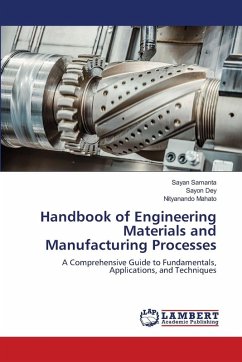
 Handbook of Engineering Materials and Manufacturing Processes29,99 €
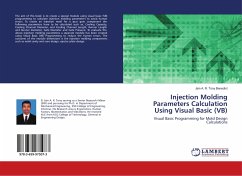
") Injection Molding Parameters Calculation Using Visual Basic (VB)27,99 €
Injection Molding Parameters Calculation Using Visual Basic (VB)27,99 € Precision Lens Molding of Glass: A Process Perspective83,99 €
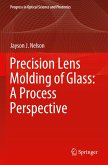
 Precision Lens Molding of Glass: A Process Perspective113,99 €
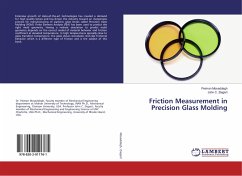
Extensive growth of state-of-the-art technologies has created a demand for high quality lenses and has driven the industry toward an inexpensive process for manufacturing of aspheric glass lenses called Precision Glass Molding (PGM). Finite Element Analysis (FEA) has been used to predict the right mold geometry. Having a realistic simulation to predict mold geometry depends on the correct model of material behavior and friction coefficient at elevated temperature. In high temperatures specially close to glass transition temperature, the glass shows viscoelastic stick-slip frictional behavior which is a different type of friction and is the subject of this book.