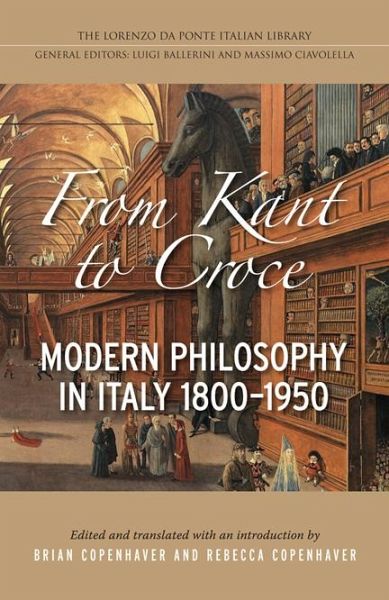
From around 1800, shortly before Pasquale Galluppi's first book, until 1950, just before Benedetto Croce died, the most formative influences on Italian philosophers were Kant and the post-Kantians, especially Hegel. In many ways, the Italian philosophers of this period lived in turbulent but creative times, from the Restoration to the Risorgimento and the rise and fall of Fascism. From Kant to Croce is a comprehensive, highly readable history of the main currents and major figures of modern Italian philosophy, described in a substantial introduction that details the development of the…mehr
From around 1800, shortly before Pasquale Galluppi's first book, until 1950, just before Benedetto Croce died, the most formative influences on Italian philosophers were Kant and the post-Kantians, especially Hegel. In many ways, the Italian philosophers of this period lived in turbulent but creative times, from the Restoration to the Risorgimento and the rise and fall of Fascism. From Kant to Croce is a comprehensive, highly readable history of the main currents and major figures of modern Italian philosophy, described in a substantial introduction that details the development of the discipline during this period. Brian P. Copenhaver and Rebecca Copenhaver provide the only up-to-date introduction in English to Italy's leading modern philosophers by translating and analysing rare and original texts and by chronicling the lives and times of the philosophers who wrote them. Thoroughly documented and highly readable, From Kant to Croce examines modern Italian philosophy from the perspective of contemporary analytic philosophy.
Brian P. Copenhaver is Distinguished Professor in the Department of Philosophy, the Udvar-Hazy Chair of Philosophy and History, and director of the Centre for Medieval and Renaissance Studies at the University of California, Los Angeles. Rebecca Copenhaver is an associate professor in the Department of Philosophy at Lewis and Clark College.
Inhaltsangabe
PART ONE: Introduction 1. A Strange History (Bobbio I) 2. Idealism and Sensism (Rosmini I) 3. Philosophies Imported and Contested (Galluppi I) 4. Experience and Ideology (Galluppi II) 5. Restoration and Reaction (Rosmini II) 6. The Mother Idea (Rosmini III) 7. Primacy (Gioberti I) 8. The Ideal Formula (Gioberti II) 9. A Natural Method (Mamiani) 10. Revolution and Recirculation (Spaventa) 11. Facts and Laws (Villari) 12. Real and Ideal (De Sanctis) 13. Resurgence (Fiorentino and Florenzi Waddington) 14. Matter and Idea (Labriola) 15. No Speculative Movement (Barzellotti) 16. A Revelation (Croce I) 17. History Under Art (Croce II) 18. What is Distinct? (Croce III) 19. What is Living? (Croce IV) 20. What is Dead? (Croce V) 21. Materialism (Gentile I) 22. Idealism (Gentile II) 23. Actualism (Gentile III) 24. Manifestos (Croce and Gentile) 25. Common Sense and Good Sense (Gramsci I) 26. The Religion of Liberty (Croce VI) 27. Philosophy in Prison (Gramsci II) 28. Still a Strange History (Bobbio II)
PART TWO: Translations 1. Galluppi, Elements 2. Rosmini, A Sketch 3. Gioberti, Primacy 4. Gioberti, The Ideal Formula 5. Mamiani, Renewal 6. Spaventa, Italian Philosophy 7. Villari, Positive Philosophy 8. De Sanctis, Realism 9. De Sanctis, The Ideal 10. Florenzi Waddington, Pantheism I 11. Florenzi Waddington, Pantheism II 12. Fiorentino, Vico and Kant 13. Fiorentino, Positivism 14. Labriola, Materialism 15. Croce, The Concept of Art 16. Croce, Logic 17. Croce, The Philosophy of Hegel 18. Gentile, Praxis 19. Gentile, Idealism 20. Gentile, The Act of Thinking 21. Gentile, Actual Idealism 22. Manifesto I 23. Manifesto II 24. Gramsci, Introduction to Philosophy 25. Croce, Liberty 26. Gramsci, Letters
PART ONE: Introduction 1. A Strange History (Bobbio I) 2. Idealism and Sensism (Rosmini I) 3. Philosophies Imported and Contested (Galluppi I) 4. Experience and Ideology (Galluppi II) 5. Restoration and Reaction (Rosmini II) 6. The Mother Idea (Rosmini III) 7. Primacy (Gioberti I) 8. The Ideal Formula (Gioberti II) 9. A Natural Method (Mamiani) 10. Revolution and Recirculation (Spaventa) 11. Facts and Laws (Villari) 12. Real and Ideal (De Sanctis) 13. Resurgence (Fiorentino and Florenzi Waddington) 14. Matter and Idea (Labriola) 15. No Speculative Movement (Barzellotti) 16. A Revelation (Croce I) 17. History Under Art (Croce II) 18. What is Distinct? (Croce III) 19. What is Living? (Croce IV) 20. What is Dead? (Croce V) 21. Materialism (Gentile I) 22. Idealism (Gentile II) 23. Actualism (Gentile III) 24. Manifestos (Croce and Gentile) 25. Common Sense and Good Sense (Gramsci I) 26. The Religion of Liberty (Croce VI) 27. Philosophy in Prison (Gramsci II) 28. Still a Strange History (Bobbio II)
PART TWO: Translations 1. Galluppi, Elements 2. Rosmini, A Sketch 3. Gioberti, Primacy 4. Gioberti, The Ideal Formula 5. Mamiani, Renewal 6. Spaventa, Italian Philosophy 7. Villari, Positive Philosophy 8. De Sanctis, Realism 9. De Sanctis, The Ideal 10. Florenzi Waddington, Pantheism I 11. Florenzi Waddington, Pantheism II 12. Fiorentino, Vico and Kant 13. Fiorentino, Positivism 14. Labriola, Materialism 15. Croce, The Concept of Art 16. Croce, Logic 17. Croce, The Philosophy of Hegel 18. Gentile, Praxis 19. Gentile, Idealism 20. Gentile, The Act of Thinking 21. Gentile, Actual Idealism 22. Manifesto I 23. Manifesto II 24. Gramsci, Introduction to Philosophy 25. Croce, Liberty 26. Gramsci, Letters
Es gelten unsere Allgemeinen Geschäftsbedingungen: www.buecher.de/agb
Impressum
www.buecher.de ist ein Internetauftritt der buecher.de internetstores GmbH
Geschäftsführung: Monica Sawhney | Roland Kölbl | Günter Hilger
Sitz der Gesellschaft: Batheyer Straße 115 - 117, 58099 Hagen
Postanschrift: Bürgermeister-Wegele-Str. 12, 86167 Augsburg
Amtsgericht Hagen HRB 13257
Steuernummer: 321/5800/1497
USt-IdNr: DE450055826