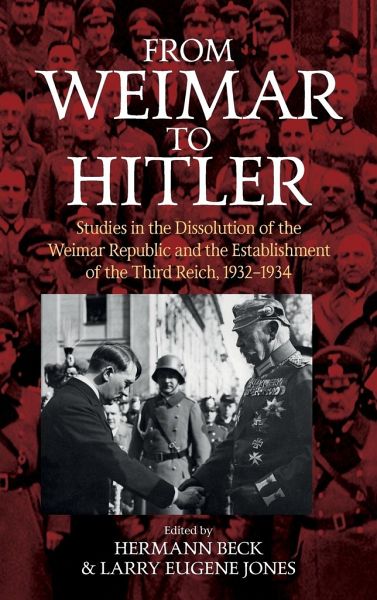
This is the first edited volume on the Nazi seizure of power that spans the entire period from the end of the Brüning chancellorship in the late spring of 1932 though the Nazi consolidation of power in the Röhm purge of June 30, 1934. The essays offer a multitude of different perspectives on the period from May 1932 to June 1934 and run the gamut from intellectual and cultural to social, economic, and political history. The essays are all based on extensive primary research in a wide range of public and private archives and present interpretations that are on the cutting edge of the most…mehr
This is the first edited volume on the Nazi seizure of power that spans the entire period from the end of the Brüning chancellorship in the late spring of 1932 though the Nazi consolidation of power in the Röhm purge of June 30, 1934. The essays offer a multitude of different perspectives on the period from May 1932 to June 1934 and run the gamut from intellectual and cultural to social, economic, and political history. The essays are all based on extensive primary research in a wide range of public and private archives and present interpretations that are on the cutting edge of the most recent research on the end of the Weimar Republic and the Nazi consolidation of power.
Larry Eugene Jones is Professor of Modern European History at Canisius College in Buffalo, New York. He is the author of German Liberalism and the Dissolution of the Weimar Party System, 1918-1933 (1988), and Hitler versus Hindenburg (2015).
Inhaltsangabe
List of Abbreviations Introduction: The Nazi Seizure of Power in Historical and Historiographical Perspective Hermann Beck and Larry Eugene Jones Chapter 1. Taming the Nazi Beast: Kurt von Schleicher and the End of the Weimar Republic Larry Eugene Jones Chapter 2. Ausnahmezustand, Staatsnotstandsplan, and Ermächtigungsgesetz: Reappraising Carl Schmitt's Political Constitutionalism and the Demise of Weimar Joseph W. Bendersky Chapter 3. Ludwig Kaas and the End of the German Center Party Martin Menke Chapter 4. The Nazi Seizure of Power in Bavaria and the Demise of the Bavarian People's Party Winfried Becker Chapter 5. German Big Business and the Nazi Revolution, 1933-34 Peter Hayes Chapter 6. Violence against 'Ostjuden' in the Spring of 1933 and the Reaction of German Authorities Hermann Beck Chapter 7. The SA in the Gleichschaltung: The Context of Power and Violence Bruce B. Campbell Chapter 8. Nationalist Socialism against National Socialism?: Perceptions of Nazism and Anti-Nazi Strategies in the Circle of the Neue Blätter für den Sozialismus, 1930-34 Stefan Vogt Chapter 9. Nationalism, Socialism, and Organized Labor's Response to the Dissolution of the Weimar Republic William L. Patch, Jr. Chapter 10. From Collegiality to the Führerprinzip: The 1933 Introduction of the Episcopacy in the Hamburg Landeskirche Rainer Hering Chapter 11. Friedrich von Bodelschwingh and the Protestant Appeasement of the Nazi Regime, 1933-34 Edward Snyder Chapter 12. In Search of Allies: Catholic Conservatives, the Alliance of Catholic Germans, and the Nazi Regime, 1933-34 Larry Eugene Jones and Kevin P. Spicer Chapter 13. German Youth between Euphoria and Resistance: Political Coercion and the Coordination of German Youth André Postert Chapter 14. "German Youth, Your Leader!": How National Socialism Entered Elementary Schools in 1933 Katharine Kennedy Conclusion: Reaffirming the Value of Political History Hermann Beck and Larry Eugene Jones Index
List of Abbreviations Introduction: The Nazi Seizure of Power in Historical and Historiographical Perspective Hermann Beck and Larry Eugene Jones Chapter 1. Taming the Nazi Beast: Kurt von Schleicher and the End of the Weimar Republic Larry Eugene Jones Chapter 2. Ausnahmezustand, Staatsnotstandsplan, and Ermächtigungsgesetz: Reappraising Carl Schmitt's Political Constitutionalism and the Demise of Weimar Joseph W. Bendersky Chapter 3. Ludwig Kaas and the End of the German Center Party Martin Menke Chapter 4. The Nazi Seizure of Power in Bavaria and the Demise of the Bavarian People's Party Winfried Becker Chapter 5. German Big Business and the Nazi Revolution, 1933-34 Peter Hayes Chapter 6. Violence against 'Ostjuden' in the Spring of 1933 and the Reaction of German Authorities Hermann Beck Chapter 7. The SA in the Gleichschaltung: The Context of Power and Violence Bruce B. Campbell Chapter 8. Nationalist Socialism against National Socialism?: Perceptions of Nazism and Anti-Nazi Strategies in the Circle of the Neue Blätter für den Sozialismus, 1930-34 Stefan Vogt Chapter 9. Nationalism, Socialism, and Organized Labor's Response to the Dissolution of the Weimar Republic William L. Patch, Jr. Chapter 10. From Collegiality to the Führerprinzip: The 1933 Introduction of the Episcopacy in the Hamburg Landeskirche Rainer Hering Chapter 11. Friedrich von Bodelschwingh and the Protestant Appeasement of the Nazi Regime, 1933-34 Edward Snyder Chapter 12. In Search of Allies: Catholic Conservatives, the Alliance of Catholic Germans, and the Nazi Regime, 1933-34 Larry Eugene Jones and Kevin P. Spicer Chapter 13. German Youth between Euphoria and Resistance: Political Coercion and the Coordination of German Youth André Postert Chapter 14. "German Youth, Your Leader!": How National Socialism Entered Elementary Schools in 1933 Katharine Kennedy Conclusion: Reaffirming the Value of Political History Hermann Beck and Larry Eugene Jones Index
Es gelten unsere Allgemeinen Geschäftsbedingungen: www.buecher.de/agb
Impressum
www.buecher.de ist ein Internetauftritt der buecher.de internetstores GmbH
Geschäftsführung: Monica Sawhney | Roland Kölbl | Günter Hilger
Sitz der Gesellschaft: Batheyer Straße 115 - 117, 58099 Hagen
Postanschrift: Bürgermeister-Wegele-Str. 12, 86167 Augsburg
Amtsgericht Hagen HRB 13257
Steuernummer: 321/5800/1497
USt-IdNr: DE450055826