
Andere Kunden interessierten sich auch für
 Practical and Scientific Fruit Culture26,99 €
![]() "Sunnyside" [microform]: a Magnificent Estate in the Kamloops District of British Columbia: Fruit Growing for Profit and Pleasure in the Midst14,99 €
"Sunnyside" [microform]: a Magnificent Estate in the Kamloops District of British Columbia: Fruit Growing for Profit and Pleasure in the Midst14,99 €![Fruit Farming in the Okanagan Valley, British Columbia [microform]]( "Fruit Farming in the Okanagan Valley, British Columbia [microform]") Fruit Farming in the Okanagan Valley, British Columbia [microform]14,99 €
Fruit Farming in the Okanagan Valley, British Columbia [microform]14,99 € How the Farm Pays: the Experiences of Forty Years of Successful Farming and Gardening24,99 €
 Citrus Fruits in California14,99 €
 The Land and the Labourers: Facts and Experiments in Cottage Farming and Co-operative Agriculture20,99 €
 Dry Farming in Western Canada24,99 €
![Fruit Farming in the Okanagan Valley, British Columbia [microform]](https://bilder.buecher.de/produkte/66/66148/66148578m.jpg "Fruit Farming in the Okanagan Valley, British Columbia [microform]")
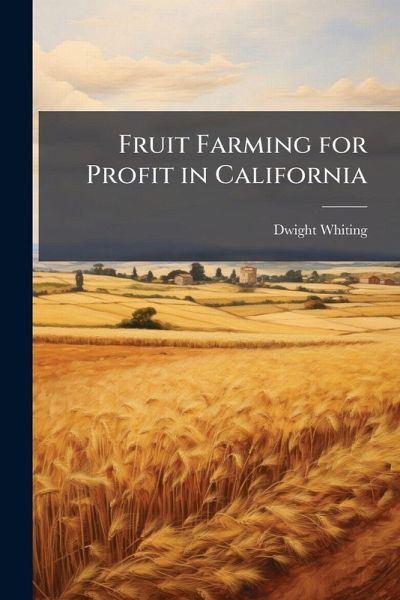
"Fruit Farming for Profit in California," penned by Dwight Whiting and originally published in 1893, offers a fascinating glimpse into the burgeoning fruit industry of late 19th-century California. This practical guide provides detailed insights into the cultivation, management, and marketing of various fruit crops, reflecting the agricultural practices and economic opportunities of the era. Whiting's work not only serves as a valuable historical record but also offers timeless wisdom on the principles of successful fruit farming. Readers will discover techniques for soil preparation, irrigation, pest control, and harvesting, all tailored to the unique climate and conditions of California. Whether you're a historian, agricultural enthusiast, or modern-day farmer, this book provides a unique perspective on the evolution of fruit farming and its enduring legacy in the Golden State. This work has been selected by scholars as being culturally important, and is part of the knowledge base of civilization as we know it. This work was reproduced from the original artifact, and remains as true to the original work as possible. Therefore, you will see the original copyright references, library stamps (as most of these works have been housed in our most important libraries around the world), and other notations in the work. This work is in the public domain in the United States of America, and possibly other nations. Within the United States, you may freely copy and distribute this work, as no entity (individual or corporate) has a copyright on the body of the work. As a reproduction of a historical artifact, this work may contain missing or blurred pages, poor pictures, errant marks, etc. Scholars believe, and we concur, that this work is important enough to be preserved, reproduced, and made generally available to the public. We appreciate your support of the preservation process, and thank you for being an important part of keeping this knowledge alive and relevant.