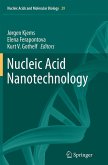
This book focuses on the development and applications of functional nucleic acid-based detection methods in the context of food safety. Offering a comprehensive overview of nucleic acids detection method in food safety for professionals and members of the public interested in this area, the book is divided into two parts. Part I addresses the basic principle of nucleic acid detection, while Part II presents novel applications of detection methods in genetically modified organisms, the identification of dead-alive microorganisms, microbial diversity, heavy metal detection, gene toxicity and…mehr
This book focuses on the development and applications of functional nucleic acid-based detection methods in the context of food safety. Offering a comprehensive overview of nucleic acids detection method in food safety for professionals and members of the public interested in this area, the book is divided into two parts. Part I addresses the basic principle of nucleic acid detection, while Part II presents novel applications of detection methods in genetically modified organisms, the identification of dead-alive microorganisms, microbial diversity, heavy metal detection, gene toxicity and non-coding RNA identification. As such, it provides readers a wealth of knowledge on the use of nucleic acids as targets and media in food safety. It offers a valuable resource for clinicians and basic scientists in the areas of food science and microbiology, and for all those who are interested in the concrete applications of molecular biological techniques.
Wentao Xu obtained his B.S. and Ph.D. degrees from China Agricultural University in 2001 and 2006. After his postdoctoral research at China Agricultural University, he Page 10 of 10 joined the faculty at China Agricultural University. He is now an associate professor in the Collage of Food Science and Nutritional Engineering at China Agricultural University. His research interest is functional nucleic acids biosensors, precise toxicological detection technology and food safety risk assessment.
Inhaltsangabe
1 Introduction: a brief guide to targets and strategies of functional nucleic acids detection in food safety.- 2 Adaptable methods to extract nucleic acid targets and evaluate quality.- 3 Basic rules in nucleic acids-mediated amplification and hybridization methods in food safety detection: a review.- 4 Reference materials: a golden criterion in nucleic acids identification.- 5 Reference gene: in-species universality versus between-species uniquity.- 6 PCR-based technologies for identifying unknown gene sequences.- 7 A developed accurate digital PCR detection technology in food safety.- 8 Development of accurate nucleic acids detection technology for target quantification.- 9 Recent progress in high-throughput detection technology for food safety.- 10 Detecting targets without thermal cycling in food: isothermal amplification and hybridization.- 11 Aptamers and their application.- 12 Lateral Flow Nucleic Acid Biosensors.- 13 Nucleic Acid Biosensors for food safety.- 14 Alternative PCR methods for detecting GM crops & food in agriculture and the food chain: a review.- 15 The identification and detection technology of research in microorganism include living or dead bacteria.- 16 Characterization of microbial diversity in food chain: a molecular review.- 17 Identification and assessment of heavy metal pollution using nucleic acid-mediated technologies.- 18Genotoxicity detection at the molecular level in food safety assessment: conventional methods and developments.- 19 A molecular review of the detection of specific nucleic acids by amplification and hybridization Characterization of microbial diversity in the food chain: a molecular review.
1 Introduction: a brief guide to targets and strategies of functional nucleic acids detection in food safety.- 2 Adaptable methods to extract nucleic acid targets and evaluate quality.- 3 Basic rules in nucleic acids-mediated amplification and hybridization methods in food safety detection: a review.- 4 Reference materials: a golden criterion in nucleic acids identification.- 5 Reference gene: in-species universality versus between-species uniquity.- 6 PCR-based technologies for identifying unknown gene sequences.- 7 A developed accurate digital PCR detection technology in food safety.- 8 Development of accurate nucleic acids detection technology for target quantification.- 9 Recent progress in high-throughput detection technology for food safety.- 10 Detecting targets without thermal cycling in food: isothermal amplification and hybridization.- 11 Aptamers and their application.- 12 Lateral Flow Nucleic Acid Biosensors.- 13 Nucleic Acid Biosensors for food safety.- 14 Alternative PCR methods for detecting GM crops & food in agriculture and the food chain: a review.- 15 The identification and detection technology of research in microorganism include living or dead bacteria.- 16 Characterization of microbial diversity in food chain: a molecular review.- 17 Identification and assessment of heavy metal pollution using nucleic acid-mediated technologies.- 18Genotoxicity detection at the molecular level in food safety assessment: conventional methods and developments.- 19 A molecular review of the detection of specific nucleic acids by amplification and hybridization Characterization of microbial diversity in the food chain: a molecular review.
Es gelten unsere Allgemeinen Geschäftsbedingungen: www.buecher.de/agb
Impressum
www.buecher.de ist ein Internetauftritt der buecher.de internetstores GmbH
Geschäftsführung: Monica Sawhney | Roland Kölbl | Günter Hilger
Sitz der Gesellschaft: Batheyer Straße 115 - 117, 58099 Hagen
Postanschrift: Bürgermeister-Wegele-Str. 12, 86167 Augsburg
Amtsgericht Hagen HRB 13257
Steuernummer: 321/5800/1497
USt-IdNr: DE450055826