
Andere Kunden interessierten sich auch für
 G. K. Chesterton43,99 €
 Poems By G. K. Chesterton32,99 €
 Poems by G. K. Chesterton42,99 €
 A Miscellany of Poems by G. K. Chesterton25,99 €
 The Wit, Whimsy, and Wisdom of G. K. Chesterton, Volume 426,99 €
 The Wit, Whimsy, and Wisdom of G. K. Chesterton, Volume 526,99 €
 Poems by G. K. Chesterton29,99 €
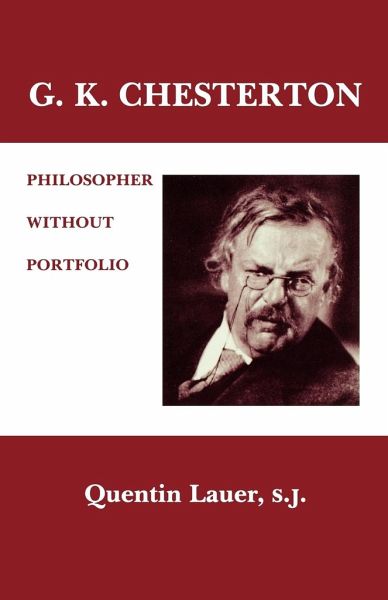
It is an indisputable fact that the credentials of Gilbert Keith Chesterton (1874-1936) were by no means those of a professional philosopher. He had no degree in the subject and he never attended a university. Nor was he widely or deeply read in the tradition of Western philosophy. He was, nonetheless, a truly philosophical thinker: convincing, persuasive, provocative, controversial. Despite all this, no one has, up to the present, devoted an entire book to the examination and analysis of his properly philosophical thinking and writing. This book attempts to range far and wide in the writings of Chesterton, perhaps even to betray him slightly by trying to systematize his thought. It is, however, not betraying Chesterton to claim that there is one central theme around which all his thinking and writing can be ordered: the theme of the grandeur of the reality of human, created in the image of God and participating in the beauty of divine creativity. His philosophy, if we want to characterize it in any one way, is a philosophy of life, of human living, with all that implies of rationality and freedom, of truth and paradox, of religion and morality, or faith and hope and love-in short, of all that makes human living spectacularly worthwhile.