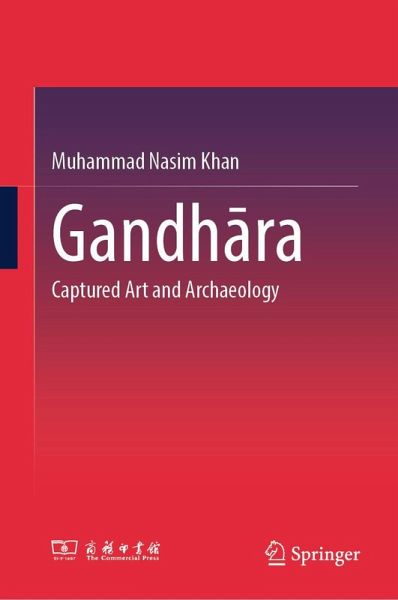
This book presents primarily firsthand information from some mysterious and unpublished archaeological sites excavated in the Swat Valley in the 1980s. In addition, new studies of Hindu and Buddhist sculptures, rock art, and ancient routes leading to and through Gandhara, as well as the analyses of epigraphic and numismatic evidence presented here, argue for a reconsideration of the established political, cultural, and religious history of Gandhara. The book also focuses on previously unknown discoveries, reviews selected research works, and critically reexamines some older finds by situating…mehr
This book presents primarily firsthand information from some mysterious and unpublished archaeological sites excavated in the Swat Valley in the 1980s. In addition, new studies of Hindu and Buddhist sculptures, rock art, and ancient routes leading to and through Gandhara, as well as the analyses of epigraphic and numismatic evidence presented here, argue for a reconsideration of the established political, cultural, and religious history of Gandhara. The book also focuses on previously unknown discoveries, reviews selected research works, and critically reexamines some older finds by situating and studying them in their respective archaeological and landscape contexts. The inclusion of archaeological data and their study in a broader geographical and cultural context is also the objective of this book. Furthermore, it studies the reasons for the mixing of cultures and the processes of compromise, particularly between Gandhara, Central Asia and China.
M. Nasim Khan is Professor at the World Arthistory Institute (WAI), Shanghai International Studies University, and his research focuses mainly on Gandh¿ran studies. He obtained his doctorate with distinction from Sorbonne University, Paris. Prior to joining WAI, he served as Director of the Institute of Archaeology and Anthropology at the University of Peshawar and at the Directorate of Archaeology and Museums of the Government of Khyber Pakhtunkhwa. He is also founder of the journal “Gandh¿ran Studies”. His published books include: Buddhist Paintings in Gandh¿ra (2000), Treasures from Kashmir Smast—The Earliest Shaiva Monastic Establishment (2006), Kharö¿h¿ Manuscripts from Gandh¿ra (2008), Coins from Kashmir Smast—New Numismatic Evidence (2008), The Sacred and the Secular—Investigating the Unique St¿pa and Settlement Site of Aziz Dheri (3 vols., 2012), and Kashmir Smast—The Earliest Seat of Hindu Learning (2 vols., 2018). In recognition of his outstanding achievements in education and research, he was awarded the Higher Education Commission’s Best University Teacher Award and one of the highest Pakistan National Civil Awards, the Tamgha-i-Imtiaz.
Inhaltsangabe
Gandhara.- Gandharan Art and Archaeology.- Excavation at Pataka Buddhist site in the Swat Valley - The site out of sight but not out of mind.- Excavation at Gumbatkai - The forgotten Buddhist site in the Swat Valley.- Excavation at Gilbanr Serai - A blurred image of the Buddhist period site in the Swat Valley.- Excavation at Charg Pa ai (Lower Dir) - Context, iconography and dating of the sculptures.- The Buddhist Site of Jinnan Wali Dheri (Taxila) Revisited.- Assassination Attempt on the Buddha at the Mount Gridhraku a. A relief panel from Peshawar Museum.- One theme, two sculptures and three possessions - Buddhist Relief panels from Gandhara representing Siddhartha going to school.- Study and acquisition history of the two Buddha's mages in the Pakistan Army Museum.- Before and after conservation - significance of a pectoral depicting the images of the Buddhas and Bodhisattvas.- Images, inscriptions and Visnuism - The story of the archaeological site of Hund.- Revisiting the two published Kharos hi inscriptions from Pir Manakrai site, Haripur-Hazara.- Sarada inscription of the Year.- Wima Takto one or two? Coin hoard recovered from the archaeological site of Aziz Dheri.- Dir Archaeology - Rock-Art Discoveries along the East-West Path.- The enigmatic Kharos hi rock inscriptions at Zulam, Panjkora Valley, Lower Dir District.- A note on Alexander's battle at Massaga in the country of Assakenoi, Lower Dir District.- The Rajas of Chitral (Ku-wei) - The Kings of the Three Eras7.- Rock art in Chilas Region- Upper Indus Valley - Northern Areas of Pakistan. When, Why and by Whom?.- Ancient routes to Gandhara across the Upper Indus, Northern Areas of Pakistan.- Gandhara-China Connection - Epigraphic, Numismatic and Iconographic evidence.
Gandhara.- Gandharan Art and Archaeology.- Excavation at Pataka Buddhist site in the Swat Valley - The site out of sight but not out of mind.- Excavation at Gumbatkai - The forgotten Buddhist site in the Swat Valley.- Excavation at Gilbanr Serai - A blurred image of the Buddhist period site in the Swat Valley.- Excavation at Charg Pa ai (Lower Dir) - Context, iconography and dating of the sculptures.- The Buddhist Site of Jinnan Wali Dheri (Taxila) Revisited.- Assassination Attempt on the Buddha at the Mount Gridhraku a. A relief panel from Peshawar Museum.- One theme, two sculptures and three possessions - Buddhist Relief panels from Gandhara representing Siddhartha going to school.- Study and acquisition history of the two Buddha's mages in the Pakistan Army Museum.- Before and after conservation - significance of a pectoral depicting the images of the Buddhas and Bodhisattvas.- Images, inscriptions and Visnuism - The story of the archaeological site of Hund.- Revisiting the two published Kharos hi inscriptions from Pir Manakrai site, Haripur-Hazara.- Sarada inscription of the Year.- Wima Takto one or two? Coin hoard recovered from the archaeological site of Aziz Dheri.- Dir Archaeology - Rock-Art Discoveries along the East-West Path.- The enigmatic Kharos hi rock inscriptions at Zulam, Panjkora Valley, Lower Dir District.- A note on Alexander's battle at Massaga in the country of Assakenoi, Lower Dir District.- The Rajas of Chitral (Ku-wei) - The Kings of the Three Eras7.- Rock art in Chilas Region- Upper Indus Valley - Northern Areas of Pakistan. When, Why and by Whom?.- Ancient routes to Gandhara across the Upper Indus, Northern Areas of Pakistan.- Gandhara-China Connection - Epigraphic, Numismatic and Iconographic evidence.
Es gelten unsere Allgemeinen Geschäftsbedingungen: www.buecher.de/agb
Impressum
www.buecher.de ist ein Internetauftritt der buecher.de internetstores GmbH
Geschäftsführung: Monica Sawhney | Roland Kölbl | Günter Hilger
Sitz der Gesellschaft: Batheyer Straße 115 - 117, 58099 Hagen
Postanschrift: Bürgermeister-Wegele-Str. 12, 86167 Augsburg
Amtsgericht Hagen HRB 13257
Steuernummer: 321/5800/1497
USt-IdNr: DE450055826