
Andere Kunden interessierten sich auch für
 European Union Foreign Policy and the Global Climate Regime70,50 €
 Perspektiven für Europa - eine neue Öffnung?- Perspectives of Europe - The New Opening?58,95 €
 Corruption as Power116,90 €
 The Institutional Dimension of the European Union's Area of Freedom, Security and Justice57,75 €
 Russian Politics36,55 €
 A New Right for Democracy and Development in Europe52,55 €
 The European Neighbourhood Policy's Challenges / Les défis de la politique européenne de voisinage63,35 €





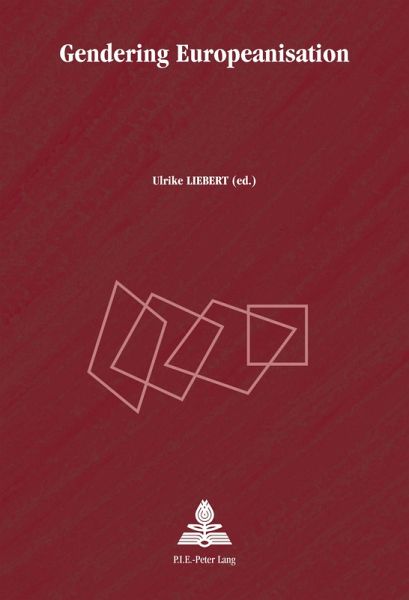
The advancement of European gender equality rights over the past three decades has been accompanied by a growing diversity of gender regimes in an enlarging EU. While the paradigms in European governance research tend to focus on homogenisation, enforcement and compliance with EU norms, comparative approaches to Europeanisation are premised on the awareness of a multiple Europe. This book explores gendered varieties of Europeanisation, ranging from resistance to adaptation, transformation and innovation. How have EU members engaged with EC equal-opportunity directives since 1975? Which gender issues have sparked political controversy? What were the outcomes of the interplays between EU norms and domestic gender regimes, public discourses on the EU and gender equality advocates?
Gendering Europeanisation presents the findings of an international group of social and political scientists based at the University of Bremen. The volume begins with a scrutiny of the mechanisms and forms of Europeanisation, presents case studies of six countries and concludes with a comparative analysis of gender politics in Europe.
Gendering Europeanisation presents the findings of an international group of social and political scientists based at the University of Bremen. The volume begins with a scrutiny of the mechanisms and forms of Europeanisation, presents case studies of six countries and concludes with a comparative analysis of gender politics in Europe.
«'Gendering Europeanisation' can be highly recommended - not to find general insights on European gender regimes but to abolish prejudices on this subject.» (Monika Mokre, Journal of European Integration History)
«Der von Liebert herausgegebene Forschungsbericht besticht...durch einen ausgeprägten Theorierahmen...und spannende Empirie. Es werden damit viele Anregungen für die Weiterentwicklung feministischer integrationstheoretischer Perspektiven geliefert. Der Band ist damit unbedingt für EU-Forscherinnen zu empfehlen wie auch für jene, die zur Gleichstellungspolitik in einer der untersuchten Mitgliedstaaten arbeiten.» (Gabriele Abels, femina politica)
«Der von Liebert herausgegebene Forschungsbericht besticht...durch einen ausgeprägten Theorierahmen...und spannende Empirie. Es werden damit viele Anregungen für die Weiterentwicklung feministischer integrationstheoretischer Perspektiven geliefert. Der Band ist damit unbedingt für EU-Forscherinnen zu empfehlen wie auch für jene, die zur Gleichstellungspolitik in einer der untersuchten Mitgliedstaaten arbeiten.» (Gabriele Abels, femina politica)