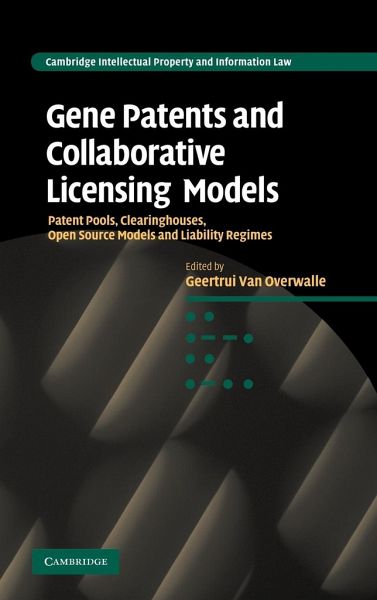
Gene Patents and Collaborative Licensing Models
Patent Pools, Clearinghouses, Open Source Models and Liability Regimes
Herausgeber: Overwalle, Geertrui van
Gene Patents and Collaborative Licensing Models
Patent Pools, Clearinghouses, Open Source Models and Liability Regimes
Herausgeber: Overwalle, Geertrui van
- Gebundenes Buch
- Merkliste
- Auf die Merkliste
- Bewerten Bewerten
- Teilen
- Produkt teilen
- Produkterinnerung
- Produkterinnerung
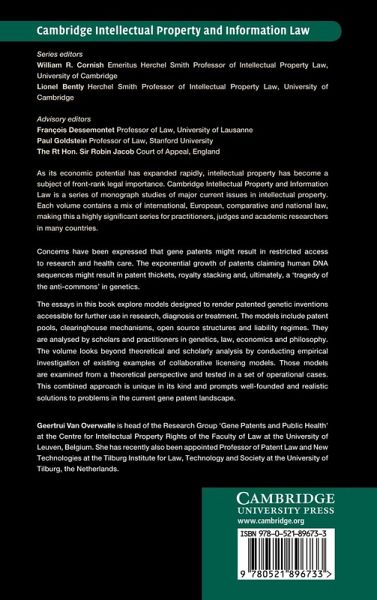
An examination of legal measures which might be used to solve the problem of fragmentation of patents in genetics.
Andere Kunden interessierten sich auch für
Jorge L. ContrerasIntellectual Property Licensing and Transactions108,99 €
Jorge L. ContrerasIntellectual Property Licensing and Transactions43,99 €
Sebastian Felix SchwemerLicensing and Access to Content in the European Union120,99 €
Philip LeithSoftware and Patents in Europe48,99 €
The Law and Governance of Decentralised Business Models53,99 €
Alexej MaxurowLicensing as a type of state activity39,99 €
The Law and Governance of Decentralised Business Models151,99 €-
-
-
An examination of legal measures which might be used to solve the problem of fragmentation of patents in genetics.
Produktdetails
- Produktdetails
- Verlag: Cambridge University Press
- Seitenzahl: 516
- Erscheinungstermin: 28. Juni 2012
- Englisch
- Abmessung: 235mm x 157mm x 32mm
- Gewicht: 890g
- ISBN-13: 9780521896733
- ISBN-10: 0521896738
- Artikelnr.: 26056643
- Herstellerkennzeichnung
- Libri GmbH
- Europaallee 1
- 36244 Bad Hersfeld
- gpsr@libri.de
- Verlag: Cambridge University Press
- Seitenzahl: 516
- Erscheinungstermin: 28. Juni 2012
- Englisch
- Abmessung: 235mm x 157mm x 32mm
- Gewicht: 890g
- ISBN-13: 9780521896733
- ISBN-10: 0521896738
- Artikelnr.: 26056643
- Herstellerkennzeichnung
- Libri GmbH
- Europaallee 1
- 36244 Bad Hersfeld
- gpsr@libri.de
Part I. Patent Pools: 1. Patent pooling for gene-based diagnostic testing:
conceptual framework Birgit Verbeure; 2. Case 1. The MPEG LA® licensing
model. What problem does it solve in biopharma and genetics? Lawrence A.
Horn; 3. Case 2. IP fragmentation and patent pools: the SARS case Carmen E.
Correa; 4. Critical analysis of patent pools Jorge A. Goldstein; Part II.
Clearing Houses: 5. Clearinghouse mechanisms in genetic diagnostics:
conceptual framework Esther van Zimmeren; 6. Case 3. The global
biodiversity information facility. An example of an information
clearinghouse James L. Edwards; 7. Case 4. BirchBob: an example of a
technology exchange clearing house Esther van Zimmeren and Dirk Avau; 8.
Case 5. The public intellectual property resource for agriculture. A
standard license public sector clearinghouse for agricultural IP Alan B.
Bennett and Sara Boettiger; 9. Case 6. The science commons material
transfer agreement project. A standard license clearing house? Thinh
Nguyen; 10. Case 7. The collective management of copyright and neighbouring
rights. An example of a royalty collection clearing house Jan Corbet; 11.
Comment on the conceptual framework for a clearing house mechanism Michael
Spence; Part III. Open Source: 12. Open source genetics: a conceptual
framework Janet Hope; 13. Case 8. CAMBIA's biological open source
initiative (BiOS) Nele Berthels; 14. Case 9. Diversity Arrays Technology
Pty Ltd.: applying the open source philosophy in agriculture Andrzej
Kilian; 15. Critical commentary on 'open source' in the life sciences Arti
K. Rai; 16. Several kinds of 'should': the ethics of open source in life
sciences innovation Antony Taubman; Part IV. Liability Regimes: 17.
Pathways across the valley of death: novel intellectual property strategies
for accelerated drug discovery Arti K. Rai, Jerome H. Reichman, Paul F.
Uhlir and Colin Crossman; 18. Case 10. The international treaty on plant
genetic resources for food and agriculture: the standard material transfer
agreement as implementation of a limited compensatory liability regime
Victoria Henson-Apollonio; 19. Critical analysis of property rules,
liability rules and molecular futures: bargaining in the shadow of the
cathedral Dan L. Burk; Part V. Different Perspectives: 20. Gene patents:
from discovery to invention. A geneticist's view Gert Matthijs and Gert-Jan
Van Ommen; 21. 'Patent Tsunami' in the field of genetic diagnostics. A
patent practitioner's view Jacques Warcoin; 22. Gene patents and clearing
models. Some comments from a competition law perspective Hanns Ullrich; 23.
Access to genetic patents and clearinghouse model. An economic perspective
Reiko Aoki; 24. The role of law, institutions and governance in
facilitating access to the scientific research commons. A philosopher's
perspective Tom Dedeurwaerdere; Part VI. Concluding Thoughts: 25. Of
thickets, blocks and gaps: designing tools to resolve obstacles in the gene
patents landscape Geertrui van Overwalle.
conceptual framework Birgit Verbeure; 2. Case 1. The MPEG LA® licensing
model. What problem does it solve in biopharma and genetics? Lawrence A.
Horn; 3. Case 2. IP fragmentation and patent pools: the SARS case Carmen E.
Correa; 4. Critical analysis of patent pools Jorge A. Goldstein; Part II.
Clearing Houses: 5. Clearinghouse mechanisms in genetic diagnostics:
conceptual framework Esther van Zimmeren; 6. Case 3. The global
biodiversity information facility. An example of an information
clearinghouse James L. Edwards; 7. Case 4. BirchBob: an example of a
technology exchange clearing house Esther van Zimmeren and Dirk Avau; 8.
Case 5. The public intellectual property resource for agriculture. A
standard license public sector clearinghouse for agricultural IP Alan B.
Bennett and Sara Boettiger; 9. Case 6. The science commons material
transfer agreement project. A standard license clearing house? Thinh
Nguyen; 10. Case 7. The collective management of copyright and neighbouring
rights. An example of a royalty collection clearing house Jan Corbet; 11.
Comment on the conceptual framework for a clearing house mechanism Michael
Spence; Part III. Open Source: 12. Open source genetics: a conceptual
framework Janet Hope; 13. Case 8. CAMBIA's biological open source
initiative (BiOS) Nele Berthels; 14. Case 9. Diversity Arrays Technology
Pty Ltd.: applying the open source philosophy in agriculture Andrzej
Kilian; 15. Critical commentary on 'open source' in the life sciences Arti
K. Rai; 16. Several kinds of 'should': the ethics of open source in life
sciences innovation Antony Taubman; Part IV. Liability Regimes: 17.
Pathways across the valley of death: novel intellectual property strategies
for accelerated drug discovery Arti K. Rai, Jerome H. Reichman, Paul F.
Uhlir and Colin Crossman; 18. Case 10. The international treaty on plant
genetic resources for food and agriculture: the standard material transfer
agreement as implementation of a limited compensatory liability regime
Victoria Henson-Apollonio; 19. Critical analysis of property rules,
liability rules and molecular futures: bargaining in the shadow of the
cathedral Dan L. Burk; Part V. Different Perspectives: 20. Gene patents:
from discovery to invention. A geneticist's view Gert Matthijs and Gert-Jan
Van Ommen; 21. 'Patent Tsunami' in the field of genetic diagnostics. A
patent practitioner's view Jacques Warcoin; 22. Gene patents and clearing
models. Some comments from a competition law perspective Hanns Ullrich; 23.
Access to genetic patents and clearinghouse model. An economic perspective
Reiko Aoki; 24. The role of law, institutions and governance in
facilitating access to the scientific research commons. A philosopher's
perspective Tom Dedeurwaerdere; Part VI. Concluding Thoughts: 25. Of
thickets, blocks and gaps: designing tools to resolve obstacles in the gene
patents landscape Geertrui van Overwalle.
Part I. Patent Pools: 1. Patent pooling for gene-based diagnostic testing:
conceptual framework Birgit Verbeure; 2. Case 1. The MPEG LA® licensing
model. What problem does it solve in biopharma and genetics? Lawrence A.
Horn; 3. Case 2. IP fragmentation and patent pools: the SARS case Carmen E.
Correa; 4. Critical analysis of patent pools Jorge A. Goldstein; Part II.
Clearing Houses: 5. Clearinghouse mechanisms in genetic diagnostics:
conceptual framework Esther van Zimmeren; 6. Case 3. The global
biodiversity information facility. An example of an information
clearinghouse James L. Edwards; 7. Case 4. BirchBob: an example of a
technology exchange clearing house Esther van Zimmeren and Dirk Avau; 8.
Case 5. The public intellectual property resource for agriculture. A
standard license public sector clearinghouse for agricultural IP Alan B.
Bennett and Sara Boettiger; 9. Case 6. The science commons material
transfer agreement project. A standard license clearing house? Thinh
Nguyen; 10. Case 7. The collective management of copyright and neighbouring
rights. An example of a royalty collection clearing house Jan Corbet; 11.
Comment on the conceptual framework for a clearing house mechanism Michael
Spence; Part III. Open Source: 12. Open source genetics: a conceptual
framework Janet Hope; 13. Case 8. CAMBIA's biological open source
initiative (BiOS) Nele Berthels; 14. Case 9. Diversity Arrays Technology
Pty Ltd.: applying the open source philosophy in agriculture Andrzej
Kilian; 15. Critical commentary on 'open source' in the life sciences Arti
K. Rai; 16. Several kinds of 'should': the ethics of open source in life
sciences innovation Antony Taubman; Part IV. Liability Regimes: 17.
Pathways across the valley of death: novel intellectual property strategies
for accelerated drug discovery Arti K. Rai, Jerome H. Reichman, Paul F.
Uhlir and Colin Crossman; 18. Case 10. The international treaty on plant
genetic resources for food and agriculture: the standard material transfer
agreement as implementation of a limited compensatory liability regime
Victoria Henson-Apollonio; 19. Critical analysis of property rules,
liability rules and molecular futures: bargaining in the shadow of the
cathedral Dan L. Burk; Part V. Different Perspectives: 20. Gene patents:
from discovery to invention. A geneticist's view Gert Matthijs and Gert-Jan
Van Ommen; 21. 'Patent Tsunami' in the field of genetic diagnostics. A
patent practitioner's view Jacques Warcoin; 22. Gene patents and clearing
models. Some comments from a competition law perspective Hanns Ullrich; 23.
Access to genetic patents and clearinghouse model. An economic perspective
Reiko Aoki; 24. The role of law, institutions and governance in
facilitating access to the scientific research commons. A philosopher's
perspective Tom Dedeurwaerdere; Part VI. Concluding Thoughts: 25. Of
thickets, blocks and gaps: designing tools to resolve obstacles in the gene
patents landscape Geertrui van Overwalle.
conceptual framework Birgit Verbeure; 2. Case 1. The MPEG LA® licensing
model. What problem does it solve in biopharma and genetics? Lawrence A.
Horn; 3. Case 2. IP fragmentation and patent pools: the SARS case Carmen E.
Correa; 4. Critical analysis of patent pools Jorge A. Goldstein; Part II.
Clearing Houses: 5. Clearinghouse mechanisms in genetic diagnostics:
conceptual framework Esther van Zimmeren; 6. Case 3. The global
biodiversity information facility. An example of an information
clearinghouse James L. Edwards; 7. Case 4. BirchBob: an example of a
technology exchange clearing house Esther van Zimmeren and Dirk Avau; 8.
Case 5. The public intellectual property resource for agriculture. A
standard license public sector clearinghouse for agricultural IP Alan B.
Bennett and Sara Boettiger; 9. Case 6. The science commons material
transfer agreement project. A standard license clearing house? Thinh
Nguyen; 10. Case 7. The collective management of copyright and neighbouring
rights. An example of a royalty collection clearing house Jan Corbet; 11.
Comment on the conceptual framework for a clearing house mechanism Michael
Spence; Part III. Open Source: 12. Open source genetics: a conceptual
framework Janet Hope; 13. Case 8. CAMBIA's biological open source
initiative (BiOS) Nele Berthels; 14. Case 9. Diversity Arrays Technology
Pty Ltd.: applying the open source philosophy in agriculture Andrzej
Kilian; 15. Critical commentary on 'open source' in the life sciences Arti
K. Rai; 16. Several kinds of 'should': the ethics of open source in life
sciences innovation Antony Taubman; Part IV. Liability Regimes: 17.
Pathways across the valley of death: novel intellectual property strategies
for accelerated drug discovery Arti K. Rai, Jerome H. Reichman, Paul F.
Uhlir and Colin Crossman; 18. Case 10. The international treaty on plant
genetic resources for food and agriculture: the standard material transfer
agreement as implementation of a limited compensatory liability regime
Victoria Henson-Apollonio; 19. Critical analysis of property rules,
liability rules and molecular futures: bargaining in the shadow of the
cathedral Dan L. Burk; Part V. Different Perspectives: 20. Gene patents:
from discovery to invention. A geneticist's view Gert Matthijs and Gert-Jan
Van Ommen; 21. 'Patent Tsunami' in the field of genetic diagnostics. A
patent practitioner's view Jacques Warcoin; 22. Gene patents and clearing
models. Some comments from a competition law perspective Hanns Ullrich; 23.
Access to genetic patents and clearinghouse model. An economic perspective
Reiko Aoki; 24. The role of law, institutions and governance in
facilitating access to the scientific research commons. A philosopher's
perspective Tom Dedeurwaerdere; Part VI. Concluding Thoughts: 25. Of
thickets, blocks and gaps: designing tools to resolve obstacles in the gene
patents landscape Geertrui van Overwalle.