
Andere Kunden interessierten sich auch für
 A History of the Middle East21,99 €
 Mongols, Tatars, and Turks in the Persianate World126,99 €
 Revolutions of the End of Time: Apocalypse, Revolution and Reaction in the Persianate World184,99 €
 A History of the Middle East19,99 €
 The Fatimids15,99 €
 Arabian Society in the Middle Ages30,99 €
 Understanding Iraq15,99 €




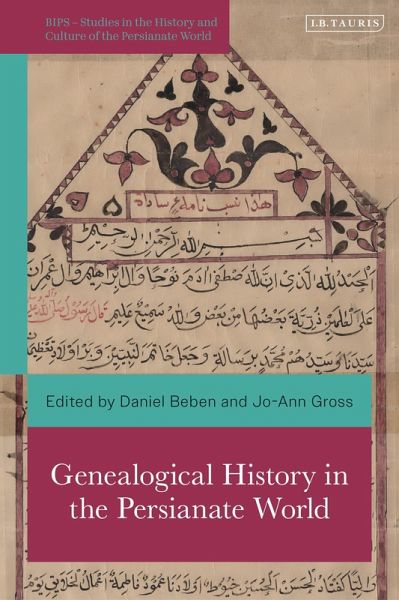
Scholarship on the Muslim world has recently begun to pay increased attention to non-literary genres of documentation as sources for historical research. Genealogical writings are one form of such documentation that has demonstrated significant potential for addressing a wide range of research concerns, particularly for topics that receive little attention in historical chronicles and other state-centered narrative sources. However, while genealogical documentation has received some attention in scholarship on the Arab world, it remains mostly unstudied in scholarship on Persianate societies. The chapters in this book offer reflections on theoretical and methodological issues concerning the study of genealogical documentation, combined with case studies based primarily on previously unpublished, unstudied source materials. The topics explored span the full breadth of the Persianate world, from Anatolia to the Ferghana Valley in Central Asia to the Gujarat region of India, utilizing sources dating from the fourteenth to the twentieth century. The book will be of significant interest to scholars and students of Islamic history and the Persianate ecumene as well as readers in other fields interested in comparative research demonstrating the use of genealogical documentation as historical sources.