
Andere Kunden interessierten sich auch für
 Chemical Weed Control in Non-Cropped Land27,99 €
") Chemical Weed Control in Late Sown Wheat (Triticum aestivum L.)43,99 €
Chemical Weed Control in Late Sown Wheat (Triticum aestivum L.)43,99 € Clean-up Non-Cropped Land Weeds24,99 €
 weed control and crop response to herbicide application in hot pepper39,99 €
 Influence of Nitrogen and Weed Management on Tossa Jute47,99 €
 PERFORMANCE OF HERBICIDE COMBINATION IN DRUM SEEDED RICE41,99 €
 Hybrid Rice in Bangladesh33,99 €

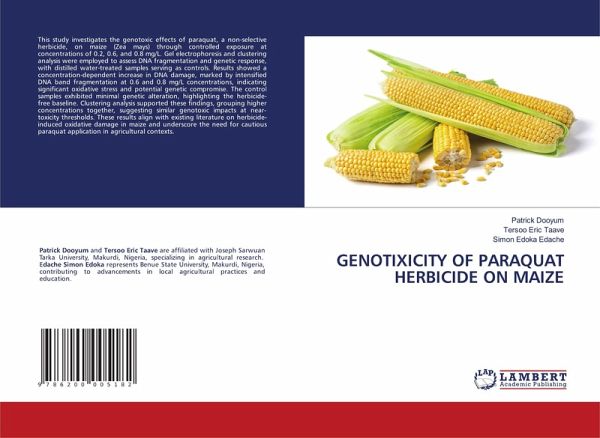
This study investigates the genotoxic effects of paraquat, a non-selective herbicide, on maize (Zea mays) through controlled exposure at concentrations of 0.2, 0.6, and 0.8 mg/L. Gel electrophoresis and clustering analysis were employed to assess DNA fragmentation and genetic response, with distilled water-treated samples serving as controls. Results showed a concentration-dependent increase in DNA damage, marked by intensified DNA band fragmentation at 0.6 and 0.8 mg/L concentrations, indicating significant oxidative stress and potential genetic compromise. The control samples exhibited minimal genetic alteration, highlighting the herbicide-free baseline. Clustering analysis supported these findings, grouping higher concentrations together, suggesting similar genotoxic impacts at near-toxicity thresholds. These results align with existing literature on herbicide-induced oxidative damage in maize and underscore the need for cautious paraquat application in agricultural contexts.