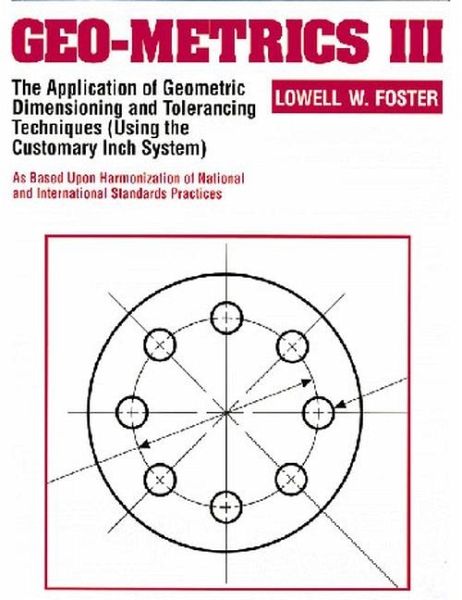
Lowell W. Foster, expert on geometric dimensioning and tolerancing (GD&T) and chairman of the U.S. National and ISO standards committees, updates his bestselling book to give readers the definitive guide to the new ANSI standard. This up-to-date information will help engineers and designers implement design and product requirements throughout the cycle- from design to manufacture to assembly-using universal standards and practices that result in reduced cost and high-quality products. With the new standard, engineers can state design requirements of "function and relationship of part" features…mehr
Lowell W. Foster, expert on geometric dimensioning and tolerancing (GD&T) and chairman of the U.S. National and ISO standards committees, updates his bestselling book to give readers the definitive guide to the new ANSI standard. This up-to-date information will help engineers and designers implement design and product requirements throughout the cycle- from design to manufacture to assembly-using universal standards and practices that result in reduced cost and high-quality products. With the new standard, engineers can state design requirements of "function and relationship of part" features which they heretofore envisioned, but could not state in the drawing. Available in inch and metric versions.
Lowell W. Foster is president and director of Lowell W. Foster Associates, Inc., a consulting firm serving clients around the world in technical management, consulting, and training matters. He continues his life-long involvement in all national and international standards committee developments for geometric dimensioning and tolerancing. His distinguished career spans more than 45 years, from his beginning as a tool designer through various technical and management positions in the areas of product design, process, production, quality control, and standardization. He has been deeply involved in numerous boards and standards committees on engineering drawing and related practices, and has received several awards and honors from schools, organizations, and colleagues. 0201633426AB04062001
Inhaltsangabe
1. Introduction. Why Use Geometric Dimensioning and Tolerancing? What is Geometric Dimensioning and Tolerancing? When Should Geometric Dimensioning and Tolerancing Be Used? Geometric Characteristics and Symbols. Using Symbols. Maximum Material Condition Principle. Regardless of Feature Size. Least Material Condition Principle. Basic and Datum. Symbolic Method of Stating a Basic or Theoretical Exact Value - Recommended. Datums and Datum Feature Symbol. Feature and Feature Control Frame. Combined Feature Control Frame and Datum Feature Symbol. Reference to Datum. Geometric Characteristics - Form, Orientation, Profile, Runout, and Locational Tolerance - Other Symbols and Terms. Geometric Characteristics, Symbols, and Terms. General Rules. Virtual Condition (MMC). Virtual Condition (LMC). 2. Tolerances of Form, Orientation, Profile, and Runout. Tolerances of Form, Orientation, and Profile. Tolerances of Form - Individual Features - No Datum. Flatness. Straightness. Straightness Tolerance Applied to Flat Surface. Circularity. Cylindricity. Evaluation of Circularity and Cylindricity. Datums. Orientation Tolerances - Related Features Using Datums. Perpendicularity. Angularity. Parallelism. Tolerances of Form - Profile Tolerancing. Profile. Profile of a Surface. Profile of a Line. Runout Tolerances - Related Features Using Datums. Runout (Circular and Total). Coaxial Features - Selection of Proper Control. Circular Runout and Total Runout. Circular Runout and Flatness. Total Runout. Runout, Partial Surface. 3. Tolerances of Location. Position. Position Symmetry or Profile of Noncylindrical Features. Noncylindrical Features - Selection of Proper Control. Position. 4. Position of Coaxial Features. Coaxial features - Selection of Proper Control. Position. Position Extended Principles. Position. 5. Datums. Datums. Establishing a Datum Axis. Datum Applications. Extended Datum Principles. 6. Concentricity. Concentricity. Coaxial features - Selection of Proper Control. Appendices. Glossary. Index.
1. Introduction. Why Use Geometric Dimensioning and Tolerancing? What is Geometric Dimensioning and Tolerancing? When Should Geometric Dimensioning and Tolerancing Be Used? Geometric Characteristics and Symbols. Using Symbols. Maximum Material Condition Principle. Regardless of Feature Size. Least Material Condition Principle. Basic and Datum. Symbolic Method of Stating a Basic or Theoretical Exact Value - Recommended. Datums and Datum Feature Symbol. Feature and Feature Control Frame. Combined Feature Control Frame and Datum Feature Symbol. Reference to Datum. Geometric Characteristics - Form, Orientation, Profile, Runout, and Locational Tolerance - Other Symbols and Terms. Geometric Characteristics, Symbols, and Terms. General Rules. Virtual Condition (MMC). Virtual Condition (LMC). 2. Tolerances of Form, Orientation, Profile, and Runout. Tolerances of Form, Orientation, and Profile. Tolerances of Form - Individual Features - No Datum. Flatness. Straightness. Straightness Tolerance Applied to Flat Surface. Circularity. Cylindricity. Evaluation of Circularity and Cylindricity. Datums. Orientation Tolerances - Related Features Using Datums. Perpendicularity. Angularity. Parallelism. Tolerances of Form - Profile Tolerancing. Profile. Profile of a Surface. Profile of a Line. Runout Tolerances - Related Features Using Datums. Runout (Circular and Total). Coaxial Features - Selection of Proper Control. Circular Runout and Total Runout. Circular Runout and Flatness. Total Runout. Runout, Partial Surface. 3. Tolerances of Location. Position. Position Symmetry or Profile of Noncylindrical Features. Noncylindrical Features - Selection of Proper Control. Position. 4. Position of Coaxial Features. Coaxial features - Selection of Proper Control. Position. Position Extended Principles. Position. 5. Datums. Datums. Establishing a Datum Axis. Datum Applications. Extended Datum Principles. 6. Concentricity. Concentricity. Coaxial features - Selection of Proper Control. Appendices. Glossary. Index.
Es gelten unsere Allgemeinen Geschäftsbedingungen: www.buecher.de/agb
Impressum
www.buecher.de ist ein Internetauftritt der buecher.de internetstores GmbH
Geschäftsführung: Monica Sawhney | Roland Kölbl | Günter Hilger
Sitz der Gesellschaft: Batheyer Straße 115 - 117, 58099 Hagen
Postanschrift: Bürgermeister-Wegele-Str. 12, 86167 Augsburg
Amtsgericht Hagen HRB 13257
Steuernummer: 321/5800/1497
USt-IdNr: DE450055826