138,99 €
inkl. MwSt.
Versandkostenfrei*Erscheint vorauss. 18. Mai 2026
Melden Sie sich
hier
hier
für den Produktalarm an, um über die Verfügbarkeit des Produkts informiert zu werden.

69 °P sammeln
Andere Kunden interessierten sich auch für
 Systemic Crises of Global Climate Change205,99 €
 Environmental Justice and Resiliency in an Age of Uncertainty177,99 €
 Fairness and Justice in Environmental Decision Making117,99 €
 Un Human Rights Institutions and the Environment169,99 €
 Routledge Handbook of Higher Education for Sustainable Development304,99 €
 Climate Change Adaptation and Disaster Risk Reduction200,99 €
 Climate Change Adaptation and Disaster Risk Reduction214,99 €

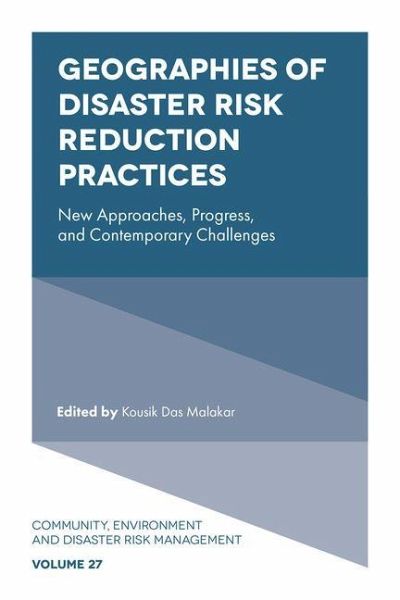
In the intricate web of socio-environmental crises across diverse geographical landscapes, grasping the intricacies of geographies and socio-spatial ecologies in disaster risk reduction practices is indispensable for global socio-ecological sustainability. In response to this imperative, this volume pioneers the development of disaster risk reduction understanding within the disaster research domain. This authored volume is structured into two parts. The initial part extensively explores the fundamentals of geographies in disaster risk reduction practices, encompassing concepts, methodologies, and challenges in disaster management, disaster preparedness, response, relief operations, resource allocation, disaster medicine, information dissemination, recovery, rehabilitation, and reconstruction. It also delves into various applications and emerging trends, management techniques, applied practices through contemporary case studies, socio-ecological challenges in disaster risk reduction, and sustainability considerations in management practices. The latter part focuses on real-world case studies within geographies and socio-spatial ecologies to examine scenarios of disaster risks, management practices, and community challenges specific to coastal regions. These case studies encompass topics such as mangrove vegetation health risks and stress, climate change adaptation strategies at the local level, shoreline change and vulnerability assessments, geographies of coastal hazards, societal vulnerability during the COVID-19 pandemic, as well as analyses of natural hazards and disaster risks, among others. This work enriches the scientific and practical understanding of mitigating disaster risks, and advocating for stakeholder integration in disaster policy planning among planners, scientists, researchers, professionals, government officials, students, and anyone else engaged in disaster research globally.