
Andere Kunden interessierten sich auch für
 Cantrell's Commentary Hosea28,99 €
 Woman's Body and the Social Body in Hosea 1-238,99 €
 Prophecy, Poetry and Hosea47,99 €
 What Job s Friends Could Have Done32,99 €
 Jonah and Balaam7,49 €
 Analyzing Labor Education in the Prophetic Books of Isaiah10,99 €
 A Critical And Exegetical Commentary On The Book Of Psalms V129,99 €




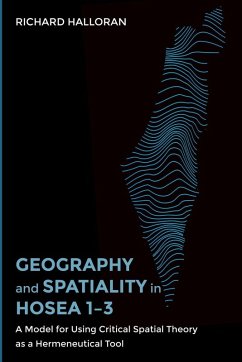
How does a prophet’s mention of a place shape his message? What if the geographical and spatial references in a text are not just background, but serve as a rhetorical tool? In Geography and Spatiality in Hosea 1–3, Richard Halloran opens a fresh interpretive window into the biblical text by bringing critical spatial theory into dialogue with prophetic literature. Focusing on Hosea 1–3, Halloran explores how ancient audiences would have heard geographic references not merely as topographic details, but as emotionally charged symbols rooted in shared memory, cultural associations, and lived experience. Combining literary, rhetorical, and spatial analysis, this interdisciplinary study reveals how Hosea strategically uses places to provoke repentance, evoke covenantal realities, and confront the people of Israel with the consequences of unfaithfulness. The study challenges interpreters to move beyond surface readings and engage the spatial dimensions of Scripture as integral to its persuasive power. Ideal for students, scholars, and pastors alike, this book offers a practical methodology and compelling case study that reimagines how readers approach geographic and spatial references in biblical texts. Furthermore, it shows how spaces became tools for a prophet, demonstrating that geographical and spatial references can speak as powerfully as words.