
Geoinformatics for Flood Risk Management
Applications and Strategies
Herausgeber: Biswas, Brototi; Das, Jayanta; Ghute, Bhagwan
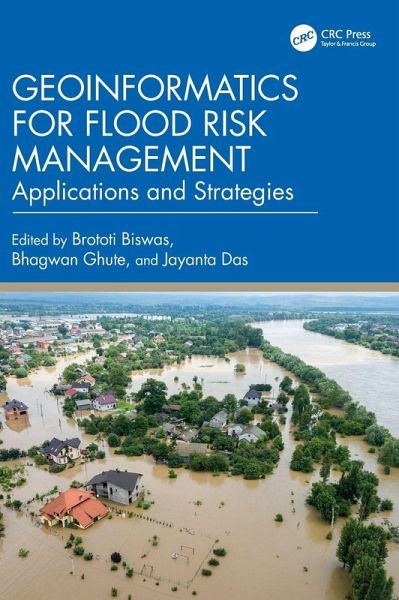
Geoinformatics for Flood Risk Management
Applications and Strategies
Herausgeber: Biswas, Brototi; Das, Jayanta; Ghute, Bhagwan
- Gebundenes Buch
- Merkliste
- Auf die Merkliste
- Bewerten Bewerten
- Teilen
- Produkt teilen
- Produkterinnerung
- Produkterinnerung
Presents a comprehensive coverage of the various types of floods. The use of geospatial techniques for flood mapping and monitoring, multi-criteria decision-making techniques for risk management, and machine learning algorithms for flood prediction, susceptibility analysis, and monitoring are all integrated in the case studies provided.
Andere Kunden interessierten sich auch für
 Geoinformatics for Marine and Coastal Management112,99 €
 Advances and Trends in Geodesy, Cartography and Geoinformatics II96,99 €
 Advances and Trends in Geodesy, Cartography and Geoinformatics II131,99 €
 Geoinformatics251,99 €
 Donald Knight (ed.)River Basin Modelling for Flood Risk Mitigation328,99 €
 Geoinformatics in Support of Urban Politics and the Development of Civil Engineering172,99 €
 Handbook of Flood Risk Management in Developing Countries204,99 €
-
-
-


Presents a comprehensive coverage of the various types of floods. The use of geospatial techniques for flood mapping and monitoring, multi-criteria decision-making techniques for risk management, and machine learning algorithms for flood prediction, susceptibility analysis, and monitoring are all integrated in the case studies provided.
Produktdetails
- Produktdetails
- Verlag: CRC Press
- Seitenzahl: 536
- Erscheinungstermin: 21. Oktober 2025
- Englisch
- Abmessung: 260mm x 183mm x 33mm
- Gewicht: 1192g
- ISBN-13: 9781032876047
- ISBN-10: 1032876042
- Artikelnr.: 73984976
- Herstellerkennzeichnung
- Libri GmbH
- Europaallee 1
- 36244 Bad Hersfeld
- gpsr@libri.de
- Verlag: CRC Press
- Seitenzahl: 536
- Erscheinungstermin: 21. Oktober 2025
- Englisch
- Abmessung: 260mm x 183mm x 33mm
- Gewicht: 1192g
- ISBN-13: 9781032876047
- ISBN-10: 1032876042
- Artikelnr.: 73984976
- Herstellerkennzeichnung
- Libri GmbH
- Europaallee 1
- 36244 Bad Hersfeld
- gpsr@libri.de
Dr. Brototi Biswas is a professor in the Department of Geography and Resource Management, Mizoram (Central) University, India. Her areas of research interest cover physical geography, climate change, urban planning, applied climatology, hazards and disasters, oceanography, social geography, natural resource management, RS and GIS and environmental issues. She has delivered invited lectures in University Grants Commissions (UGC)-sponsored national seminars and academic departments of different colleges in India. She was awarded the "Best Teacher" award in 2013 by Maharashtra Dalit Sahitya Academy. She has successfully guided two PhD students while at present supervising six PhD students. She has guided 20 PG dissertations for postgraduate students. She has conducted (as organizing secretary) four conferences and two workshops sponsored by varied government departments. She has also conducted four Indian Institute of Remote Sensing (IIRS) outreach programmes. Prof. Biswas mainly works on various aspects of physical geography, including hazard and hazard management. She has completed five research projects as Principal Investigator. The funding agencies of the various research projects are UGC, SRTM University (Maharashtra), ICSSR and DST. She has served as reviewer for many international journals. She has to her credit 51 research papers, one authored book, seven book chapters, and 10 conference proceedings. Prof. Biswas has also published two edited books with Springer Nature. Dr. Bhagwan B. Ghute, Assistant Professor, has been working in the Department of Geology, Toshniwal Arts, Commerce and Science College, Sengaon Dist. Hingoli (Maharashtra) India since 2011. He obtained his BSc and MSc. Geology from Swami Ramanand Teerth Marathwada University, Nanded, in 2006 and 2008, respectively, with first class. He received the Dr. Bhimrao Pingale First Merit award, securing the first rank during his MSc Geology at SRTM University, Nanded, in 2008. He has qualified the State Eligibility Test for the lectureship in December 2010 in earth, atmospheric, ocean and planetary sciences with the first rank from all over Maharashtra. He is also recognized as a Post-Graduate (PG) teacher and PhD research supervisor by Swami Ramanand Teerth Marathwada University, Nanded. He has completed two MRPs funded by Swami Ramanand Teerth Marathwada University, Nanded, and Rajiv Gandhi Science and Technology Commission, Mumbai. He is a life member of various societies and journals. Currently, he has been nominated as a Member of the Board of Studies in Geology at SRTM University (2023-2027). His main fields of research are quaternary geology, hydrogeology, remote sensing and GIS, and he has published more than 20 research papers in national and international journals. Dr. Jayanta Das is an esteemed academic in geography, serving as the Assistant Professor and Head of the Department of Geography at Rampurhat College, West Bengal, India. He holds a PhD in Geography from the University of North Bengal, with his research focused on sustainable alternatives to tobacco cultivation in West Bengal's Koch Behar district. Dr. Das's expertise encompasses climate change, applied geomorphology, hazard management, soil and agricultural geography, remote sensing, GIS, and environmental geography. An accomplished editor, Dr. Das has led special issues in journals such as Environmental Science and Pollution Research, Indian Journal of Spatial Science, Hill Geographer and served as an editor to Journal of Water, also contributed to multiple volumes with Springer, Elsevier, and CRC Press. His books cover diverse topics, including hazard monitoring, sustainable agriculture, groundwater, flood and geomorphology. His scholarly output includes 80 international peer-reviewed publications, receiving around 1300 citations (H-index: 21, i10-index: 31). His research is published in high-impact journals, reflecting his proficiency in areas like flood risk assessment, groundwater recharge, and land use analysis. Dr. Das has played a significant role in advancing geographical sciences, organizing international conferences, and training workshops, including MoES, SERB and ICSSR-sponsored conferences on sustainable development. Dr. Das has led two major research projects funded by ICSSR and ANRF. His international collaborations include mentoring African researchers through the CV Raman International Fellowship, focusing on hydro-geographical studies and risk mapping. Recognized with multiple awards for his contributions, Dr. Das's dedication to research and education continues to impact the field of geography both nationally and globally.
Part A: Foundation of Flood Risk Assessment. 1. Flood Inundation Mapping of
Amochu River Basin using HECRAS and GIS. 2. Nexus Between Channel Geometry
and Flood Condition through the Study of Hydraulic Geometry. 3. Study on
the Nexus between Channel Geometry, Flow Characteristics, Anthropogenic
Intervention and Occurrence of Flood in Ajay River, West Bengal. 4.
Evaluation of Morphometric Indices for Prioritization of Watershed by
Adopting Geo-Spatial Techniques: A Study on the Puthimari River Basin,
Assam, India. 5. Infrastructure Losses Caused by Flooding in Nigeria. 6.
Socio-Economic and Physical Vulnerability to Riverine Floods: Bharathapuzha
Basin, Palakkad, Kerala. Part B: Geoinformatics in Flood Risk Mapping and
Assessment. 7. Analysis and mapping of flood susceptibility areas in Chai
Badan District, Lopburi Province, Thailand. 8. Flood Hazard Prediction and
Vulnerability Assessment Using Machine Learning Algorithms in Coastal Areas
of Bangladesh. 9. A Synergistic Application of Remote Sensing and GIS for
Flood Zone Mapping in Adayar River, Chennai: A Case Study. 10. Flood Hazard
Mapping of Barak River Basin of Assam, India: Using Analytic Hierarchy
Process (AHP). 11. Flood Susceptibility Mapping in the Upper Blue Nile
Basin, Ethiopia Using Geospatial Technology and Multi-Criteria Decision
Analysis. 12. Analysis of Flash Flood Hydrology and Susceptibility
Modelling of Alipurduar District in India using a Multi-Criteria
Decision-Making Approach. 13. Environmental Factors Influencing Urban Flash
Flood in Eastern Surma Kushiyara Floodplain, Bangladesh: A Machine
Learning-Based Analysis on Sylhet City. 14. Prioritization of Flood
Susceptibility zones using MCDM techniques, TOPSIS, and the CF Model in the
Manjalar Watershed: A Part of the Vaigai Basin, South India. 15. Flood
Hotspot Identification in Koch Bihar District through Empirical Inundation
Analysis and Theoretical Susceptibility Mapping. 16. Application of Hybrid
Geographic Information Systems (GIS) Based Ensemble Decision-Making Trial
and Evaluation Laboratory (DEMATEL) and Analytic Network Process (ANP)
methods for Flood Risk Assessment of Meghna Basin Area in Northeast
Bangladesh. 17. Assessing People's Vulnerability to Urban Flooding in the
Context of Climate Change: A Case Study of Six Districts in Ziguinchor,
Senegal. Part C: Flood Risk Mitigation Strategies. 18. Flood and Flood Risk
Reduction: Challenges and Strategies. 19. Understanding People's Adaptation
Strategies in Response to Flood: A Case Study in Teesta River Basin,
Bangladesh. 20. Geospatial Approach to Susceptibility Assessment for Flood
Risk Management in Northern Himalayan Districts of West Bengal, India. 21.
Flood Susceptibility Modelling for Flood Risk Reduction Towards the
Nature-Based Solution of Tripura, India. 22. Impact of Flash Flood Events
and Risk Mapping through Geospatial Techniques in the Gori Ganga Watershed.
23. Preparing Sustainable Flood Risk Assessment and Management through
Indigenous Knowledge and Local Resources in Nigeria. 24. Significance of
Local Indigenous Knowledge in Flood Control Management. 25. Assessment of
Flood Hazard Zonation and Development of Flood Management Strategies in
Subansiri Watershed: A Domain of Geospatial Technology. 26. Advancements
and Challenges in Flood Modeling: A Comprehensive Review of Empirical to
Physical-Based Approaches.
Amochu River Basin using HECRAS and GIS. 2. Nexus Between Channel Geometry
and Flood Condition through the Study of Hydraulic Geometry. 3. Study on
the Nexus between Channel Geometry, Flow Characteristics, Anthropogenic
Intervention and Occurrence of Flood in Ajay River, West Bengal. 4.
Evaluation of Morphometric Indices for Prioritization of Watershed by
Adopting Geo-Spatial Techniques: A Study on the Puthimari River Basin,
Assam, India. 5. Infrastructure Losses Caused by Flooding in Nigeria. 6.
Socio-Economic and Physical Vulnerability to Riverine Floods: Bharathapuzha
Basin, Palakkad, Kerala. Part B: Geoinformatics in Flood Risk Mapping and
Assessment. 7. Analysis and mapping of flood susceptibility areas in Chai
Badan District, Lopburi Province, Thailand. 8. Flood Hazard Prediction and
Vulnerability Assessment Using Machine Learning Algorithms in Coastal Areas
of Bangladesh. 9. A Synergistic Application of Remote Sensing and GIS for
Flood Zone Mapping in Adayar River, Chennai: A Case Study. 10. Flood Hazard
Mapping of Barak River Basin of Assam, India: Using Analytic Hierarchy
Process (AHP). 11. Flood Susceptibility Mapping in the Upper Blue Nile
Basin, Ethiopia Using Geospatial Technology and Multi-Criteria Decision
Analysis. 12. Analysis of Flash Flood Hydrology and Susceptibility
Modelling of Alipurduar District in India using a Multi-Criteria
Decision-Making Approach. 13. Environmental Factors Influencing Urban Flash
Flood in Eastern Surma Kushiyara Floodplain, Bangladesh: A Machine
Learning-Based Analysis on Sylhet City. 14. Prioritization of Flood
Susceptibility zones using MCDM techniques, TOPSIS, and the CF Model in the
Manjalar Watershed: A Part of the Vaigai Basin, South India. 15. Flood
Hotspot Identification in Koch Bihar District through Empirical Inundation
Analysis and Theoretical Susceptibility Mapping. 16. Application of Hybrid
Geographic Information Systems (GIS) Based Ensemble Decision-Making Trial
and Evaluation Laboratory (DEMATEL) and Analytic Network Process (ANP)
methods for Flood Risk Assessment of Meghna Basin Area in Northeast
Bangladesh. 17. Assessing People's Vulnerability to Urban Flooding in the
Context of Climate Change: A Case Study of Six Districts in Ziguinchor,
Senegal. Part C: Flood Risk Mitigation Strategies. 18. Flood and Flood Risk
Reduction: Challenges and Strategies. 19. Understanding People's Adaptation
Strategies in Response to Flood: A Case Study in Teesta River Basin,
Bangladesh. 20. Geospatial Approach to Susceptibility Assessment for Flood
Risk Management in Northern Himalayan Districts of West Bengal, India. 21.
Flood Susceptibility Modelling for Flood Risk Reduction Towards the
Nature-Based Solution of Tripura, India. 22. Impact of Flash Flood Events
and Risk Mapping through Geospatial Techniques in the Gori Ganga Watershed.
23. Preparing Sustainable Flood Risk Assessment and Management through
Indigenous Knowledge and Local Resources in Nigeria. 24. Significance of
Local Indigenous Knowledge in Flood Control Management. 25. Assessment of
Flood Hazard Zonation and Development of Flood Management Strategies in
Subansiri Watershed: A Domain of Geospatial Technology. 26. Advancements
and Challenges in Flood Modeling: A Comprehensive Review of Empirical to
Physical-Based Approaches.
Part A: Foundation of Flood Risk Assessment. 1. Flood Inundation Mapping of
Amochu River Basin using HECRAS and GIS. 2. Nexus Between Channel Geometry
and Flood Condition through the Study of Hydraulic Geometry. 3. Study on
the Nexus between Channel Geometry, Flow Characteristics, Anthropogenic
Intervention and Occurrence of Flood in Ajay River, West Bengal. 4.
Evaluation of Morphometric Indices for Prioritization of Watershed by
Adopting Geo-Spatial Techniques: A Study on the Puthimari River Basin,
Assam, India. 5. Infrastructure Losses Caused by Flooding in Nigeria. 6.
Socio-Economic and Physical Vulnerability to Riverine Floods: Bharathapuzha
Basin, Palakkad, Kerala. Part B: Geoinformatics in Flood Risk Mapping and
Assessment. 7. Analysis and mapping of flood susceptibility areas in Chai
Badan District, Lopburi Province, Thailand. 8. Flood Hazard Prediction and
Vulnerability Assessment Using Machine Learning Algorithms in Coastal Areas
of Bangladesh. 9. A Synergistic Application of Remote Sensing and GIS for
Flood Zone Mapping in Adayar River, Chennai: A Case Study. 10. Flood Hazard
Mapping of Barak River Basin of Assam, India: Using Analytic Hierarchy
Process (AHP). 11. Flood Susceptibility Mapping in the Upper Blue Nile
Basin, Ethiopia Using Geospatial Technology and Multi-Criteria Decision
Analysis. 12. Analysis of Flash Flood Hydrology and Susceptibility
Modelling of Alipurduar District in India using a Multi-Criteria
Decision-Making Approach. 13. Environmental Factors Influencing Urban Flash
Flood in Eastern Surma Kushiyara Floodplain, Bangladesh: A Machine
Learning-Based Analysis on Sylhet City. 14. Prioritization of Flood
Susceptibility zones using MCDM techniques, TOPSIS, and the CF Model in the
Manjalar Watershed: A Part of the Vaigai Basin, South India. 15. Flood
Hotspot Identification in Koch Bihar District through Empirical Inundation
Analysis and Theoretical Susceptibility Mapping. 16. Application of Hybrid
Geographic Information Systems (GIS) Based Ensemble Decision-Making Trial
and Evaluation Laboratory (DEMATEL) and Analytic Network Process (ANP)
methods for Flood Risk Assessment of Meghna Basin Area in Northeast
Bangladesh. 17. Assessing People's Vulnerability to Urban Flooding in the
Context of Climate Change: A Case Study of Six Districts in Ziguinchor,
Senegal. Part C: Flood Risk Mitigation Strategies. 18. Flood and Flood Risk
Reduction: Challenges and Strategies. 19. Understanding People's Adaptation
Strategies in Response to Flood: A Case Study in Teesta River Basin,
Bangladesh. 20. Geospatial Approach to Susceptibility Assessment for Flood
Risk Management in Northern Himalayan Districts of West Bengal, India. 21.
Flood Susceptibility Modelling for Flood Risk Reduction Towards the
Nature-Based Solution of Tripura, India. 22. Impact of Flash Flood Events
and Risk Mapping through Geospatial Techniques in the Gori Ganga Watershed.
23. Preparing Sustainable Flood Risk Assessment and Management through
Indigenous Knowledge and Local Resources in Nigeria. 24. Significance of
Local Indigenous Knowledge in Flood Control Management. 25. Assessment of
Flood Hazard Zonation and Development of Flood Management Strategies in
Subansiri Watershed: A Domain of Geospatial Technology. 26. Advancements
and Challenges in Flood Modeling: A Comprehensive Review of Empirical to
Physical-Based Approaches.
Amochu River Basin using HECRAS and GIS. 2. Nexus Between Channel Geometry
and Flood Condition through the Study of Hydraulic Geometry. 3. Study on
the Nexus between Channel Geometry, Flow Characteristics, Anthropogenic
Intervention and Occurrence of Flood in Ajay River, West Bengal. 4.
Evaluation of Morphometric Indices for Prioritization of Watershed by
Adopting Geo-Spatial Techniques: A Study on the Puthimari River Basin,
Assam, India. 5. Infrastructure Losses Caused by Flooding in Nigeria. 6.
Socio-Economic and Physical Vulnerability to Riverine Floods: Bharathapuzha
Basin, Palakkad, Kerala. Part B: Geoinformatics in Flood Risk Mapping and
Assessment. 7. Analysis and mapping of flood susceptibility areas in Chai
Badan District, Lopburi Province, Thailand. 8. Flood Hazard Prediction and
Vulnerability Assessment Using Machine Learning Algorithms in Coastal Areas
of Bangladesh. 9. A Synergistic Application of Remote Sensing and GIS for
Flood Zone Mapping in Adayar River, Chennai: A Case Study. 10. Flood Hazard
Mapping of Barak River Basin of Assam, India: Using Analytic Hierarchy
Process (AHP). 11. Flood Susceptibility Mapping in the Upper Blue Nile
Basin, Ethiopia Using Geospatial Technology and Multi-Criteria Decision
Analysis. 12. Analysis of Flash Flood Hydrology and Susceptibility
Modelling of Alipurduar District in India using a Multi-Criteria
Decision-Making Approach. 13. Environmental Factors Influencing Urban Flash
Flood in Eastern Surma Kushiyara Floodplain, Bangladesh: A Machine
Learning-Based Analysis on Sylhet City. 14. Prioritization of Flood
Susceptibility zones using MCDM techniques, TOPSIS, and the CF Model in the
Manjalar Watershed: A Part of the Vaigai Basin, South India. 15. Flood
Hotspot Identification in Koch Bihar District through Empirical Inundation
Analysis and Theoretical Susceptibility Mapping. 16. Application of Hybrid
Geographic Information Systems (GIS) Based Ensemble Decision-Making Trial
and Evaluation Laboratory (DEMATEL) and Analytic Network Process (ANP)
methods for Flood Risk Assessment of Meghna Basin Area in Northeast
Bangladesh. 17. Assessing People's Vulnerability to Urban Flooding in the
Context of Climate Change: A Case Study of Six Districts in Ziguinchor,
Senegal. Part C: Flood Risk Mitigation Strategies. 18. Flood and Flood Risk
Reduction: Challenges and Strategies. 19. Understanding People's Adaptation
Strategies in Response to Flood: A Case Study in Teesta River Basin,
Bangladesh. 20. Geospatial Approach to Susceptibility Assessment for Flood
Risk Management in Northern Himalayan Districts of West Bengal, India. 21.
Flood Susceptibility Modelling for Flood Risk Reduction Towards the
Nature-Based Solution of Tripura, India. 22. Impact of Flash Flood Events
and Risk Mapping through Geospatial Techniques in the Gori Ganga Watershed.
23. Preparing Sustainable Flood Risk Assessment and Management through
Indigenous Knowledge and Local Resources in Nigeria. 24. Significance of
Local Indigenous Knowledge in Flood Control Management. 25. Assessment of
Flood Hazard Zonation and Development of Flood Management Strategies in
Subansiri Watershed: A Domain of Geospatial Technology. 26. Advancements
and Challenges in Flood Modeling: A Comprehensive Review of Empirical to
Physical-Based Approaches.