A. Dirk Moses (Professor of Global and Universit Colonial History
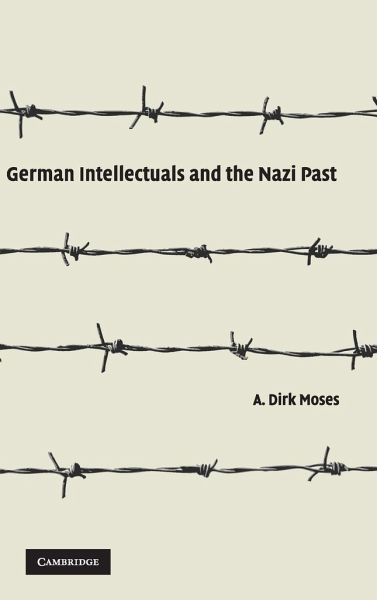
German Intellectuals and the Nazi Past
A. Dirk Moses (Professor of Global and Universit Colonial History
German Intellectuals and the Nazi Past
- Gebundenes Buch
- Merkliste
- Auf die Merkliste
- Bewerten Bewerten
- Teilen
- Produkt teilen
- Produkterinnerung
- Produkterinnerung
This book examines the relentlessly polarized West German intellectual debates about the Nazi past.
Andere Kunden interessierten sich auch für
Sean A. Forner (Michigan State University)German Intellectuals and the Challenge of Democratic Renewal47,99 €
Lay Intellectuals in the Carolingian World49,99 €
Roger Chickering (Washington DC Georgetown University)The German Empire, 1871-191837,99 €
Sarah E. Chinn (City University of New York Hunter College)Disability, the Body, and Radical Intellectuals in the Literature of the Civil War and Reconstruction37,99 €
Sarah E. Chinn (City University of New York Hunter College)Disability, the Body, and Radical Intellectuals in the Literature of the Civil War and Reconstruction43,99 €
Martin Mulsow (University of Erfurt)The Hidden Origins of the German Enlightenment37,99 €
Kathryn KerbyfultonWomen Intellectuals and Leaders in the Middle Ages45,99 €-
-
-
This book examines the relentlessly polarized West German intellectual debates about the Nazi past.
Produktdetails
- Produktdetails
- Verlag: Cambridge University Press
- Seitenzahl: 304
- Erscheinungstermin: 16. Februar 2016
- Englisch
- Abmessung: 240mm x 161mm x 21mm
- Gewicht: 574g
- ISBN-13: 9780521864954
- ISBN-10: 052186495X
- Artikelnr.: 22753352
- Herstellerkennzeichnung
- Libri GmbH
- Europaallee 1
- 36244 Bad Hersfeld
- gpsr@libri.de
- Verlag: Cambridge University Press
- Seitenzahl: 304
- Erscheinungstermin: 16. Februar 2016
- Englisch
- Abmessung: 240mm x 161mm x 21mm
- Gewicht: 574g
- ISBN-13: 9780521864954
- ISBN-10: 052186495X
- Artikelnr.: 22753352
- Herstellerkennzeichnung
- Libri GmbH
- Europaallee 1
- 36244 Bad Hersfeld
- gpsr@libri.de
Dirk Moses studied history in Australia, Scotland, the United States and Germany before joining the History Department at the University of Sydney in 2000. As a research fellow at the University of Freiburg, he worked on postwar German debates about the recent past, a project which became German Intellectuals and the Nazi Past. He has edited and co-edited four anthologies on genocide, mainly on the relationship with colonialism. He has held fellowships in Austria, Germany, Israel and the USA, most recently at the Woodrow Wilson International Center for Scholars in Washington, DC. Currently, he is Professor of Global and Colonial History at the European University Institute in Florence, Italy, where he is finishing a book manuscript entitled Genocide and the Terror of History. He is also working on a project called 'The Diplomacy of Genocide', which studies international reactions to allegations of genocide in postcolonial conflicts in the 1960s and 1970s.
1. Stigma and structure in German memory
2. The languages of republicanism and West German political generations
3. The Forty-Fivers: a generation between fascism and democracy
4. The German German - the integrative republicanism of Wilhelm Hennis
5. The non-German German - the redemptive republicanism of Jurgen Habermas
6. Theory and practice: science, technology, and the republican university
7. The crisis of the republic: 1960-7
8. 1967 and its aftermath
9. The structure of discourse in the 1980s and 1990s
10. History, multiculturalism, and the non-German German
11. German Germans and the old nation
12. Political theology and the dissolution of the underlying structure.

2. The languages of republicanism and West German political generations
3. The Forty-Fivers: a generation between fascism and democracy
4. The German German - the integrative republicanism of Wilhelm Hennis
5. The non-German German - the redemptive republicanism of Jurgen Habermas
6. Theory and practice: science, technology, and the republican university
7. The crisis of the republic: 1960-7
8. 1967 and its aftermath
9. The structure of discourse in the 1980s and 1990s
10. History, multiculturalism, and the non-German German
11. German Germans and the old nation
12. Political theology and the dissolution of the underlying structure.
1. Stigma and structure in German memory
2. The languages of republicanism and West German political generations
3. The Forty-Fivers: a generation between fascism and democracy
4. The German German - the integrative republicanism of Wilhelm Hennis
5. The non-German German - the redemptive republicanism of Jurgen Habermas
6. Theory and practice: science, technology, and the republican university
7. The crisis of the republic: 1960-7
8. 1967 and its aftermath
9. The structure of discourse in the 1980s and 1990s
10. History, multiculturalism, and the non-German German
11. German Germans and the old nation
12. Political theology and the dissolution of the underlying structure.
2. The languages of republicanism and West German political generations
3. The Forty-Fivers: a generation between fascism and democracy
4. The German German - the integrative republicanism of Wilhelm Hennis
5. The non-German German - the redemptive republicanism of Jurgen Habermas
6. Theory and practice: science, technology, and the republican university
7. The crisis of the republic: 1960-7
8. 1967 and its aftermath
9. The structure of discourse in the 1980s and 1990s
10. History, multiculturalism, and the non-German German
11. German Germans and the old nation
12. Political theology and the dissolution of the underlying structure.