
Joachim Whaley
Germany and the Holy Roman Empire
Volume II: The Peace of Westphalia to the Dissolution of the Reich, 1648-1806
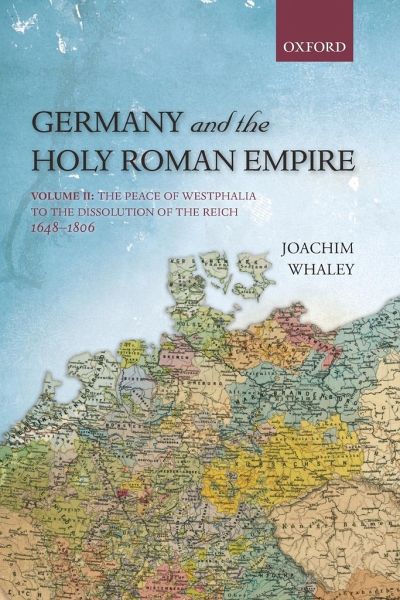
Joachim Whaley
Germany and the Holy Roman Empire
Volume II: The Peace of Westphalia to the Dissolution of the Reich, 1648-1806
- Broschiertes Buch
- Merkliste
- Auf die Merkliste
- Bewerten Bewerten
- Teilen
- Produkt teilen
- Produkterinnerung
- Produkterinnerung
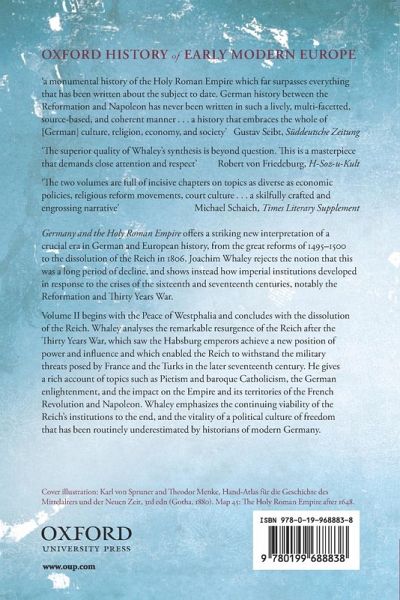
In the first single-author account of German history from the Reformation to the early nineteenth century since Hajo Holborn's study written in the 1950s, Dr Whaley provides a full account of the history of the Holy Roman Empire. Volume II extends from the Peace of Westphalia to the Dissolution of the Reich.
Andere Kunden interessierten sich auch für
 Joachim WhaleyGermany and the Holy Roman Empire76,99 €
 Joachim WhaleyGermany and the Holy Roman Empire, Volume 2212,99 €
 Joachim WhaleyGermany and the Holy Roman Empire, Volume 1224,99 €
 Bruno PreisendörferAls Deutschland noch nicht Deutschland war24,99 €
 Robert-Tarek FischerWilhelm I.40,00 €
 Ohne AutorRepetitorium der deutschen Geschichte24,90 €
 Brendan SimmsDer längste Nachmittag18,95 €
-
-
-




In the first single-author account of German history from the Reformation to the early nineteenth century since Hajo Holborn's study written in the 1950s, Dr Whaley provides a full account of the history of the Holy Roman Empire. Volume II extends from the Peace of Westphalia to the Dissolution of the Reich.
Produktdetails
- Produktdetails
- Verlag: Oxford University Press(UK)
- Seitenzahl: 774
- Erscheinungstermin: 10. Oktober 2013
- Englisch
- Abmessung: 234mm x 156mm x 42mm
- Gewicht: 1153g
- ISBN-13: 9780199688838
- ISBN-10: 0199688834
- Artikelnr.: 39107925
- Herstellerkennzeichnung
- Libri GmbH
- Europaallee 1
- 36244 Bad Hersfeld
- gpsr@libri.de
- Verlag: Oxford University Press(UK)
- Seitenzahl: 774
- Erscheinungstermin: 10. Oktober 2013
- Englisch
- Abmessung: 234mm x 156mm x 42mm
- Gewicht: 1153g
- ISBN-13: 9780199688838
- ISBN-10: 0199688834
- Artikelnr.: 39107925
- Herstellerkennzeichnung
- Libri GmbH
- Europaallee 1
- 36244 Bad Hersfeld
- gpsr@libri.de
Joachim Whaley read History at Christ's College Cambridge. He held Fellowships in History at Christ's College and Robinson College before becoming a Lecturer in German in the Faculty of Modern and Medieval Languages at Cambridge, where he teaches German history, thought, and language. He is the author of Religious Toleration and Social Change in Hamburg 1529-1819 and of numerous articles on early modern and modern German history. He was elected a Fellow of the Royal Historical Society in 1984, and Fellow of the British Academy in 2015.
* Preface to Volume II
* I. Reconstruction and Resurgence 1648-1705: the Reich under Ferdinand
III and Leopold I
* 1: Historians and the Reich after the Thirty Years War
* 2: The Last Years of Ferdinand III: Western Leagues and Northern Wars
* 3: From Ferdinand III to Leopold I
* 4: Leopold I and his Foreign Enemies
* 5: A New Turkish Threat
* 6: Renewed Conflict with France
* 7: The Emperor, the Perpetual Reichstag, the Kreise, and Imperial
Justice
* 8: Imperial Networks: the Reichskirche and the Imperial Cities
* 9: The Imperial Court at Vienna and Dynastic Elevations in the Reich
* 10: The Nature of the Reich: Projects and Culture
* 11: Interpretations of the Leopoldine Reic
* II. Consolidation and Crisis 1705-1740: the Reich under Joseph I and
Charles VI
* 12: Two Wars and Three Emperors
* 13: Leopold I, Joseph I, and the War of Spanish Succession
* 14: Joseph I and the Government of the Reich
* 15: Charles VI: Fruition or Decline?
* 16: Conflicting Priorities: c.1714 - c.1730
* 17: Charles VI and the Government of the Reich
* 18: The Return of Confessional Politics?
* 19: The Problem of the Austrian Succession
* 20: The Ebb of Imperial Power 1733-1740?
* 21: The Reich in Print
* III. The German Territories, c. 1648-c.1740
* 22: An Age of Absolutism?
* 23: Contemporary Perceptions: From Reconstruction to Early
Enlightenment
* 24: The Smaller Territories
* 25: Austria and Brandenburg-Prussia
* 26: The Revival of the Court and the Development of Territorial
Government
* 27: The Court: its Culture, its Functions, and its Critics
* 28: The Development of Military Power
* 29: Princes and Estates
* 30: An Oppressed Peasantry?
* 31: Government and Society
* 32: Government and Economic Development
* 33: Public and Private Enterprise
* 34: Christian Polities: Baroque Catholicism
* 35: Christian Polities: the Territories of the Reichskirche
* 36: Christian Polities: Protestant Orthodoxy and Renewal
* 37: From Coexistence to Toleration?
* 38: Enlightenment and Patriotism
* IV. Decline or Maturity? The Reich from Charles VII to Leopold II, c.
1740-1792
* 39: Three Emperors and a King
* 40: Silesian Wars, 1740-1763
* 41: Managing the Reich without the Habsburgs: Charles VII (1742-45)
* 42: The Return of the Habsburgs: Francis I (1745-1765)
* 43: The Reich without Enemies? Germany and Europe 1763-1792
* 44: Renewal: Joseph II 1765-c.1776
* 45: The Great Reform Debate: Joseph II c. 1778-1790
* 46: Restoration: Leopold II 1790-92
* 47: Central and Intermediate Institutions of the Reich
* 48: The Reich, the Public Sphere, and the Nation
* V. The German Territories after c. 1760
* 49: Enlightenment and the Problem of Reform
* 50: Crisis and Opportunity
* 51: The Challenge of the Enlightenment and the Public Sphere
* 52: Protestant, Catholic and Jewish Aufklärung
* 53: Aufklärung and Government
* 54: Cameralism, Physiocracy, and the Provisioning of Society
* 55: Economic Policy: Manufactures, Guilds, Welfare, and Taxation
* 56: Administration, Law, and Justice
* 57: Education and Toleration
* 58: Courts and Culture
* 59: The Impact of Reform: Immunity against Revolution?
* VI. War and Dissolution: the Reich 1792-1806
* 60: Ruptures and Continuities
* 61: The Reich in the Revolutionary Wars
* 62: Reverberations of the French Revolution: Unrest and Uprisings
* 63: Reverberations of the French Revolution: Intellectuals
* 64: Schemes for the Reform of the Reich in the 1790s
* 65: The Peace of Lunéville (1801) and the
Reichsdeputationshauptschluß (1803)
* 66: The Transformation of the Reich 1803-05
* 67: Final Attempts at Reform and the Dissolution of the Reich 1806
* Conclusion
* Glossary
* Bibliography
* Index
* I. Reconstruction and Resurgence 1648-1705: the Reich under Ferdinand
III and Leopold I
* 1: Historians and the Reich after the Thirty Years War
* 2: The Last Years of Ferdinand III: Western Leagues and Northern Wars
* 3: From Ferdinand III to Leopold I
* 4: Leopold I and his Foreign Enemies
* 5: A New Turkish Threat
* 6: Renewed Conflict with France
* 7: The Emperor, the Perpetual Reichstag, the Kreise, and Imperial
Justice
* 8: Imperial Networks: the Reichskirche and the Imperial Cities
* 9: The Imperial Court at Vienna and Dynastic Elevations in the Reich
* 10: The Nature of the Reich: Projects and Culture
* 11: Interpretations of the Leopoldine Reic
* II. Consolidation and Crisis 1705-1740: the Reich under Joseph I and
Charles VI
* 12: Two Wars and Three Emperors
* 13: Leopold I, Joseph I, and the War of Spanish Succession
* 14: Joseph I and the Government of the Reich
* 15: Charles VI: Fruition or Decline?
* 16: Conflicting Priorities: c.1714 - c.1730
* 17: Charles VI and the Government of the Reich
* 18: The Return of Confessional Politics?
* 19: The Problem of the Austrian Succession
* 20: The Ebb of Imperial Power 1733-1740?
* 21: The Reich in Print
* III. The German Territories, c. 1648-c.1740
* 22: An Age of Absolutism?
* 23: Contemporary Perceptions: From Reconstruction to Early
Enlightenment
* 24: The Smaller Territories
* 25: Austria and Brandenburg-Prussia
* 26: The Revival of the Court and the Development of Territorial
Government
* 27: The Court: its Culture, its Functions, and its Critics
* 28: The Development of Military Power
* 29: Princes and Estates
* 30: An Oppressed Peasantry?
* 31: Government and Society
* 32: Government and Economic Development
* 33: Public and Private Enterprise
* 34: Christian Polities: Baroque Catholicism
* 35: Christian Polities: the Territories of the Reichskirche
* 36: Christian Polities: Protestant Orthodoxy and Renewal
* 37: From Coexistence to Toleration?
* 38: Enlightenment and Patriotism
* IV. Decline or Maturity? The Reich from Charles VII to Leopold II, c.
1740-1792
* 39: Three Emperors and a King
* 40: Silesian Wars, 1740-1763
* 41: Managing the Reich without the Habsburgs: Charles VII (1742-45)
* 42: The Return of the Habsburgs: Francis I (1745-1765)
* 43: The Reich without Enemies? Germany and Europe 1763-1792
* 44: Renewal: Joseph II 1765-c.1776
* 45: The Great Reform Debate: Joseph II c. 1778-1790
* 46: Restoration: Leopold II 1790-92
* 47: Central and Intermediate Institutions of the Reich
* 48: The Reich, the Public Sphere, and the Nation
* V. The German Territories after c. 1760
* 49: Enlightenment and the Problem of Reform
* 50: Crisis and Opportunity
* 51: The Challenge of the Enlightenment and the Public Sphere
* 52: Protestant, Catholic and Jewish Aufklärung
* 53: Aufklärung and Government
* 54: Cameralism, Physiocracy, and the Provisioning of Society
* 55: Economic Policy: Manufactures, Guilds, Welfare, and Taxation
* 56: Administration, Law, and Justice
* 57: Education and Toleration
* 58: Courts and Culture
* 59: The Impact of Reform: Immunity against Revolution?
* VI. War and Dissolution: the Reich 1792-1806
* 60: Ruptures and Continuities
* 61: The Reich in the Revolutionary Wars
* 62: Reverberations of the French Revolution: Unrest and Uprisings
* 63: Reverberations of the French Revolution: Intellectuals
* 64: Schemes for the Reform of the Reich in the 1790s
* 65: The Peace of Lunéville (1801) and the
Reichsdeputationshauptschluß (1803)
* 66: The Transformation of the Reich 1803-05
* 67: Final Attempts at Reform and the Dissolution of the Reich 1806
* Conclusion
* Glossary
* Bibliography
* Index
* Preface to Volume II
* I. Reconstruction and Resurgence 1648-1705: the Reich under Ferdinand
III and Leopold I
* 1: Historians and the Reich after the Thirty Years War
* 2: The Last Years of Ferdinand III: Western Leagues and Northern Wars
* 3: From Ferdinand III to Leopold I
* 4: Leopold I and his Foreign Enemies
* 5: A New Turkish Threat
* 6: Renewed Conflict with France
* 7: The Emperor, the Perpetual Reichstag, the Kreise, and Imperial
Justice
* 8: Imperial Networks: the Reichskirche and the Imperial Cities
* 9: The Imperial Court at Vienna and Dynastic Elevations in the Reich
* 10: The Nature of the Reich: Projects and Culture
* 11: Interpretations of the Leopoldine Reic
* II. Consolidation and Crisis 1705-1740: the Reich under Joseph I and
Charles VI
* 12: Two Wars and Three Emperors
* 13: Leopold I, Joseph I, and the War of Spanish Succession
* 14: Joseph I and the Government of the Reich
* 15: Charles VI: Fruition or Decline?
* 16: Conflicting Priorities: c.1714 - c.1730
* 17: Charles VI and the Government of the Reich
* 18: The Return of Confessional Politics?
* 19: The Problem of the Austrian Succession
* 20: The Ebb of Imperial Power 1733-1740?
* 21: The Reich in Print
* III. The German Territories, c. 1648-c.1740
* 22: An Age of Absolutism?
* 23: Contemporary Perceptions: From Reconstruction to Early
Enlightenment
* 24: The Smaller Territories
* 25: Austria and Brandenburg-Prussia
* 26: The Revival of the Court and the Development of Territorial
Government
* 27: The Court: its Culture, its Functions, and its Critics
* 28: The Development of Military Power
* 29: Princes and Estates
* 30: An Oppressed Peasantry?
* 31: Government and Society
* 32: Government and Economic Development
* 33: Public and Private Enterprise
* 34: Christian Polities: Baroque Catholicism
* 35: Christian Polities: the Territories of the Reichskirche
* 36: Christian Polities: Protestant Orthodoxy and Renewal
* 37: From Coexistence to Toleration?
* 38: Enlightenment and Patriotism
* IV. Decline or Maturity? The Reich from Charles VII to Leopold II, c.
1740-1792
* 39: Three Emperors and a King
* 40: Silesian Wars, 1740-1763
* 41: Managing the Reich without the Habsburgs: Charles VII (1742-45)
* 42: The Return of the Habsburgs: Francis I (1745-1765)
* 43: The Reich without Enemies? Germany and Europe 1763-1792
* 44: Renewal: Joseph II 1765-c.1776
* 45: The Great Reform Debate: Joseph II c. 1778-1790
* 46: Restoration: Leopold II 1790-92
* 47: Central and Intermediate Institutions of the Reich
* 48: The Reich, the Public Sphere, and the Nation
* V. The German Territories after c. 1760
* 49: Enlightenment and the Problem of Reform
* 50: Crisis and Opportunity
* 51: The Challenge of the Enlightenment and the Public Sphere
* 52: Protestant, Catholic and Jewish Aufklärung
* 53: Aufklärung and Government
* 54: Cameralism, Physiocracy, and the Provisioning of Society
* 55: Economic Policy: Manufactures, Guilds, Welfare, and Taxation
* 56: Administration, Law, and Justice
* 57: Education and Toleration
* 58: Courts and Culture
* 59: The Impact of Reform: Immunity against Revolution?
* VI. War and Dissolution: the Reich 1792-1806
* 60: Ruptures and Continuities
* 61: The Reich in the Revolutionary Wars
* 62: Reverberations of the French Revolution: Unrest and Uprisings
* 63: Reverberations of the French Revolution: Intellectuals
* 64: Schemes for the Reform of the Reich in the 1790s
* 65: The Peace of Lunéville (1801) and the
Reichsdeputationshauptschluß (1803)
* 66: The Transformation of the Reich 1803-05
* 67: Final Attempts at Reform and the Dissolution of the Reich 1806
* Conclusion
* Glossary
* Bibliography
* Index
* I. Reconstruction and Resurgence 1648-1705: the Reich under Ferdinand
III and Leopold I
* 1: Historians and the Reich after the Thirty Years War
* 2: The Last Years of Ferdinand III: Western Leagues and Northern Wars
* 3: From Ferdinand III to Leopold I
* 4: Leopold I and his Foreign Enemies
* 5: A New Turkish Threat
* 6: Renewed Conflict with France
* 7: The Emperor, the Perpetual Reichstag, the Kreise, and Imperial
Justice
* 8: Imperial Networks: the Reichskirche and the Imperial Cities
* 9: The Imperial Court at Vienna and Dynastic Elevations in the Reich
* 10: The Nature of the Reich: Projects and Culture
* 11: Interpretations of the Leopoldine Reic
* II. Consolidation and Crisis 1705-1740: the Reich under Joseph I and
Charles VI
* 12: Two Wars and Three Emperors
* 13: Leopold I, Joseph I, and the War of Spanish Succession
* 14: Joseph I and the Government of the Reich
* 15: Charles VI: Fruition or Decline?
* 16: Conflicting Priorities: c.1714 - c.1730
* 17: Charles VI and the Government of the Reich
* 18: The Return of Confessional Politics?
* 19: The Problem of the Austrian Succession
* 20: The Ebb of Imperial Power 1733-1740?
* 21: The Reich in Print
* III. The German Territories, c. 1648-c.1740
* 22: An Age of Absolutism?
* 23: Contemporary Perceptions: From Reconstruction to Early
Enlightenment
* 24: The Smaller Territories
* 25: Austria and Brandenburg-Prussia
* 26: The Revival of the Court and the Development of Territorial
Government
* 27: The Court: its Culture, its Functions, and its Critics
* 28: The Development of Military Power
* 29: Princes and Estates
* 30: An Oppressed Peasantry?
* 31: Government and Society
* 32: Government and Economic Development
* 33: Public and Private Enterprise
* 34: Christian Polities: Baroque Catholicism
* 35: Christian Polities: the Territories of the Reichskirche
* 36: Christian Polities: Protestant Orthodoxy and Renewal
* 37: From Coexistence to Toleration?
* 38: Enlightenment and Patriotism
* IV. Decline or Maturity? The Reich from Charles VII to Leopold II, c.
1740-1792
* 39: Three Emperors and a King
* 40: Silesian Wars, 1740-1763
* 41: Managing the Reich without the Habsburgs: Charles VII (1742-45)
* 42: The Return of the Habsburgs: Francis I (1745-1765)
* 43: The Reich without Enemies? Germany and Europe 1763-1792
* 44: Renewal: Joseph II 1765-c.1776
* 45: The Great Reform Debate: Joseph II c. 1778-1790
* 46: Restoration: Leopold II 1790-92
* 47: Central and Intermediate Institutions of the Reich
* 48: The Reich, the Public Sphere, and the Nation
* V. The German Territories after c. 1760
* 49: Enlightenment and the Problem of Reform
* 50: Crisis and Opportunity
* 51: The Challenge of the Enlightenment and the Public Sphere
* 52: Protestant, Catholic and Jewish Aufklärung
* 53: Aufklärung and Government
* 54: Cameralism, Physiocracy, and the Provisioning of Society
* 55: Economic Policy: Manufactures, Guilds, Welfare, and Taxation
* 56: Administration, Law, and Justice
* 57: Education and Toleration
* 58: Courts and Culture
* 59: The Impact of Reform: Immunity against Revolution?
* VI. War and Dissolution: the Reich 1792-1806
* 60: Ruptures and Continuities
* 61: The Reich in the Revolutionary Wars
* 62: Reverberations of the French Revolution: Unrest and Uprisings
* 63: Reverberations of the French Revolution: Intellectuals
* 64: Schemes for the Reform of the Reich in the 1790s
* 65: The Peace of Lunéville (1801) and the
Reichsdeputationshauptschluß (1803)
* 66: The Transformation of the Reich 1803-05
* 67: Final Attempts at Reform and the Dissolution of the Reich 1806
* Conclusion
* Glossary
* Bibliography
* Index