

Andere Kunden interessierten sich auch für
 Through Innocent Eyes20,99 €
 America in the Eyes of the Germans19,99 €
 America in the Eyes of the Germans44,99 €
 The World through Roman Eyes159,99 €
 Elizabeth I of England through Valois Eyes68,99 €
 The Irish Through British Eyes87,99 €
 Elizabeth I of England through Valois Eyes31,99 €




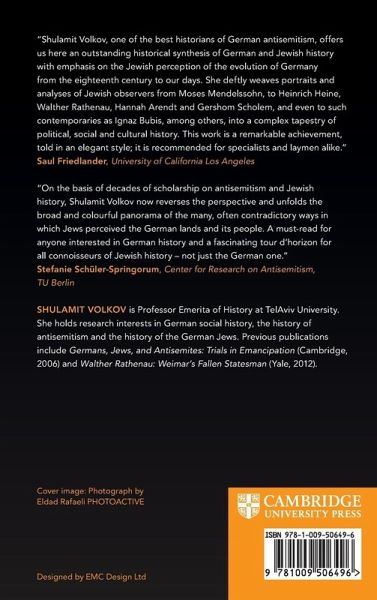
What can Jewish history tell us about German history? How can we understand the history of modern Germany from a Jewish perspective? And how do we bring the voices of German Jews to the fore? Germany through Jewish Eyes explores the dramatic course of German history, from the Enlightenment, through wars and revolutions, unification and reunification, Nazi dictatorship, Holocaust, and the rebuilding of a prosperous, modern democracy - all from a Jewish perspective. Through a series of chronologically ordered life-stories, Shulamit Volkov examines how the lived experience of German Jewry can provide new insights into familiar events and long-term developments. Her study explores the plurality of the Jewish gaze, considering how German Jews sought full equality and integration while attempting to preserve a unique identity, and how they experienced security and integration as well as pronounced hatred. Volkov's innovative study offers readers the opportunity to look again at the pivotal moments of German history with a fresh understanding.