
Andere Kunden interessierten sich auch für
") Norman Mailer 1945-1946 (LOA #364)27,99 €
Norman Mailer 1945-1946 (LOA #364)27,99 € Käsebier Takes Berlin10,99 €
 Kapo12,99 €
 The Artificial Silk Girl8,49 €
 The Radio Operator20,99 €
 Short Letter, Long Farewell22,99 €
 High Dive16,99 €

When World War I breaks out, a young architecture student in Munich does everything in his power to avoid being enlisted into the German military in this perceptive, wickedly humorous novel by a prominent twentieth-century writer, journalist, and film critic.
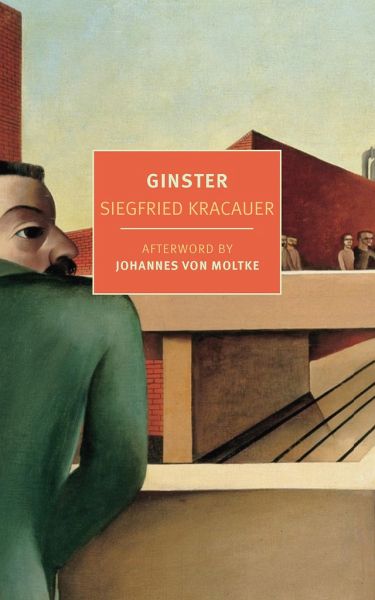
Ginster is a war novel about not going to war; about how war, far from the front, comes to warp every aspect of outer and inner life and to infect the workings of language itself. The subject is World War I, but this novel by the brilliant twentieth-century sociologist, journalist, and film critic Siegfried Kracauer, first published in 1928, has as much to say about what it means to live under the sulking great powers and blood-imbrued satrapies of today as it does about the inflamed self-righteousness of late imperial Germany. In Ginster, as in Greek tragedy, massacre occurs offstage, arriving only as "news," but the everyday horror of a society engineered for the continual production of violence is not to be denied.Ginster, the Chaplinesque antihero, intent chiefly on saving his own skin, works hard to keep his distance from the war machine, and yet making a living, he discovers, is all about keeping it running. How different, in the end, is his dreamy self-absorption from the empty military language that has come to pervade every aspect of civilian life in the homeland?
Ginster is a war novel about not going to war; about how war, far from the front, comes to warp every aspect of outer and inner life and to infect the workings of language itself. The subject is World War I, but this novel by the brilliant twentieth-century sociologist, journalist, and film critic Siegfried Kracauer, first published in 1928, has as much to say about what it means to live under the sulking great powers and blood-imbrued satrapies of today as it does about the inflamed self-righteousness of late imperial Germany. In Ginster, as in Greek tragedy, massacre occurs offstage, arriving only as "news," but the everyday horror of a society engineered for the continual production of violence is not to be denied.Ginster, the Chaplinesque antihero, intent chiefly on saving his own skin, works hard to keep his distance from the war machine, and yet making a living, he discovers, is all about keeping it running. How different, in the end, is his dreamy self-absorption from the empty military language that has come to pervade every aspect of civilian life in the homeland?
Kracauer s mordant satire has the caustic power of Celine but is less coarse and choleric. Sharp criticisms of patriotism, cronyism, and the war itself are tempered by the fanciful observations of a character who has the eye of a visual artist... The result is a tour de force of language enriched by gallows humor. Publishers Weekly Starred Review
"Ginster s name belongs with modern literature s antiwar activists from the Good Soldier vejk to Yossarian." Kirkus Reviews
The reissue of this novel now is valuable, beyond its considerable historical and aesthetic virtues, because it makes pertinent points about today s world, bedeviled by war, misery, poverty, and the enticing lure of despotism as an answer to democracy s shortcomings. Thomas Filbin, The Arts Fuse
"Ginster is a scathing portrait, light on the plot, of German civilian life between the July-August 1914 declarations of World War I . . . [A] drop-dead hilarious anti-war satire." Artun Ak, Reading in Translation
"Like Erich Maria Remarque s All Quiet on the Western Front, Ginster appeared in time to mark the tenth anniversary of the armistice. If Remarque s novel seemed to the playwright Carl Zuckmayer to capture with unparalleled immediacy the experience of a generation, Kracauer s novel challenges the very premise of Zuckmayer s enthusiasm. Which generation? Whose experience? [. . .] Ginster does not offer the moral security of All Quiet on the Western Front. The protagonist lives through a 'historic time' with an ironic awareness of the inadequacy of the vocabularies with which people understand their own time."
Benjamin Morgan, TLS
"Ginster s name belongs with modern literature s antiwar activists from the Good Soldier vejk to Yossarian." Kirkus Reviews
The reissue of this novel now is valuable, beyond its considerable historical and aesthetic virtues, because it makes pertinent points about today s world, bedeviled by war, misery, poverty, and the enticing lure of despotism as an answer to democracy s shortcomings. Thomas Filbin, The Arts Fuse
"Ginster is a scathing portrait, light on the plot, of German civilian life between the July-August 1914 declarations of World War I . . . [A] drop-dead hilarious anti-war satire." Artun Ak, Reading in Translation
"Like Erich Maria Remarque s All Quiet on the Western Front, Ginster appeared in time to mark the tenth anniversary of the armistice. If Remarque s novel seemed to the playwright Carl Zuckmayer to capture with unparalleled immediacy the experience of a generation, Kracauer s novel challenges the very premise of Zuckmayer s enthusiasm. Which generation? Whose experience? [. . .] Ginster does not offer the moral security of All Quiet on the Western Front. The protagonist lives through a 'historic time' with an ironic awareness of the inadequacy of the vocabularies with which people understand their own time."
Benjamin Morgan, TLS
"War has long been described as a machine, but Siegfried Kracauer s harrowing and hilarious German home front novel, Ginster, shows what machines really are: a massive conglomeration of many tiny, boring individual parts . . . [Ginster's] interior train-track of thinking is particularly bizarre and beautiful, at once mopey and optimistic, as he fails at every aspect of soldiering. It is a slapstick act perfected to high art." Mary Marge Locker, The New York Times
Kracauer s mordant satire has the caustic power of Celine but is less coarse and choleric. Sharp criticisms of patriotism, cronyism, and the war itself are tempered by the fanciful observations of a character who has the eye of a visual artist... The result is a tour de force of language enriched by gallows humor. Publishers Weekly Starred Review
"Ginster s name belongs with modern literature s antiwar activists from the Good Soldier vejk to Yossarian." Kirkus Reviews
The reissue of this novel now is valuable, beyond its considerable historical and aesthetic virtues, because it makes pertinent points about today s world, bedeviled by war, misery, poverty, and the enticing lure of despotism as an answer to democracy s shortcomings. Thomas Filbin, The Arts Fuse
"Ginster is a scathing portrait, light on the plot, of German civilian life between the July-August 1914 declarations of World War I . . . [A] drop-dead hilarious anti-war satire." Artun Ak, Reading in Translation
"Like Erich Maria Remarque s All Quiet on the Western Front, Ginster appeared in time to mark the tenth anniversary of the armistice. If Remarque s novel seemed to the playwright Carl Zuckmayer to capture with unparalleled immediacy the experience of a generation, Kracauer s novel challenges the very premise of Zuckmayer s enthusiasm. Which generation? Whose experience? [. . .] Ginster does not offer the moral security of All Quiet on the Western Front. The protagonist lives through a 'historic time' with an ironic awareness of the inadequacy of the vocabularies with which people understand their own time."
Benjamin Morgan, TLS
Kracauer s mordant satire has the caustic power of Celine but is less coarse and choleric. Sharp criticisms of patriotism, cronyism, and the war itself are tempered by the fanciful observations of a character who has the eye of a visual artist... The result is a tour de force of language enriched by gallows humor. Publishers Weekly Starred Review
"Ginster s name belongs with modern literature s antiwar activists from the Good Soldier vejk to Yossarian." Kirkus Reviews
The reissue of this novel now is valuable, beyond its considerable historical and aesthetic virtues, because it makes pertinent points about today s world, bedeviled by war, misery, poverty, and the enticing lure of despotism as an answer to democracy s shortcomings. Thomas Filbin, The Arts Fuse
"Ginster is a scathing portrait, light on the plot, of German civilian life between the July-August 1914 declarations of World War I . . . [A] drop-dead hilarious anti-war satire." Artun Ak, Reading in Translation
"Like Erich Maria Remarque s All Quiet on the Western Front, Ginster appeared in time to mark the tenth anniversary of the armistice. If Remarque s novel seemed to the playwright Carl Zuckmayer to capture with unparalleled immediacy the experience of a generation, Kracauer s novel challenges the very premise of Zuckmayer s enthusiasm. Which generation? Whose experience? [. . .] Ginster does not offer the moral security of All Quiet on the Western Front. The protagonist lives through a 'historic time' with an ironic awareness of the inadequacy of the vocabularies with which people understand their own time."
Benjamin Morgan, TLS