
Andere Kunden interessierten sich auch für
 Global Governance und Post-Nationalismus49,90 €
 Nationalism and Private Law in Europe118,99 €
 Global Governance73,25 €
 Covid-19, State-Power and Society in Europe91,99 €
 Covid-19, State-Power and Society in Europe91,99 €
 Deliberative Global Governance54,99 €
 Beyond Extensive Consultations123,99 €




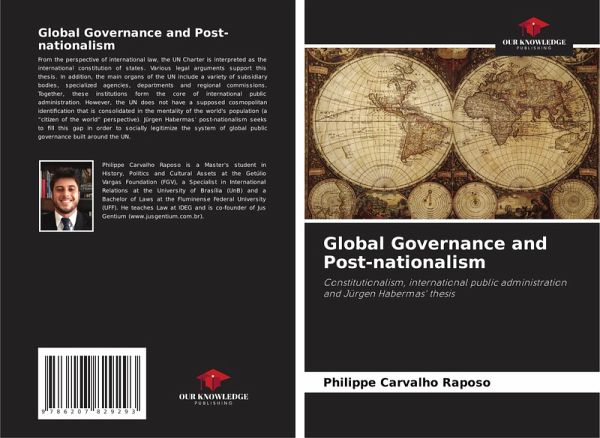
From the perspective of international law, the UN Charter is interpreted as the international constitution of states. Various legal arguments support this thesis. In addition, the main organs of the UN include a variety of subsidiary bodies, specialized agencies, departments and regional commissions. Together, these institutions form the core of international public administration. However, the UN does not have a supposed cosmopolitan identification that is consolidated in the mentality of the world's population (a "citizen of the world" perspective). Jürgen Habermas' post-nationalism seeks to fill this gap in order to socially legitimize the system of global public governance built around the UN.