
Andere Kunden interessierten sich auch für
 Global Industry Chains: Creating a Networked City Planet106,99 €
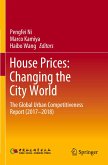
 House Prices: Changing the City World76,99 €
 House Prices: Changing the City World77,99 €
 Global Urban Value Chain in History of Human Civilization91,99 €
 The World: 300 Years of Urbanization Expansion113,99 €
 The World: 300 Years of Urbanization Expansion113,99 €
 Cities Network Along the Silk Road76,99 €
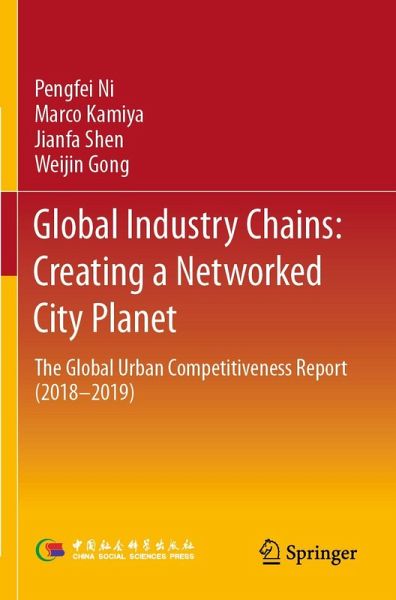
This report presents the outcomes of a survey project of the National Academy of Economic Strategy of the Chinese Academy of Social Sciences and the United Nations Human Settlements Programme. The project evaluated and ranked the competitiveness of 1,007 global cities, with a combined population of over 500,000, based on a number of selected indicators. The report provides an overview of the global urbanization pattern and areas of improvements in the selected cities. The outcomes of the project confirm that the formation and changes of global value chains have caused profound changes in economic structures in some countries and affected the development of cities in these countries, thereby reshaping the city planet.
In addition to comparative analysis of competitiveness of cities, this report also sheds light on the global pattern and trends of economic and human development. It reveals four new findings regarding the development of cities around the world: First, over the past four decades, human societies are transitioning quickly from agricultural societies which are characterized by scattered settlements to industrial societies which are characterized by city clusters, interconnectivity, and resource sharing. The planet where we are living has become a city planet. Second, globalization and the advancements of smart and networking technologies have accelerated urbanization across the world in the past four decades. Third, cities are becoming increasingly metropolitan, interconnected, and smart. Fourth, sustainability scores of the selected global cities show olive-shaped distribution on the world map and sustainability performance of Asia cities has improved continuously.
In addition to comparative analysis of competitiveness of cities, this report also sheds light on the global pattern and trends of economic and human development. It reveals four new findings regarding the development of cities around the world: First, over the past four decades, human societies are transitioning quickly from agricultural societies which are characterized by scattered settlements to industrial societies which are characterized by city clusters, interconnectivity, and resource sharing. The planet where we are living has become a city planet. Second, globalization and the advancements of smart and networking technologies have accelerated urbanization across the world in the past four decades. Third, cities are becoming increasingly metropolitan, interconnected, and smart. Fourth, sustainability scores of the selected global cities show olive-shaped distribution on the world map and sustainability performance of Asia cities has improved continuously.