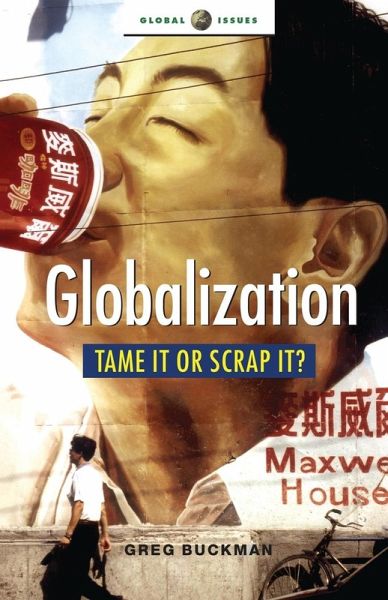
'Globalization is irreversible and irresistible.' Tony Blair This book gives the lie to that claim. Economic globalization has never been an inevitable part of human history. It is eminently reversible and hugely resistible. Greg Buckman argues there are two broad approaches within the anti-globalization movement. One, perhaps the most widely supported and influential strand today, calls the Fair Trade and Back to Bretton Woods school. This argues for immediate reforms of the world's trading system, capital markets, and global institutions, notably the World Bank, IMF and WTO. The other, the…mehr
'Globalization is irreversible and irresistible.' Tony Blair This book gives the lie to that claim. Economic globalization has never been an inevitable part of human history. It is eminently reversible and hugely resistible. Greg Buckman argues there are two broad approaches within the anti-globalization movement. One, perhaps the most widely supported and influential strand today, calls the Fair Trade and Back to Bretton Woods school. This argues for immediate reforms of the world's trading system, capital markets, and global institutions, notably the World Bank, IMF and WTO. The other, the Localization school, takes a more root and branch position and argues for the abolition of these institutions and outright reversal of globalization. Buckman explains the details of each school's outlook and proposals, their weaknesses, where they disagree, their common ground, and where they might come together in campaigns. This book gives the lie to the claim that globalization is 'irreversible and irresistible'. Greg Buckman argues there are two broad approaches within the anti-globalization movement, explaining the details of each school's outlook, their weaknesses, where they disagree, their common ground, and where they might come together in campaigns.
Greg Buckman is former national finance manager for The Wilderness Society of Australia and currently Treasurer of the Australian Greens and has been co-editor of their magazine, Green. He has undertaken much economic research, particularly on issues concerning globalization, forestry and energy. His long involvement with the environment movement goes back to the successful international fight to save the Franklin River in Tasmania, Australia in the early 1980s.
Inhaltsangabe
Part I: The Evolution and Consequences of Economic Globalization 1. Introduction 2. The Evolution of Global Supermarket: A History of World Trade World trade in the nineteenth century World trade in the twentieth century World trade after the Second World War The shocks of the 1970s Causes of the spread of world trade 3. The Evolution of the Global Bank: A History of World Capital Flows Pre-Industrial Revolution global finance The influence of the Industrial Revolution The emergence of the gold standard The First World War and the interwar years The Bretton Woods twins The world economic order from the 1950s to the 1970s The shocks of the 1970s Todayûs casino economy 4. The Engines of Globalization Transnational corporations The political influence of TNCs; The on-the-ground influence of TNCs; Changing attitudes towards TNCs The World Trade Organization Trade negotiations; The Doha Round; The bizarre rulings of the WTO; The new trade boundaries pushed by the WTO; Regional trade deals The International Monetary Fund and World Bank The rise of the IMF and World Bank; The fall of the IMF and World Bank The Washington Consensus The technological engines of globalization The environmental price of world trade 5. Rich versus Poor in the Global Economy The polarization of global wealth Concentration of economic globalization around rich countries Relative size of poor economies The third world debt crisis Poor countries and global trade Trade winners and losers Poor country raw material exports Poor country trade winners Export-processing Zones Rich country trade losers Aid to the rescue? Ecological debt 6. Rich Country Double Standards Rich country double standards on trade Double standards on patents Double standards on agricultural and textile trade Part II: The Policy Alternatives of the Anti-Globalization Movement 7. The Anti-Globalization Movement The global loss of democracy The anti-globalization movement Origins of the anti-globalization movement The anti-globalization protests Policy formulation by the anti-globalization movement NGOs and non-mainstream parties 8. The Fair Trade/Back to Bretton Woods School Trade Ending rich country protectionism, allowing poor country special and different treatment; Protection of national agricultural industries; Social and environmental trade clauses The Future of the IMF, World Bank and WTO The World Trade Organization; No new issues; Services and patent agreements; The International Monetary Fund and World Bank; Debt cancellation Capital Market and Transnational Corporation Regulation Different types of capital control; The Tobin Tax; Control over Transnational Corporations; An international bankruptcy mechanism 9. The Localization School Advocates of Localization Localization aiding Democracy Trade The Future of the IMF, World Bank and WTO The World Trade Organization; The International Monetary Fund and World Bank Capital and Transnational Corporation Regulation Control over transnational corporations 10. Globaphobes versus Globaphiles The Oxfam Rigged Rules report debate Short versus long term strategies Corporate engagement Rich country versus poor country anti-globalization organizations Changing fashions within the anti-globalization movement Policies that straddle both schools Policies that stand outside the localization / fair trade divide 11. Deficiencies of Both Schools Deficiencies in Fair Trade school policies Deficiencies in Localization school policies Deficiencies common to both schools 12. The Policy Future of the Anti-Globalization Movement The common ground between the two schools Common policies of the Fair Trade and Localization schools; Philosophies common to both Schools Broader areas of agreement between the two schools Agreement on need for international finance institutions; Agreement on need for residual world trade and limited protectionism Potential areas of better consistency between the two schools Capital market / TNC regulation policies ; Management of the IMF, World Bank and WTO policies; Trade policies The general policy future of the anti-globalization movement The need for the anti-globalization movement to engage with the public more; The need for the anti-globalization movement to engage with itself more 13. Conclusion
Part I: The Evolution and Consequences of Economic Globalization 1. Introduction 2. The Evolution of Global Supermarket: A History of World Trade World trade in the nineteenth century World trade in the twentieth century World trade after the Second World War The shocks of the 1970s Causes of the spread of world trade 3. The Evolution of the Global Bank: A History of World Capital Flows Pre-Industrial Revolution global finance The influence of the Industrial Revolution The emergence of the gold standard The First World War and the interwar years The Bretton Woods twins The world economic order from the 1950s to the 1970s The shocks of the 1970s Todayûs casino economy 4. The Engines of Globalization Transnational corporations The political influence of TNCs; The on-the-ground influence of TNCs; Changing attitudes towards TNCs The World Trade Organization Trade negotiations; The Doha Round; The bizarre rulings of the WTO; The new trade boundaries pushed by the WTO; Regional trade deals The International Monetary Fund and World Bank The rise of the IMF and World Bank; The fall of the IMF and World Bank The Washington Consensus The technological engines of globalization The environmental price of world trade 5. Rich versus Poor in the Global Economy The polarization of global wealth Concentration of economic globalization around rich countries Relative size of poor economies The third world debt crisis Poor countries and global trade Trade winners and losers Poor country raw material exports Poor country trade winners Export-processing Zones Rich country trade losers Aid to the rescue? Ecological debt 6. Rich Country Double Standards Rich country double standards on trade Double standards on patents Double standards on agricultural and textile trade Part II: The Policy Alternatives of the Anti-Globalization Movement 7. The Anti-Globalization Movement The global loss of democracy The anti-globalization movement Origins of the anti-globalization movement The anti-globalization protests Policy formulation by the anti-globalization movement NGOs and non-mainstream parties 8. The Fair Trade/Back to Bretton Woods School Trade Ending rich country protectionism, allowing poor country special and different treatment; Protection of national agricultural industries; Social and environmental trade clauses The Future of the IMF, World Bank and WTO The World Trade Organization; No new issues; Services and patent agreements; The International Monetary Fund and World Bank; Debt cancellation Capital Market and Transnational Corporation Regulation Different types of capital control; The Tobin Tax; Control over Transnational Corporations; An international bankruptcy mechanism 9. The Localization School Advocates of Localization Localization aiding Democracy Trade The Future of the IMF, World Bank and WTO The World Trade Organization; The International Monetary Fund and World Bank Capital and Transnational Corporation Regulation Control over transnational corporations 10. Globaphobes versus Globaphiles The Oxfam Rigged Rules report debate Short versus long term strategies Corporate engagement Rich country versus poor country anti-globalization organizations Changing fashions within the anti-globalization movement Policies that straddle both schools Policies that stand outside the localization / fair trade divide 11. Deficiencies of Both Schools Deficiencies in Fair Trade school policies Deficiencies in Localization school policies Deficiencies common to both schools 12. The Policy Future of the Anti-Globalization Movement The common ground between the two schools Common policies of the Fair Trade and Localization schools; Philosophies common to both Schools Broader areas of agreement between the two schools Agreement on need for international finance institutions; Agreement on need for residual world trade and limited protectionism Potential areas of better consistency between the two schools Capital market / TNC regulation policies ; Management of the IMF, World Bank and WTO policies; Trade policies The general policy future of the anti-globalization movement The need for the anti-globalization movement to engage with the public more; The need for the anti-globalization movement to engage with itself more 13. Conclusion
Es gelten unsere Allgemeinen Geschäftsbedingungen: www.buecher.de/agb
Impressum
www.buecher.de ist ein Internetauftritt der buecher.de internetstores GmbH
Geschäftsführung: Monica Sawhney | Roland Kölbl | Günter Hilger
Sitz der Gesellschaft: Batheyer Straße 115 - 117, 58099 Hagen
Postanschrift: Bürgermeister-Wegele-Str. 12, 86167 Augsburg
Amtsgericht Hagen HRB 13257
Steuernummer: 321/5800/1497
USt-IdNr: DE450055826