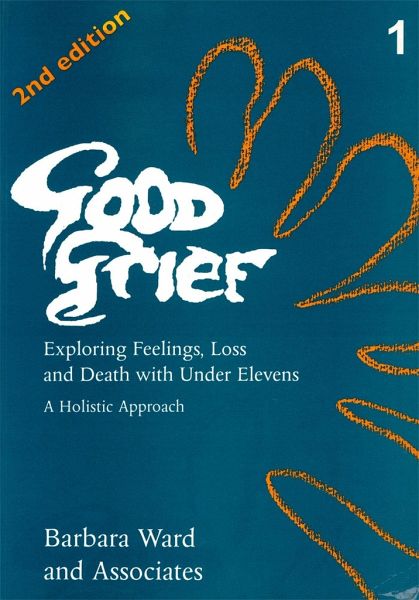
Good Grief has been designed to explore and demystify the experience of loss - in different contexts - within the framework of the National Curriculum. Suitable for all professionals, carers and parents, Good Grief 1 facilitates the use of children's own experiences and encouraging improvisation and extension.
Good Grief has been designed to explore and demystify the experience of loss - in different contexts - within the framework of the National Curriculum. Suitable for all professionals, carers and parents, Good Grief 1 facilitates the use of children's own experiences and encouraging improvisation and extension.
Barbara Ward is a freelance trainer and consultant and a psychosynthesis counsellor from a teaching and health education background.
Inhaltsangabe
Aims and Objectives. Statistics for Britain. Foreword. Contents. Contributors. 1. INTRODUCTION AND BACKGROUND. 1.1 Why teach about loss and death? 1.2 Educator's notes. 1.3 Understanding Loss. 1.4 Divorce and Separation. 1.5 How to help someone who is suffering from loss. 1.6 Tracing Western attitudes to death. 1.7 Stages of grief. 1.8 Difficulties in grieving. 1.9 Grief in children. 1.10 Dying children and their families. 1.11 Preparation for a child's funeral. 1.12 Children's reaction to death. 1.13 Death of a child - a school's response. 1.14 Loss of a child - helping the parents. 1.15 When a child in your school is bereaved. 1.16 Bereavement in the junior school - a teacher's experience. 1.17 Glossary of words associated with death. 2. ACTIVITIES. 2.1 Creative activities. 2.2 Feelings. 2.3 Living with loss. 2.4 What is death? 2.5 How can we help? 2.6 Self esteem and self image. 3. APPENDICES. 3.1 Unhappy ever after. 3.2 Caught in the middle. 3.3 Helen House. 3.4 What to do when someone dies. 3.5 Why do we have funerals. 3.6 Rituals and customs. 3.7 How will Mummy breath and who will feed her? 3.8 I can't write to Daddy. 3.9 Heavenly bodies. 3.10 Value of hospitalized children's artwork. 3.11 Additional resources 3.12 Books for bereaved children. 3.13 Children's booklist. 3.14. Educator's and adult's booklist. Useful addresses. Attributions.
Aims and Objectives. Statistics for Britain. Foreword. Contents. Contributors. 1. INTRODUCTION AND BACKGROUND. 1.1 Why teach about loss and death? 1.2 Educator's notes. 1.3 Understanding Loss. 1.4 Divorce and Separation. 1.5 How to help someone who is suffering from loss. 1.6 Tracing Western attitudes to death. 1.7 Stages of grief. 1.8 Difficulties in grieving. 1.9 Grief in children. 1.10 Dying children and their families. 1.11 Preparation for a child's funeral. 1.12 Children's reaction to death. 1.13 Death of a child - a school's response. 1.14 Loss of a child - helping the parents. 1.15 When a child in your school is bereaved. 1.16 Bereavement in the junior school - a teacher's experience. 1.17 Glossary of words associated with death. 2. ACTIVITIES. 2.1 Creative activities. 2.2 Feelings. 2.3 Living with loss. 2.4 What is death? 2.5 How can we help? 2.6 Self esteem and self image. 3. APPENDICES. 3.1 Unhappy ever after. 3.2 Caught in the middle. 3.3 Helen House. 3.4 What to do when someone dies. 3.5 Why do we have funerals. 3.6 Rituals and customs. 3.7 How will Mummy breath and who will feed her? 3.8 I can't write to Daddy. 3.9 Heavenly bodies. 3.10 Value of hospitalized children's artwork. 3.11 Additional resources 3.12 Books for bereaved children. 3.13 Children's booklist. 3.14. Educator's and adult's booklist. Useful addresses. Attributions.
Es gelten unsere Allgemeinen Geschäftsbedingungen: www.buecher.de/agb
Impressum
www.buecher.de ist ein Internetauftritt der buecher.de internetstores GmbH
Geschäftsführung: Monica Sawhney | Roland Kölbl | Günter Hilger
Sitz der Gesellschaft: Batheyer Straße 115 - 117, 58099 Hagen
Postanschrift: Bürgermeister-Wegele-Str. 12, 86167 Augsburg
Amtsgericht Hagen HRB 13257
Steuernummer: 321/5800/1497
USt-IdNr: DE450055826